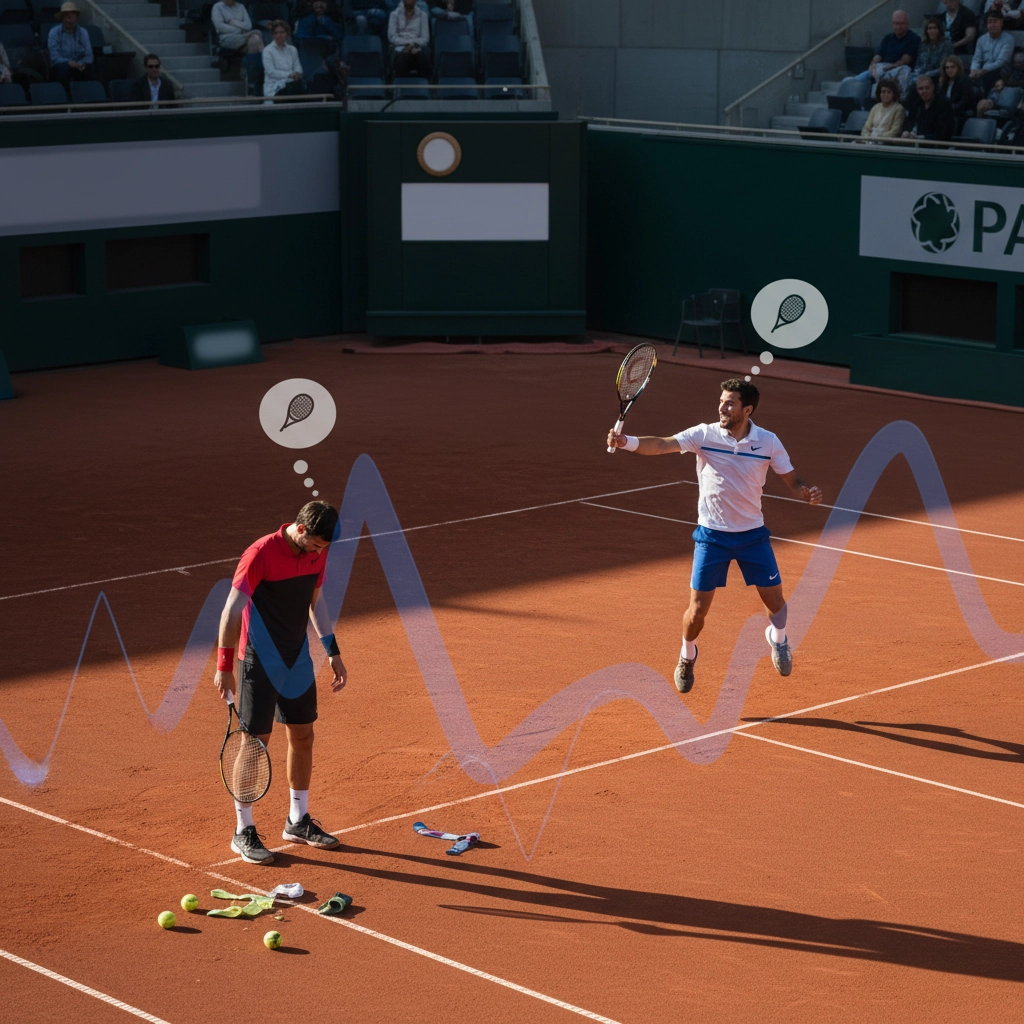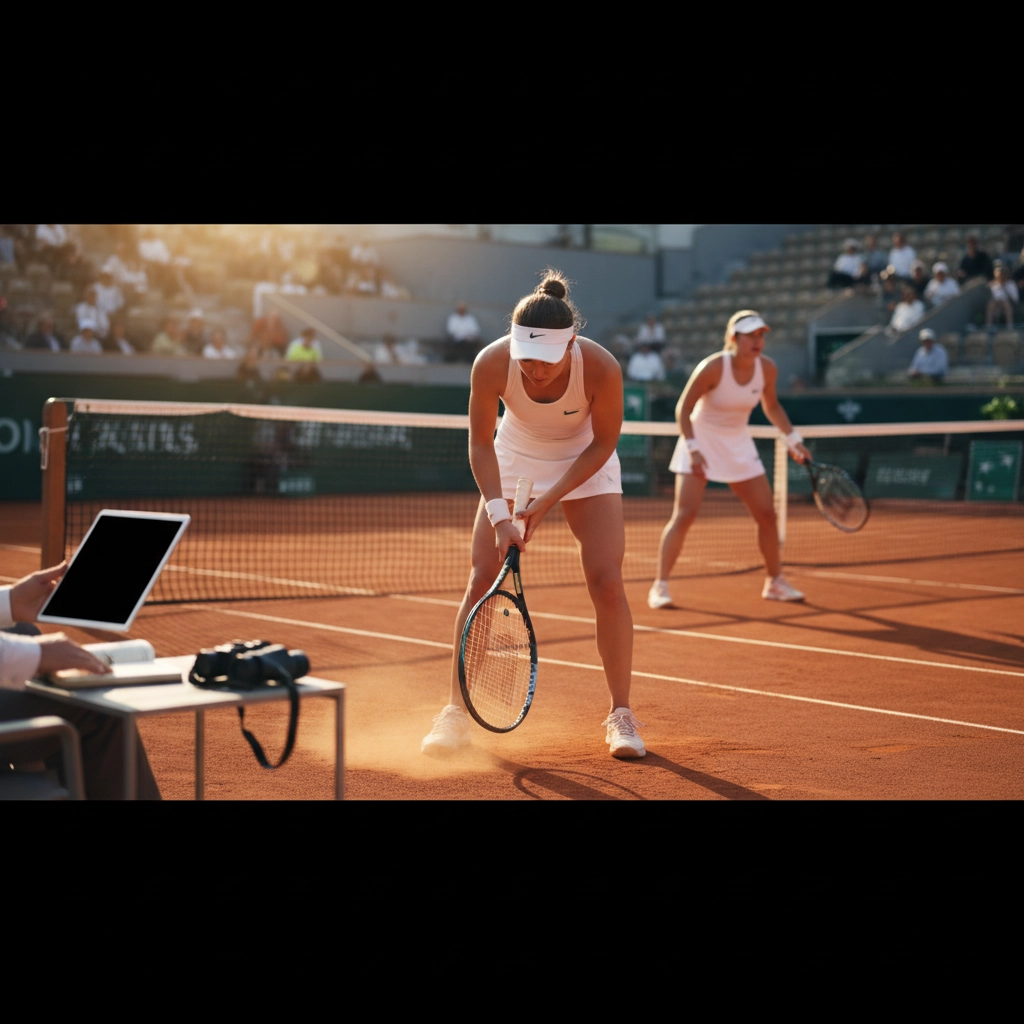
Why your mental game shapes how you analyze matches
You can record every point, but without the right mindset you’ll still miss the lessons that win matches. How you interpret mistakes, momentum swings, and tactical choices determines whether post-match analysis becomes a growth tool or a replay of frustration. When you approach match review emotionally—blaming, ruminating, or fixating on outcomes—you filter data through bias and memory gaps. When you approach it with a clear, process-focused mindset, you turn the same data into reliable patterns and actionable next steps.
Think of your mental game as the lens through which you view evidence. That lens affects what you notice (attention), what you remember (memory consolidation), and what you trust (confidence). By intentionally adjusting that lens before, during, and after matches, you create consistent, low-emotion conditions for better analysis. The following early-stage mindset shifts are small, practical, and aimed at getting you into a learning frame quickly.
Practical mindset shifts to make match analysis clearer
1. Move from “Did I win?” to “What did I control?”
Outcome-focused thinking keeps you stuck on scorelines and lucky breaks. Instead, direct your attention to controllables: serve percentage, first-return depth, chosen patterns (e.g., serve-and-volley attempts). When you ask “What did I control?” you extract repeatable behaviors regardless of the result. That produces specific practice items rather than vague criticism.
2. Replace judgment with curiosity
Judgment sounds like “I always double-fault” and usually ends with shame. Curiosity asks “Under what conditions did the double-faults happen?” and opens paths to solutions. Use open questions during review: What was the situation? How did my opponent respond? What was my thought or pre-serve routine? Curiosity reduces emotional reactivity and improves accuracy in observations.
3. Set short, focused observation goals
- Pick one or two focal points before watching footage (e.g., return position on second serves, net approaches).
- Time-box your review to avoid drifting into blanket criticism—15–30 minutes per focal point is effective.
- Record just three concrete takeaways per focal point to keep follow-up practice manageable.
4. Slow down internal narration and record facts first
Your inner voice likes to create a story instantly. Interrupt it by noting objective facts before adding interpretation: score, shot type, player positions, outcome. Facts anchor your analysis; interpretations come second and should be tagged as hypotheses to test in practice.
5. Create a consistent, low-stress review ritual
- Choose a quiet time post-match (not immediately in the heat of emotion).
- Use a simple template: context (opponent, conditions), observations (facts), hypotheses (why), and actions (practice tasks).
- Treat the ritual like a performance habit—small and repeatable—and enforce it even after losses.
These mindset hacks reduce noise and sharpen what you actually learn from each match. Next, you’ll get practical tools and a step-by-step review process—including a video-review checklist and journaling prompts—to turn insights into measurable improvement.

A simple, step-by-step match-review process you can repeat
Start with a clear sequence and timing so review becomes a habit, not a free-for-all. Aim for a 45–60 minute session split into three focused passes.
– Setup (5 minutes)
– Open your template: context (date, opponent level, court, conditions), scoreline snapshot, and one or two focal questions (e.g., “How did I manage second-serve returns?”).
– Decide your emotional baseline—if you’re still heated, wait. A 24–48 hour cool-off often produces clearer observations.
– Pass One — Facts Only (15 minutes)
– Watch the match at normal speed. Note objective data: serve location, shot type, outcome, rally length, and player positions.
– Use brief shorthand: S1 (first serve in), DF (double-fault), A (approach), N (net). Keep it to facts—no “good” or “bad.”
– Pass Two — Patterns and Context (15–20 minutes)
– Re-watch selected sequences flagged during Pass One. Look for repetitions: opponent’s favorite return, your predictable serve placement under pressure, momentum shifts after certain errors.
– Tag contextual triggers: score (e.g., 15-40), wind, court surface, or fatigue. Turn facts into hypotheses: “When leading 40-30, I crowd the baseline and hit shorter cross-courts, inviting the opponent’s forehand.”
– Pass Three — Synthesis and Action (10–20 minutes)
– Limit yourself to three clear takeaways. For each takeaway write: observation (fact), hypothesis (why), and a single practice drill to test it.
– Example: Observation — 60% second serves short; Hypothesis — rushed toss on break points; Drill — 30 reps second-serve routine under simulated break-point pressure with video feedback.
Keep timing strict. The constraint forces clarity: fewer, better-targeted actions beat an exhaustive but vague to-do list.
Video-review checklist and quick notation system
A compact checklist keeps your eye on the right variables and makes later comparison easier.
– Before playback
– Mark timestamps for key moments (break points, long rallies, net approaches).
– Note camera angle—baseline and behind-the-serve are most informative.
– While watching
– Scan for these measurable items: first-serve percentage, second-serve points won, return depth, approach success rate, forced vs. unforced error split, winner types, and break-point conversion.
– Use a simple code: F = forced, U = unforced, R = return, S1/S2 = serve type, N = net. Color-code clips if your app allows: red for tactical leaks, green for reliable plays.
– Technical checks
– Slow-motion a handful of serves and footwork sequences to spot setup and balance breakdowns.
– Capture still frames of stance/ball toss for comparison across sessions.
– Clip and tag for practice
– Create three short clips per takeaway: one illustrating the problem, one showing a successful alternative (even from practice), and one drill prompt.
– Label clips with the drill name and expected success metric (e.g., “Return depth drill — 70% past baseline in 20 reps”).
Many phone apps let you mark and export clips easily; even a simple folder with timestamped notes works.

Journaling prompts and converting insights into measurable drills
Close the review loop by turning observations into testable, time-bound experiments.
– Journal prompts (answer succinctly)
– What one controllable habit most influenced the match?
– When was I playing my best tennis during the match—what was different?
– Which belief about myself did this match support or contradict?
– What is one hypothesis I can test in the next week?
– Design a measurable drill
– Specify the skill, reps/time, and success criteria. Example: “Second-serve routine — 40 serves in 20 minutes; success if first-serve % ≥ 65 and double-faults ≤ 2.”
– Add context: simulate pressure (countdown, opponent return patterns) and log outcomes.
– Schedule quick re-checks
– Revisit the same metrics after two practice sessions and again after the next match. Track changes numerically, not just feel-based.
Treat each takeaway as an experiment: test the hypothesis, collect data, then accept, refine, or reject it. That disciplined loop—observe, hypothesize, practice, measure—turns chaotic post-match replay into a reliable improvement engine.
Putting the mindset into practice
Make this work by treating one insight as an experiment: schedule the review, pick a single metric to change, run the drill, and measure. Don’t wait for perfection—consistency beats intensity. Share your findings with a coach or practice partner and pick one small accountability step (a weekly check-in, a short video clip, or a logged metric). For more guided mental-game resources, see USTA mental game resources.
Frequently Asked Questions
How soon after a match should I do a review?
Wait until your emotions have settled—typically 24–48 hours for most players. Shorter reviews can capture immediate factual details, but deeper pattern recognition and productive hypotheses come from a calmer mindset.
What if I don’t have video of the match?
Use objective note-taking during play (short codes like S1, DF, N) and rely on memory only for concrete facts: score, rally length, and clear turning points. Supplement with a post-match verbal recap recorded on your phone to review later and to reduce memory bias.
How do I stop match review from harming my confidence?
Limit review time, focus on controllables, and always end with at least one positive, actionable drill you can practice immediately. Treat observations as experiments—data to test—not final judgments about your ability.