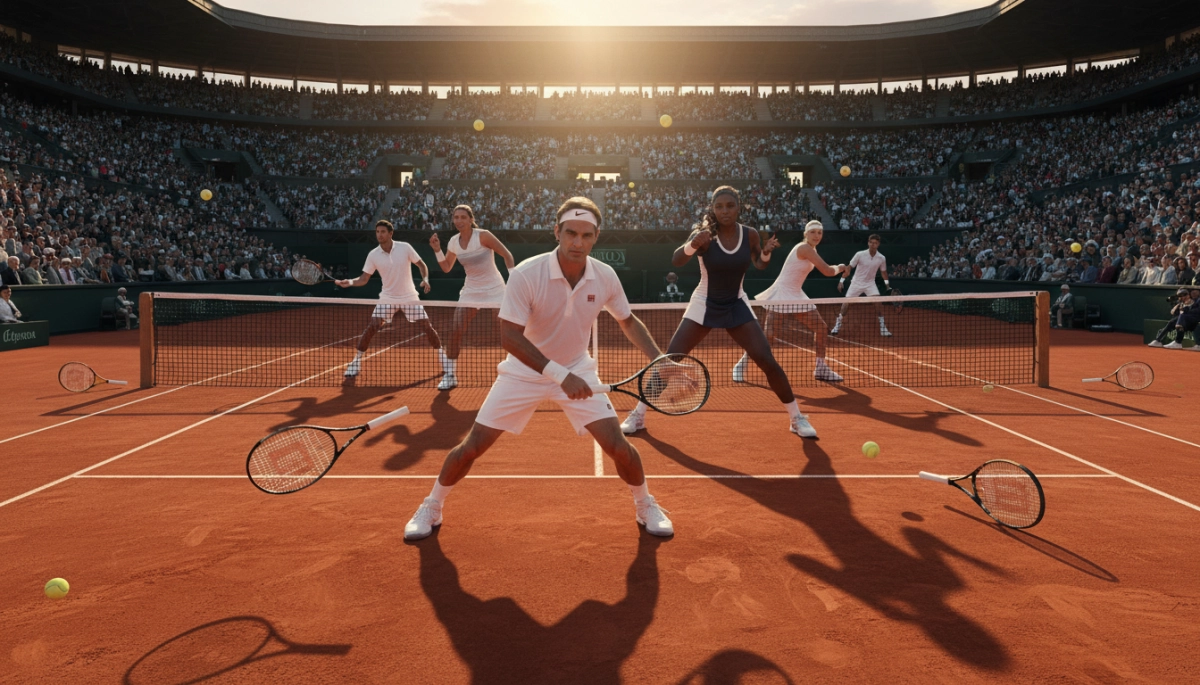
How you should think about “greatest” in tennis
When you ask who the greatest tennis players of all time are, you’re confronting more than a simple tally of trophies. Tennis is a sport that has evolved through surfaces, equipment, professionalism, and global depth. To compare players across decades you need a framework that balances objective achievements with contextual understanding.
This guide will give you that framework and then apply it to a ranked list and detailed profiles. You’ll learn which statistics matter most, how era-specific factors change the weight of accomplishments, and why some legendary names remain debated despite impressive resumes.
Metrics that matter when you judge careers
Not all records are created equal. When you evaluate players, weigh a mix of quantitative and qualitative measures so your assessment reflects both dominance and adaptability.
- Majors and finals reached: Grand Slam titles are the clearest milestones because they represent peak events across surfaces and pressure situations.
- Weeks at No. 1 and year-end rankings: Consistency across seasons matters—dominance over time often separates a single great season from a generational player.
- Head-to-head matchups: How a player fared against contemporaries helps you understand the competitive landscape they faced.
- Surface versatility: Winning on grass, clay, and hard courts shows adaptability—crucial when equipment and court speeds shift the game.
- Longevity and peak span: A player who sustains elite performance across many years should be valued higher than someone with a shorter peak, even if peak achievements are similar.
- Innovation and influence: Some players changed technique, training, or the business of tennis—factors that aren’t captured by stats but shape the sport’s history.
Why eras and context change how you rank champions
You can’t list the all-time greats without addressing the key eras: the amateur/pre-Open years, the Open Era beginning in 1968, and the modern baseline-dominated period from the late 1990s onward. Each era presents different challenges that affect how you should interpret achievements.
For example, the pre-Open era restricted entry to some events and separated professionals from amateurs, so comparisons with Open Era totals require nuance. Likewise, advances in racquet technology, fitness, and global competition in the 21st century have expanded the depth of talent, so accumulating titles today often means navigating a denser field.
Early pioneers whose legacies still matter
Before ranking contemporary icons, you should recognize the players who built the foundations: names like Bill Tilden, Suzanne Lenglen, Rod Laver and Margaret Court redefined excellence in their times. You’ll examine their major counts, innovations, and how their accomplishments translate into modern conversation.
With this framework and historical context established, you’re ready to move into the ranked list and in-depth profiles that compare statistics, head-to-heads, and the intangible qualities that crown a tennis legend.
Our top 10 — a concise ranking and why each spot matters
Below is the list we use for the deeper profiles that follow. This ranking balances major titles, sustained weeks at No. 1, surface adaptability, head-to-head context, and influence on the game. Each placement is a judgment call—expect debate—but this order reflects a synthesis of objective measures and era context.
- Novak Djokovic — supreme consistency, records for weeks at No. 1, unmatched return game and mental resilience across surfaces.
- Rafael Nadal — the unrivaled specialist on clay who translated that dominance into multiple Grand Slam titles across surfaces and an iconic fighting spirit.
- Roger Federer — revolutionary all-court artistry, grass-court mastery, and a longevity that made him tennis’s global ambassador.
- Serena Williams — a generational force whose power, athleticism and major haul rewrote modern women’s tennis standards.
- Steffi Graf — the only player to complete the calendar-year Golden Slam; exceptional versatility and speed across surfaces.
- Margaret Court — prolific major totals and early dominance that remain central to cross-era comparisons.
- Martina Navratilova — the ultimate serve-and-volley innovator with longevity and unparalleled success on grass and indoors.
- Chris Evert — clay-court consistency and a mental toughness that produced an astonishing winning percentage at majors.
- Pete Sampras — a dominant serve-and-volley champion who defined the 1990s and set benchmarks in majors and year-end crowns.
- Rod Laver — two calendar Grand Slams across eras; an essential figure for historical perspective and pre/Open Era translation.
Spotlight profiles: what really separates the top five
These mini-profiles explain why the top five occupy their positions. Focus on the mix of peak brilliance, cross-surface success, head-to-head context, and broader influence.
Novak Djokovic — Consistency is Djokovic’s defining trait. He has regularly outperformed rivals across hard courts, grass and clay, and his ability to play under pressure—particularly in fifth sets and tiebreaks—has produced high conversion rates in the biggest matches. Djokovic’s adaptability in return positioning and defensive offense changed how players construct points against big servers. He also set records for weeks at No. 1, which underlines season-to-season dominance instead of isolated peaks.
Rafael Nadal — “King of Clay” is more than a nickname; it reflects an era-making stranglehold on Roland Garros and match-winning strategies tailored to heavy topspin and court grind. Nadal’s physicality and strategic point construction allowed him to translate clay dominance into a career that includes multiple majors on other surfaces. His head-to-head battles, especially against the other modern greats, accentuate his competitive edge and tactical evolution.
Roger Federer — Federer combined technical elegance with ruthless efficiency. His one-handed backhand, fluid movement and shot-making made him a stylistic icon and a consistent title contender across surfaces, notably grass. Beyond numbers, Federer’s influence on tennis marketing, event presentation and global popularity expanded the sport’s reach, which factors into his placement among the greats.
Serena Williams — Redefined power and athleticism in the women’s game. Serena’s serve, baseline aggression and clutch mentality produced a major haul sustained over nearly two decades. She dominated across surfaces and eras, often beating top-ranked opponents in major finals, and her cultural impact extended far beyond the court.
Steffi Graf — Speed, athleticism and a penetrating forehand anchored Graf’s dominance. Her 1988 Golden Slam remains unique: winning all four majors and Olympic gold in a single year. Graf’s ability to transition from baseline offense to aggressive finishing shots made her a complete champion on every surface.
Looking ahead: how greatness keeps evolving
Rankings and debates about the greatest players aren’t endpoints — they’re a way to focus conversation on what we value in sport. As equipment, training and global participation continue to change, new talents will reshape the criteria for greatness. Celebrate the narratives as much as the numbers: rivalries, playing styles and moments of resilience are what make tennis history alive, not just lists on a page.
If you follow the current season closely you’ll see how quickly perceptions shift; for up-to-the-minute stats and official rankings, check the ATP Tour.
Key Takeaways
- Greatness in tennis blends measurable achievements (majors, weeks at No. 1) with context like era, surface versatility and head-to-head competition.
- Comparing players across eras requires nuance—rule changes, technology and the depth of the field all shape accomplishments.
- Rankings invite discussion rather than final answers; celebrating different styles and stories keeps the sport engaging as it evolves.