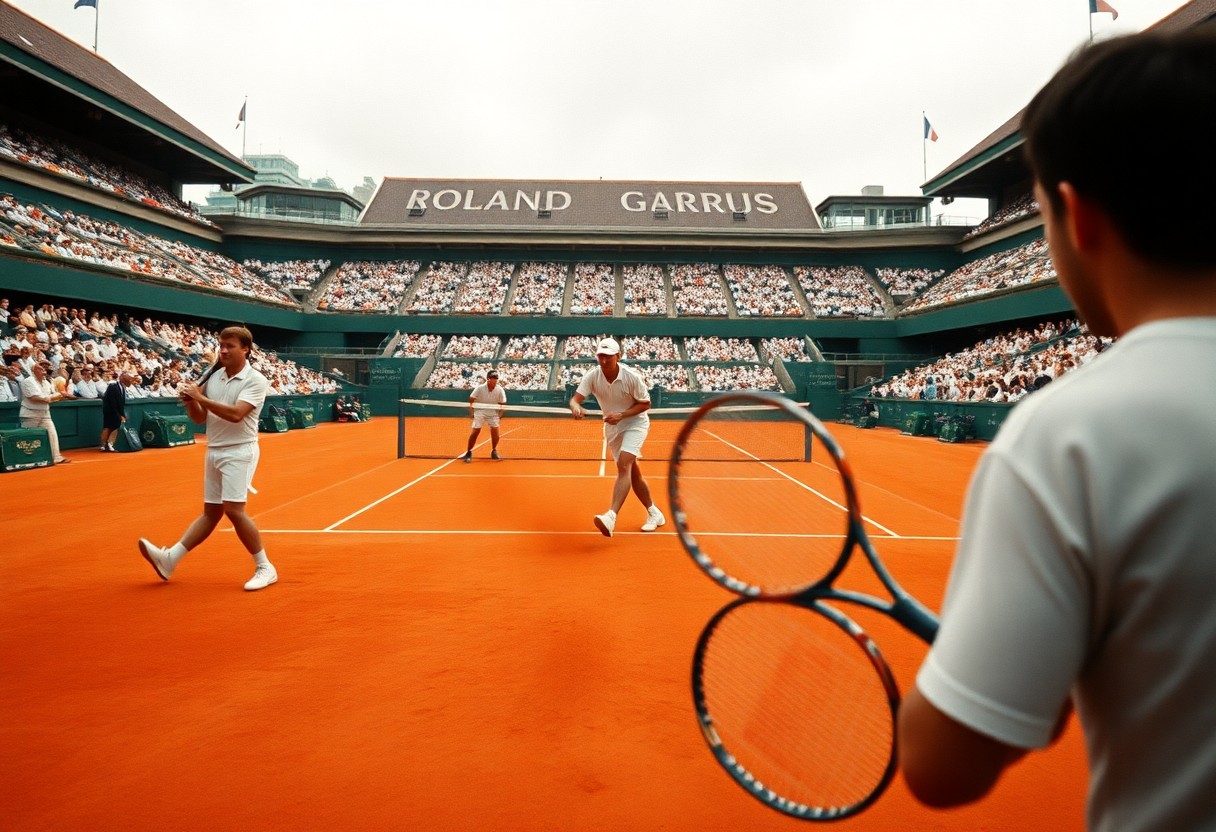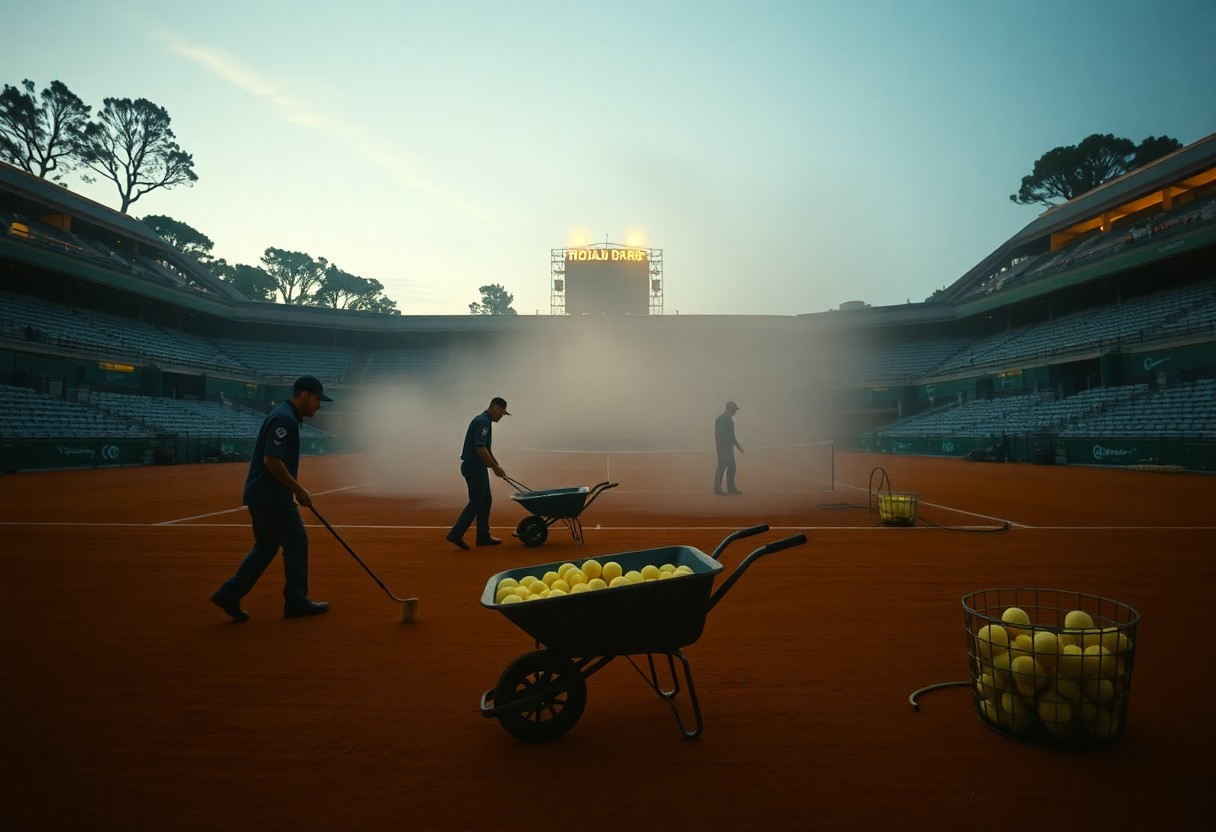
RolandGarros relies on an army of unsung professionals – from ground staff executing meticulous court maintenance to ball kids, umpires, and volunteers – whose coordinated work ensures matches run smoothly; teams contend with heavy machinery and sudden weather hazards while medics stand ready, and the tournament thrives because of their relentless dedication and teamwork.
Types of Unsung Heroes
Court crews, engineers, coordinators, security teams and volunteers each handle distinct tasks that keep Roland Garros running: from clay regrading and tarp deployment to Hawk-Eye calibration and shuttle logistics. Field examples include overnight court rebuilds after storms and rapid failover of broadcast encoders during outages. Daily operations rely on overlapping shifts and precise checklists to serve thousands of spectators and players. Recognizing their work in media and accreditation helps sustain expertise and morale.
- Ground Staff
- Technical Support
- Event Coordination
- Security & Safety
- Volunteers
| Ground Staff | Clay maintenance, watering, rolling, line marking, tarp deployment and drainage repairs |
| Technical Support | Scoreboard and replay systems, network infrastructure, broadcast encoders, camera calibration |
| Event Coordination | Match scheduling, player transport, accreditation, sponsor liaison and volunteer rostering |
| Security & Safety | Crowd control, access checks, emergency response planning and medical coordination |
| Volunteers | Guest services, ball kids, player logisitics support and front-of-house assistance |
Ground Staff
Teams working on the red clay perform rapid, precise tasks: regrading the surface, watering to maintain traction, rolling to compact the base and re-chalking lines before every match. They often repair divots and clear drains between sessions, using heavy rollers and mechanized sweepers under time pressure to reopen courts within 30-60 minutes after play, ensuring consistent bounce and player safety.
Technical Support
Engineers maintain live scoring, replay systems and broadcast feeds across dozens of courts, troubleshooting Hawk-Eye and camera synchronisation while guaranteeing uplink stability for multiple 4K streams. Rapid diagnostics and scripted rollback procedures keep play visible to global audiences, with teams staged in a network operations room to resolve latency or encoder failures in real time.
During high-impact incidents such as sudden power loss or a failed encoder, technicians execute pretested contingency plans: switch to redundant power, reroute traffic through backup ISPs and initiate alternate encoding profiles. They calibrate dozens of court cameras pre-tournament, monitor packet loss targets under 0.5%, and document incident timelines for post-event audits to prevent repeat outages.
Event Coordination
Coordinators map match schedules across multiple courts, manage player arrivals and shuttle rotations, and allocate hospitality zones for sponsors, relying on live dashboards to adjust for delays. They liaise with tournament directors and broadcasters to reshuffle courts when matches run long, while balancing media windows and player rest requirements to preserve the tournament timetable.
In fast-moving scenarios-late finishes or weather interruptions-planners reroute transport, reassign ball crews and notify broadcasters within minutes, using contingency matrices that specify alternate court assignments and staffing overlays. They also coordinate with local authorities for crowd diversions and ensure accreditation updates propagate to access control systems without operational gaps.
Tips for Managing a Major Tournament
Tight coordination across logistics, staffing, security, and scheduling keeps operations fluid during the two-week window; stagger match windows and reserve hot teams for court turnarounds. Run full-scale dress rehearsals to validate vendor SLAs and test redundant networks under load with thousands of personnel involved. Deploy clear KPIs for throughput and incident response, and maintain a volunteer pool to handle surges. Recognizing the scale, build layered contingency plans and daily briefings.
- Logistics – staggered match windows, vendor SLAs, backup power
- Staffing – shifts, floaters, and trained backups
- Security – perimeter control, rapid escalation, and encrypted comms
- Scheduling – court turnaround metrics and buffer slots
- Volunteers – training cycles and role-specific checklists
- Emergency response – drills, timelines, and medical staging
Planning and Preparation
Start planning 12-18 months out: lock in vendors, map access and egress routes, and run full-site simulations 90 days before play. Set measurable KPIs – turnstiles per hour, concession throughput, and average court changeover time – and track them on a live dashboard updated every 15 minutes. Train staff in emergency response drills to reduce reaction time below 10 minutes and maintain standby crews for weather or schedule overruns.
Communication Strategies
Adopt a three-tier model: command (senior ops), field (court managers), and public-facing (press/social), with encrypted radios plus a fallback SMS cluster to reach thousands in under five minutes. Use fixed briefing windows every four hours and require acknowledgement for priority security directives; log incidents with timestamps to preserve an audit trail for post-event reviews.
Prepare 10-15 pre-approved message templates for evacuations, medical incidents, and schedule changes, and translate each into French, English, and Spanish to cover most attendees. Enforce two-way read receipts for field teams and require confirmations for any security or evacuation order. Feed GPS-tagged reports into a centralized incident board so command can reallocate resources within 7-12 minutes based on live data.
Step-by-Step: Setting Up Roland Garros
| Venue Preparation |
Teams focus on the three show courts-Philippe-Chatrier, Suzanne-Lenglen and Simonne-Mathieu-performing daily clay grading, line repainting and moisture management. Grounds crews of 30-40 use rollers, drag brushes and moisture meters to keep the surface consistent; drainage channels are inspected and repaired to prevent play delays after rain, while stands and player facilities are staged to tournament specifications. |
| Equipment Installation |
Technicians install scoreboard systems, broadcast cameras, Hawkeye line-calling units and the fiber backbone, coordinating crane lifts for camera gantries and temporary grandstands. Teams run structured cable routes and position Hawkeye systems on main show courts, with safety zones around heavy lifts strictly enforced. |
| Final Checks |
Organizers execute full dress rehearsals 24-48 hours before play: lighting and replay latency tests, ball-person drills and emergency route verifications are performed. Any discrepancies trigger targeted fixes, and sign-off only occurs after safety and broadcast systems meet tolerance thresholds. |
Venue Preparation
Teams start by stabilizing clay depth and moisture across match courts, using roller passes and laser-guided grading machines to maintain evenness within millimeters; line crews repaint with UV-resistant paint and grounds supervisors schedule 2-3 daily waterings to prevent dust and surface slippage, while maintenance logs track each court’s condition for match assignments.
Equipment Installation
Technicians mount camera platforms and run the fiber backbone before seating is completed, installing LED scoreboards, commentator booths and Hawkeye units on primary courts; heavy lifts are coordinated with rigging teams and on-site engineers to ensure safe crane operations and uninterrupted broadcast feeds.
On complex installs, crews of 80-150 specialists work in phased shifts: fiber splicing and power distribution are completed first, then camera calibration and Hawkeye alignment-each calibration can take 3-6 hours per court to reach millimeter-level accuracy for line calls and sub-second replay latency tests.
Final Checks
Event staff run systematic sign-offs covering lighting, scoreboard sync, audio checks and emergency systems, plus simulated match flows with ball kids and officials; technicians verify replay latency and camera tracking, while safety officers confirm evacuation paths and barrier integrity before the first match.
The final verification follows a 60-point checklist: broadcast continuity, Hawkeye calibration, court slip tests, standby power validation and crowd-control rehearsals; any failed item is logged and cleared through a secondary test, ensuring all systems meet operational thresholds prior to opening day.
Factors Influencing Tournament Success
Operations at Roland Garros must synchronize court prep, player transport, security, and broadcast to handle the roughly 254 singles matches across two weeks; a single rain delay can cascade into evening sessions and staffing overtime. Grounds crews rework clay between matches, and ball kid shifts rotate every match to maintain rhythm. Knowing how each element affects scheduling and player safety helps organizers prioritize resources.
- weather
- court maintenance
- fan experience
- logistics
- security
Weather Considerations
Rain and humidity reshape daily operations: since Court Philippe-Chatrier received its retractable roof in 2020, many rain suspensions are avoidable, yet outer courts remain exposed and demand rapid clay restoration between matches. Grounds teams use harrows and rollers to restore lines, and damp clay produces a noticeably slower, higher-bouncing surface that forces tactical and scheduling adjustments.
Fan Experience
Fan enjoyment depends on fluid entry flows, clear signage, and reliable amenities: Court Philippe-Chatrier (~15,000 seats) requires precise ingress planning, while mobile ticketing and queue marshals reduce peak congestion. Concession throughput and accessible routes shape perceptions, and visible security and sanitation maintain both safety and atmosphere under heavy footfall.
Operational detail matters: staggered entry windows, dedicated family and accessible zones, and real-time crowd monitoring via CCTV and sensors prevent bottlenecks. Concession areas increasingly use contactless payments and pre-order kiosks to shorten lines, while on-site medical teams and trained stewards ensure rapid response to incidents and preserve the tournament’s positive reputation.
Pros and Cons of Behind-the-Scenes Roles
| Pros | Cons |
|---|---|
| Direct access to players and courts – volunteers (~1,500+) often get match viewing hours and accreditation perks. | Long shifts: typical match-day shifts run 8-12 hours, with overtime during delays. |
| Practical skill-building in logistics, turf care, and event tech used in future sports careers. | Physical demands such as moving equipment and clay maintenance cause repetitive strain. |
| Networking: interactions with coaches, vendors, and officials can lead to paid roles. | Unpredictable scheduling; rain or extended matches force last-minute changes. |
| Sense of contribution: being part of a Grand Slam’s daily operations is highly rewarding. | Low pay for many entry roles; some positions are voluntary or receive modest stipends. |
| Training offered on-site in safety, protocol, and court-specific techniques. | Exposure to weather: temperatures at Roland Garros can exceed 30°C, increasing heat risk. |
| Clear progression: seasonal staff often promoted to full-time event operations roles. | High-pressure moments (e.g., Centre Court fixes) require immediate problem-solving under scrutiny. |
| Variety of roles from hospitality to IT, allowing broad resume experience. | Language barriers and communication lapses can complicate fast-paced coordination. |
Advantages of Supporting Roles
Hands-on positions build measurable experience: grounds crews learn clay compaction and irrigation, hospitality teams handle 5,000+ guest flows daily, and tech staff manage live scoring systems used by broadcasters; combined, these roles provide tangible skills, industry contacts, and visible credits for future sports-event careers.
Challenges Faced by Unsung Heroes
Staff often face extended physical strain-shifts of 8-12 hours with heavy lifting, night repairs after rain delays, and exposure to heat or cold; operational pressure spikes during televised matches, where any error can cause reputational impact for the individual and the tournament.
When disruptions occur, teams regularly work extra hours-rain or late finishes can add 6-10 hours to a shift-while understaffing forces multitasking across roles; this leads to fatigue, higher injury risk, and the need for robust on-the-job safety protocols and rapid cross-training to maintain standards under stress.
The Impact of Unsung Heroes on the Tournament
Every match outcome traces back to a network of support: grounds crews, stringers, physios, ball kids and volunteers whose work sustains play. Grounds teams monitor clay moisture with meters and reprofile courts overnight to preserve a consistent bounce, while on-site stringing stations handle hundreds of rackets daily to match players’ tension preferences. Those behind the scenes directly affect player safety, schedule reliability and the smooth flow that the broadcast and crowd expect.
Enhancing Player Performance
Stringers, physiotherapists and court technicians collaborate to shave margins off fatigue and error. Stringing teams adjust tension by 1-2 lbs per player request; physios run targeted pre-match routines and cold-water recovery protocols; grounds crews tune clay compaction and watering so bounce variance stays within narrow tolerances. Together these roles reduce micro-injuries and produce the stable conditions elite players need to perform at peak levels.
Creating Memorable Experiences
Ushers, hospitality staff and digital teams turn attendance into memories for the hundreds of thousands across the fortnight. Volunteers man info points, hospitality suites serve thousands daily and social media crews push real-time clips across multiple platforms to reach global fans. Efficient crowd movement and clear signage keep lines short and moments-walk-up autograph sessions, fan zones, guided court tours-positive and accessible for diverse audiences.
In practice, that means coordinated logistics: stewards reroute queues, catering teams stage service across dozens of concession points, and accessibility officers manage dedicated routes for guests with reduced mobility. Digital operations time highlight drops to peak viewing windows while on-site teams handle thousands of queries each day, ensuring the fan engagement is both safe and seamless from entry to exit.
Final Words
Now, behind the glamour of Roland Garros, a coordinated network of groundskeepers, ballkids, linespeople, medical staff, broadcasters and logistics teams applies specialized skills, precise timing and relentless attention to detail to maintain the clay surface, player welfare and match integrity; understanding their roles reveals how every match depends on disciplined preparation and expert teamwork.
FAQ
Q: Who maintains the clay courts at Roland Garros and what does daily court preparation involve?
A: A specialized grounds team led by a head groundskeeper handles the courts. Their daily routine begins before dawn and includes watering to achieve the right moisture, rolling to compact the surface, brushing to remove loose clay, retopping and re-lining the boundaries, and repairing footprints or divots between matches. When rain intervenes they deploy tarpaulins, drying machines and squeegees and coordinate with the tournament referee to adjust schedules. Maintaining consistent playing characteristics on red clay demands constant measurement of firmness and evenness, plus close communication with match officials so courts are match-ready on time.
Q: What are the responsibilities of ball kids, player services, and on-site support staff?
A: Ball kids and court attendants are trained for precise positioning, rapid and discreet ball retrieval, and smooth changeovers to keep match flow efficient. Player services teams provide on-site stringing, racquet repairs, equipment storage and timely delivery, while team physios and medical staff operate treatment rooms, assess injuries, and manage emergency response when needed. Player liaisons handle scheduling, practice court allocation, transport logistics and accreditation assistance, ensuring athletes and their teams can focus on performance without logistical distractions.
Q: How do logistics, broadcast, security and IT teams coordinate to run a Grand Slam week successfully?
A: A central operations hub synchronizes court scheduling, practice allocations, transport for players and officials, and contingency plans for weather or delays. Broadcast and production crews set up OB trucks, camera positions and live uplinks well in advance and work with live scoring and Hawk-Eye engineers to deliver uninterrupted feeds. Security and access-control teams manage accreditation, perimeter security, crowd flows and emergency procedures, while IT and communications maintain ticketing systems, data feeds, Wi‑Fi, timing systems and redundancy power. Daily briefings and real-time communications ensure all departments adjust together when the schedule changes or incidents arise.