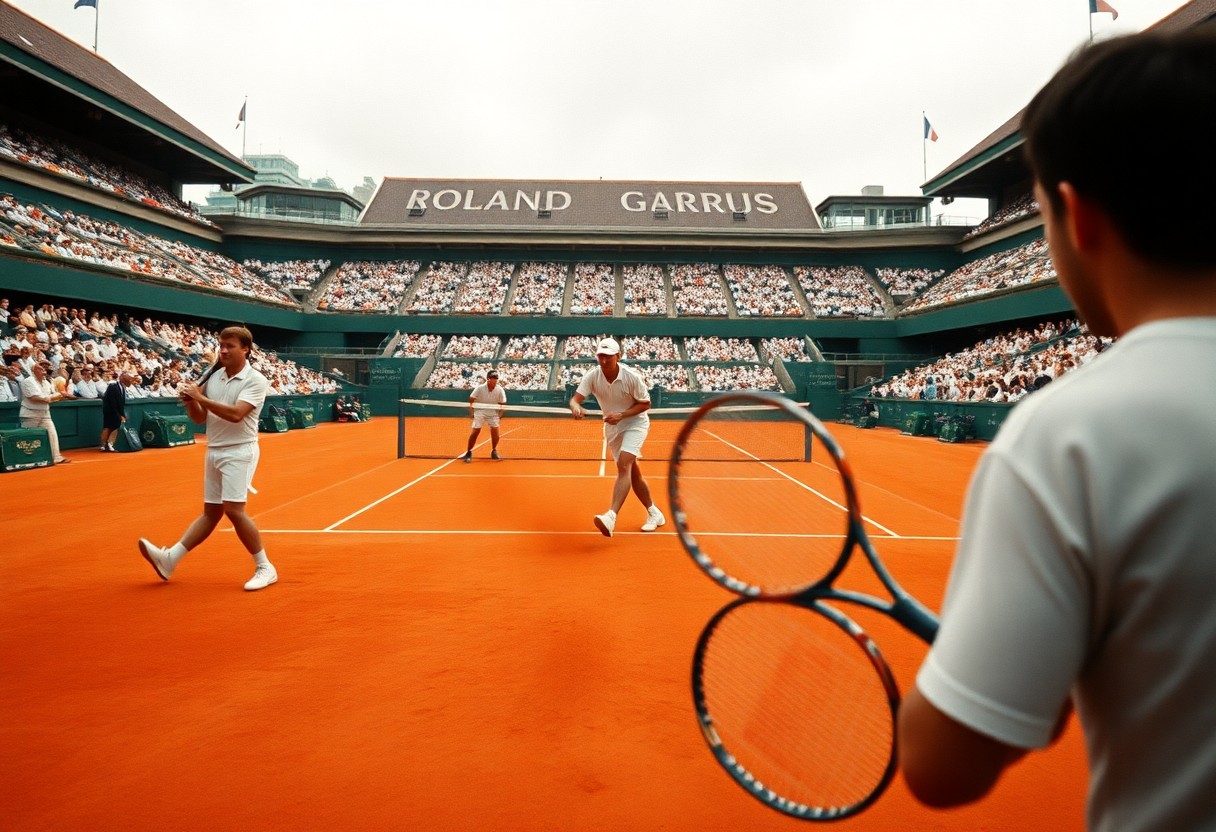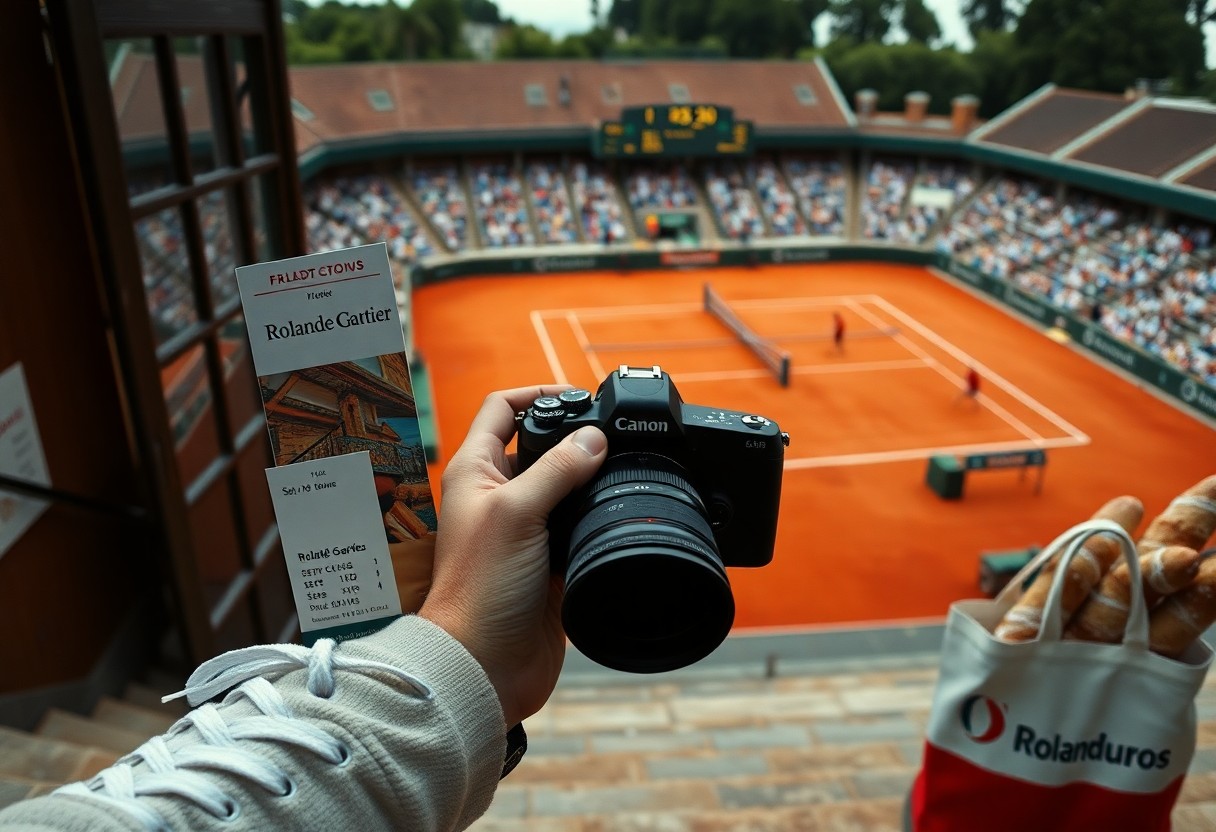
Most first-time visitors can maximize Roland Garros by booking tickets and entry times well in advance, studying the daily schedule, and prioritizing center court sessions; arrive early to beat long security lines and plan transit to avoid delays. Embrace the unique clay-court atmosphere, learn basic etiquette, and protect against heat – hydrate, wear sun protection, and secure valuables to stay safe. Follow player-access rules and use official apps for live updates to move like a pro and fully enjoy the tournament.
Types of Tickets
Options range from general admission lawn spots to reserved stands and high-end hospitality packages; weekdays often cost €25-€120, while weekend sessions and late rounds jump to €80-€450 for prime courts. Early rounds offer the best value; finals and Philippe-Chatrier matches can exceed €1,000 on resale. Limited availability and same-day returns are common, so plan booking windows and backups.
- General Admission – flexible, cheapest
- Grandstand – tiered seating, good sightlines
- Court-Level – closest to action, fewer seats
- Centre Court – premium, highest demand
- Hospitality – VIP lounges, catering, private entry
| Ticket Type | Typical Price / Note |
| General Admission | €25-€60, standing/bench, best for early rounds |
| Grandstand | €30-€120, elevated view, numbered seats |
| Court-Level | €50-€300, close to court, limited rows |
| Centre Court (Chatrier) | €120-€1,000+, prime matches, high demand |
| Hospitality / Boxes | €400-€10,000+, inclusive services, exclusive access |
Grandstand vs. Court-Level
Grandstand seats deliver consistent sightlines across most courts, typically priced €30-€120 with wider views and easier access to concessions; court-level offers intimate proximity, often within 5-10 rows of play, but can suffer from angled views and limited legroom. Seats near aisles improve exits, while centre-block court-level tickets command the highest resale premiums.
Premium Options
Premium choices include hospitality lounges, private boxes and VIP tickets that bundle match seats with catering, dedicated entrances and host services; packages range from €400 day passes to multi-seat boxes costing several thousand euros for later rounds. Corporates often book months ahead to secure best dates.
Smaller-scale packages (lounge access, pre-match dining) typically run €400-€1,200 per person, whereas full-day boxes for big sessions can exceed €5,000; benefits usually include expedited security, exclusive restrooms, and curated menus. Event planners cite ROI from client hospitality and networking, but sells out quickly for semifinals and finals. Perceiving value depends on whether you prioritize close-up seats, privacy, or full-service perks.
Tips for First-Time Visitors
Plan your day around court schedules, public transport and security checks; gates often open 90-120 minutes before play and lines for Philippe-Chatrier can exceed 30 minutes during big sessions. Use the RER/metro to Porte d’Auteuil or event shuttles, carry a small bag within size limits, and expect matches of 2-5 hours with limited shade and tight walkways. The top priorities are timing, hydration and bag compliance.
- Arriving Early
- Dress Comfortably
- Tickets & Access
- Court Scheduling
- Food & Water
- Weather Preparedness
- Bag Policy
Arriving Early
Arrive at least 60-90 minutes before your session to pass security, find seating and catch warm-ups; during show sessions gates can open 90-120 minutes prior and queues at entry and concession stands often lengthen near noon and evening. Expect bag checks and digital ticket scans, which can add 10-25 minutes per gate, and use the lesser-known Porte Molitor entrance to save time when available.
Dress Comfortably
Wear supportive, closed-toe shoes with good grip for walking between courts and climbing steps; Paris in May-June typically ranges from 12-25°C, so layer breathable fabrics and pack a lightweight rain jacket or poncho. Bring a hat, sunglasses and SPF 30+ sunscreen to handle long sun exposure and clay dust, and avoid pristine white garments that stain easily.
Choose footwear like cushioned trainers and fabrics such as polyester blends or merino that wick sweat and dry quickly; avoid high heels and flat-soled dress shoes on gravel ramps and steep steps. Carry a small foldable seat pad for hard stands, a compact umbrella for sudden showers, and test pockets for easy phone access-these details reduce fatigue and keep belongings secure during long matches.

Step-by-Step Guide to the Venue
Start at the main esplanade, where gates typically open around 09:00 for day sessions; pass through security checks that enforce a strict small-bag rule, then use signage to reach your sector. Allow extra time on opening weekends when queues can extend; purchase food vouchers or use contactless payment to speed up breaks. Plan to spend at least half a day to see multiple courts.
Quick Steps
| Step | Action |
|---|---|
| Arrival | Enter via Porte d’Auteuil or eastern esplanade, show ticket, follow stewards to seating sectors. |
| Security | Undergo bag check; no large backpacks, have ID ready and digital tickets accessible. |
| Finding Courts | Use the tournament map apps or physical boards; head to Philippe-Chatrier for headline matches. |
| Between Matches | Walk the central promenade to catch secondary courts; transfer times are 5-15 minutes on foot. |
| Exits & Transport | Leave early after big matches to avoid congestion; ticketed re-entry rules apply. |
Layout Overview
The grounds center on three show courts-Philippe‑Chatrier (~15,000), Suzanne‑Lenglen (~10,000), and Simonne‑Mathieu (~5,000)-surrounded by about 20 clay courts and a central promenade with food stalls, merchandise shops and directional signage. Spectator flow favors clockwise movement around the esplanade; busy pathways cluster between Chatrier and Lenglen during session changeovers. The tournament runs for roughly two weeks, so plan circulation accordingly.
Important Facilities
Medical posts, first‑aid stations and accessible seating are positioned near the three main courts; ATMs, baby‑care rooms and left‑luggage points sit along the central promenade, while multiple food zones and restrooms cluster by sector. Keep track of nearest exits and medical center locations when choosing seats.
Specifically, first‑aid stations are located adjacent to Philippe‑Chatrier and Suzanne‑Lenglen with roaming medics during peak hours, and a larger medical center near the main entrance handles more serious incidents. Left‑luggage has limited capacity-use compact bags-and water refill points reduce lines at kiosks; some vendor queues accept only contactless payment, so carry a card.
Factors to Consider
Plan for variable spring weather, long queues, and walking between courts; pack sun protection, a light waterproof, and shoes for clay. Prioritize the right tickets-court-specific vs. ground pass-since access dictates what you can see, and factor in Paris transit strikes or metro delays. Expect security checks and limited food options on-site; download the official app for live updates. After balancing weather, schedules, and comfort, finalize your arrival and exit strategy.
- Weather (sun, rain, temperature)
- Match schedules (session times, order of play)
- Tickets (ground pass vs. court tickets)
- Transport (metro lines, walking time)
- Footwear & comfort (walking on clay)
- Security & bag rules
Weather Conditions
Roland-Garros runs in late May-early June, with typical highs around 18-24°C and cool mornings near 10-12°C; sudden showers are common and can make the clay heavy and slippery, slowing play. Pack a compact waterproof, breathable layers, sunscreen, and shoes with good grip; umbrellas are fine in concourses but often prohibited once inside courts, so plan rain protection accordingly.
Match Schedules
Sessions commonly begin around 11:00 for day play, with later high-profile matches on Philippe-Chatrier and Suzanne-Lenglen; singles averages 2-3 hours while men’s best-of-five matches can exceed 5 hours. Purchase tickets keyed to session type, check the official app for start times, and allow extra time for security and walkways.
Order of play is usually published the evening before (often around 21:00 local time) and updated the next morning; expect rescheduling during rain, so sign up for push alerts and arrive at least 30-45 minutes early for center-court matches to avoid missing player introductions or late shifts in the schedule.
Pros and Cons of Attending
| Pros | Cons |
|---|---|
| Electric, up-close atmosphere during the two-week Grand Slam (late May-early June). | Massive crowds: security and entry queues frequently take 30-90 minutes. |
| Centre Court Philippe-Chatrier (~15,000 seats) with a retractable roof for headline matches. | High ticket demand: big-session resale often runs 2-4× face value. |
| Unique clay-court play: slower surface, higher bounces, longer rallies and tactical shifts. | Many outer courts lack full coverage, so weather can delay schedules and force cancellations. |
| Practice courts and warm-ups allow glimpses of top players before matches. | Strict security and player zones limit autograph opportunities and movement between courts. |
| Historic venue and fan zones with live screens, exhibitions, and themed food stalls. | Food and merchandise are pricey; expect long concession lines (often 15-45 minutes). |
| Great photo moments and ceremonial traditions that TV rarely captures fully. | Photography restrictions during play and announcements can interrupt ideal shots. |
| Good public-transport access (Métro line 10 to Porte d’Auteuil, buses) for most attendees. | Transport hubs get congested; post-session exits can take extra 30-60 minutes. |
Advantages of Being There
Attending means feeling the energy of a two-week Grand Slam in late May-early June, watching matches live on Centre Court Philippe-Chatrier (~15,000 seats), spotting players on adjacent practice courts, and observing clay-specific tactics-longer rallies and varied bounce that change match dynamics; the close sightlines and fan rituals around semi-finals and finals create moments TV coverage rarely reproduces.
Potential Drawbacks
Expect heavy foot traffic and queues-security lines commonly run 30-90 minutes-and steep secondary-market prices for headline sessions (often 2-4× face value); rain affects outer courts, concessions have long waits, and dense crowds raise the risk of pickpocketing in tight areas.
Security screenings often require bag checks and device removal, so allocate an extra hour on arrival; transport (Métro line 10 to Porte d’Auteuil) handles volume but stations become clogged after sessions. For health, clay dust and close quarters can aggravate allergies or respiratory issues-carry meds. To mitigate theft risk, use front pockets or a money belt and stagger food/bathroom breaks during mid-session play when lines are shorter.
Enhancing Your Experience
Stagger your match schedule using the official Roland‑Garros app for live draws, court assignments and interactive maps; arriving 30-45 minutes early lets you catch player warm‑ups and claim prime walkway viewing. For high‑energy evening sessions on Court Philippe‑Chatrier (≈15,000 seats) plan extra travel time. Pack a small power bank, sun protection and compact binoculars. Arriving early and using the app will multiply your access and reduce queues.
Food and Beverage Options
Vendors serve everything from croissants and crepes to salads and plated mains, with typical prices ranging €3-€6 for coffee, €6-€12 for sandwiches and €12-€25 for hot meals. Peak concession lines hit between 12:00-14:00, so schedule lunches outside that window or use the official app’s vendor map. Most stands accept contactless cards; cashless payments and avoiding lunch rushes save time and frustration.
Engaging with Other Fans
Spectator etiquette makes a big difference: maintain complete silence during points and applaud between them to respect players and the crowd. French support creates lively waves for home players, and Court Philippe‑Chatrier’s capacity (~15,000) can amplify every cheer. Use silence during points and strategic applause to join the atmosphere without disrupting play.
Connect before and during the tournament via the official Roland‑Garros app and the hashtag #RolandGarros for pop‑up meetups, ticket swaps and timing updates. Arrive early to strike up conversations in the stands-fans often exchange seat‑side tips and line watches-and follow players’ exit routes after matches for autograph chances near mixed‑zone areas. Using the app and hashtags increases your odds of finding like‑minded fans and spontaneous meetups.
Final Words
Hence plan your visit with advance tickets and a flexible schedule, prioritize Philippe-Chatrier matches, arrive early to watch warm-ups, use public transit to avoid congestion, wear comfortable shoes and sun protection for clay courts, learn basic spectator etiquette and court layouts, and take time for the Musée de Roland-Garros and Parisian food to blend tennis insight with local culture.
FAQ
Q: What should I bring and how should I dress for a day at Roland Garros?
A: Pack a small crossbody or clear bag that meets the event’s security policy, your ticket (mobile or printed), an ID, and a fully charged phone with a power bank. Wear comfortable, closed-toe shoes with good grip for walking on clay paths and terraces; lightweight layers work best for changing temperatures. Bring sun protection (hat, sunglasses, high-SPF sunscreen), a compact rain jacket or disposable poncho for showers, and a small pair of binoculars for distant seats. Keep valuables minimal; bulky tripods, professional lenses, and large luggage are often restricted, so check the official list of prohibited items before you go.
Q: How should I plan my day to see the best matches and enjoy the grounds?
A: Arrive early to explore the outer courts, catch practice sessions, and stake out good viewing spots-early arrivals also face shorter security queues. Use the official order of play and the tournament app to prioritize matches; split your day between a show court session and time roaming the grounds to watch rising stars and practice courts. Buy tickets for the court you most want in advance (Philippe-Chatrier and Suzanne-Lenglen sell out fast) and consider a grounds pass on a secondary day to experience more variety. Allow extra time for weather delays and long breaks between sessions; plan meals around match schedules or reserve on-site dining if available.
Q: What should I know about getting to, entering, and moving around the venue like a pro?
A: Use public transit (metro or buses) and aim for nearby stations such as Porte d’Auteuil or Michel-Ange-Molitor, allowing extra time for crowds and security checks at gates. Follow signs to designated entry points and have your ticket and ID ready to speed entry. Once inside, check stadium maps to locate restrooms, water refill stations, and food stands; pick up a schedule for court times and be mindful of etiquette-silence during points and no flash photography. If leaving between sessions, re-entry rules vary by ticket type, so confirm before you exit and plan exits and rendezvous points in advance to avoid crowded bottlenecks.