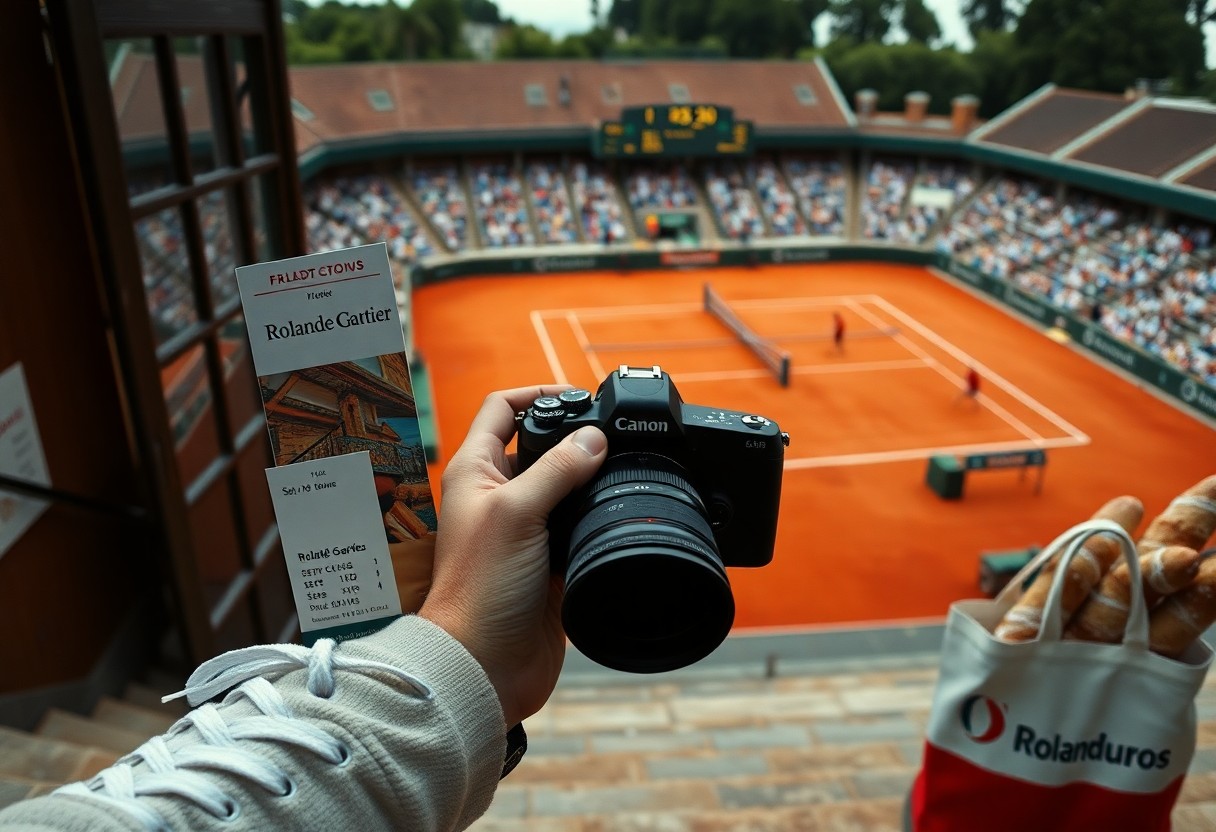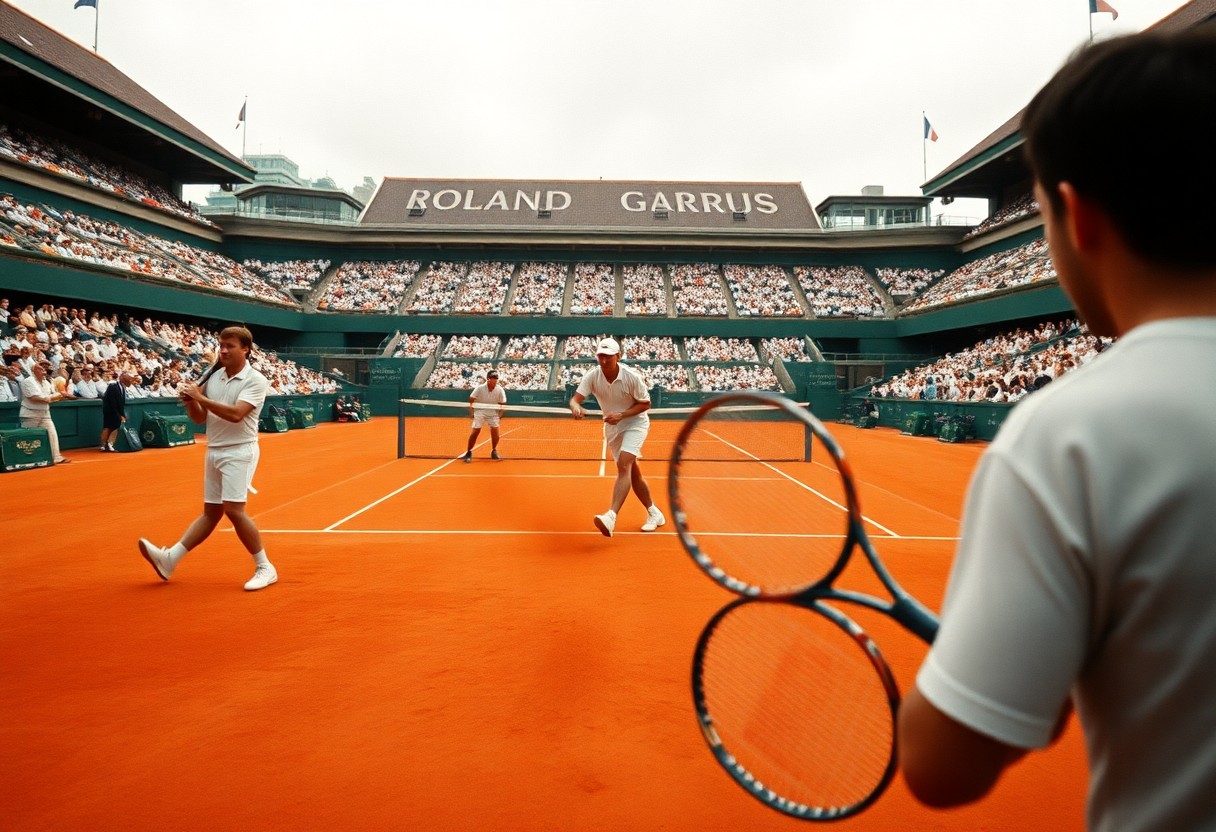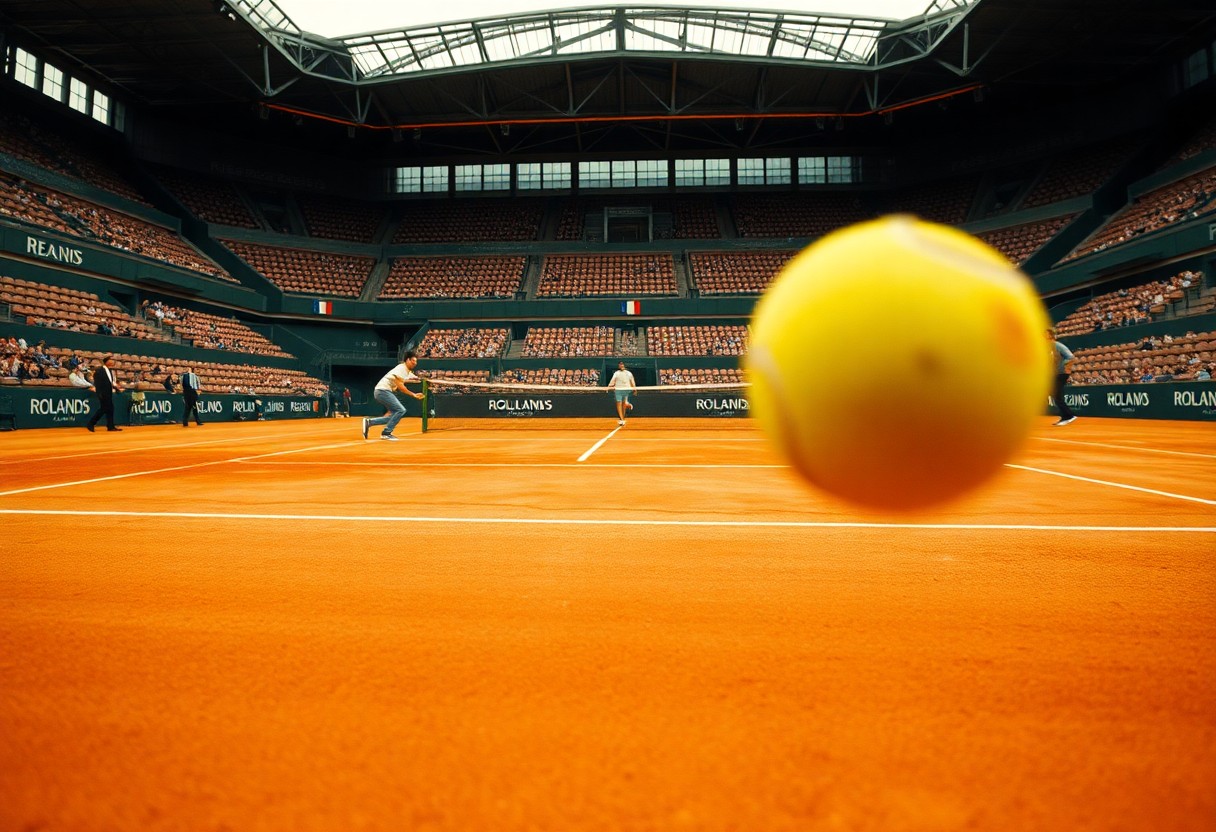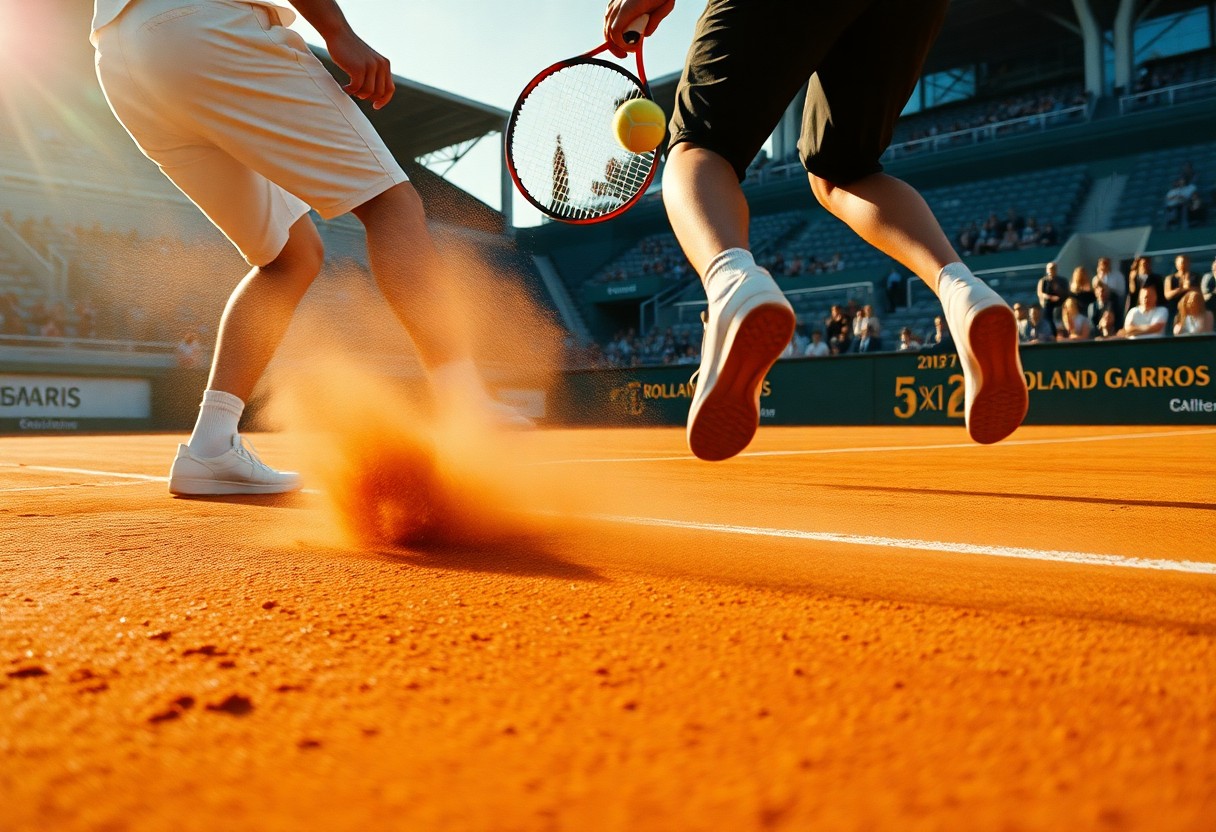
This guide breaks down how clay courts reshape tactics and physiology: slower surface and higher bounce favor heavy topspin and extended rallies, so players must master controlled sliding and endurance, exploit topspin-heavy shots while guarding against the danger of slipping and unpredictable bounces; mental patience, point construction and physical recovery define success at Roland Garros.
Types of Clay Surfaces
| Roland Garros red (crushed brick) | Very slow; high, irregular bounce; rewards heavy topspin and endurance – exemplified by Rafael Nadal’s 14 French Open titles. |
| European compacted red | Similar composition but can play slightly faster when compacted; produces smoother slides and more predictable footing for veteran clay specialists. |
| Har-Tru (green clay) | Made from crushed metabasalt; firmer and faster with a lower bounce, drains quickly and shortens rally length compared with red clay. |
| Synthetic/artificial clay | Layered manufactured surfaces that mimic clay texture but offer greater consistency, reduced maintenance and less extreme sliding behavior. |
| Condition: wet vs dry | Watered courts become tackier and slower; dried, dusty courts play faster and produce more variable, sometimes dangerous, loose bounces. |
- Red clay
- Green clay
- Sliding
- High bounce
- Spin-friendly
Characteristics of Red Clay
Roland Garros’s crushed brick creates the slowest high-level surface, where rallies routinely lengthen and heavy topspin is amplified; matches demand greater endurance and repeated lateral recovery, and maintenance (daily watering and rolling) keeps the surface tacky and selective-flat hitters suffer more and clay specialists, like Rafael Nadal, have leveraged this to dominate.
Characteristics of Green Clay
Har-Tru’s crushed metabasalt yields a firmer, faster court with a noticeably lower bounce and reduced slide, favoring aggressive, flatter strokes and big serving; it drains quickly after rain and often produces shorter points than European red.
Technically, green clay compacts into a tighter top layer so foot-slip is less extreme and the ball skids more-this changes timing by milliseconds, boosts the effectiveness of flat serves and slice backhands, and forces players who rely on heavy topspin to take the ball earlier or open the court with angled aggression.
After adapting footwork and shot preparation, players can convert surface-specific weaknesses into tactical advantages on either clay type.
Factors Influencing Player Performance on Clay
Success on clay comes from a blend of technical, physical and tactical adjustments tailored to the surface:
- Sliding and footwork
- Topspin and trajectory
- Low bounce and skid
- Endurance and point construction
- Serve placement and return depth
Perceiving how these elements interact-how heavy topspin alters bounce or how extended rallies force energy management-lets players craft match plans specific to Roland Garros.
Footwork and Movement
Clay demands controlled lateral slides of roughly 1-3 meters into shots, a lower center of gravity and an anticipatory split-step to recover; players practicing gated-slide drills and progressive resistance sprints improve court coverage for rallies that often last longer than on faster surfaces, while elite movers like Nadal use compact recovery steps to convert defensive slides into aggressive angles, emphasizing balance and weight transfer over pure speed.
Spin and Ball Trajectory
Topspin on clay produces a higher, more vertical rebound and greater margin for error, so heavy-rpm groundstrokes push opponents behind the baseline and create openings; conversely, low slices skid and force awkward trajectories, making combination use of topspin and slice a decisive tactical tool for controlling point geometry at Roland Garros.
Delving deeper, the physics matter: the Magnus effect from high forward spin shortens flight time and increases bounce height, which favors players who hit with upward racquet paths and open stances; at match level, deploying a forehand with extra spin not only displaces the opponent but also raises the percentage of short returns, enabling kick serves and heavy crosscourt forehands to open the court-while well-timed low slices remain a high-risk, high-reward counter that can neutralize big hitters by producing unpredictable skids and lower strike zones.
Tips for Players Transitioning to Clay
Shift practice toward 3-4 weekly on-court clay sessions that emphasize heavy topspin, extended rally tolerance, and controlled sliding; lower string tension by 2-4 lbs and add 10-20% more aerobic volume in the gym to handle longer exchanges. Prioritize drills that force lateral recovery and 6-10 minute point-play sets to simulate match patterns. Recognizing that adaptation is a volume-and-technical process requiring gradual load increases.
- sliding
- topspin
- endurance
- point construction
- string tension
- shoe traction
Training Regimens
Increase on-court clay time to 3-4 sessions weekly, with 2 dedicated sliding drills of 30-40 minutes and 3 sessions of 40-60 minute point-play focusing on heavy topspin. Add 2 gym sessions per week emphasizing eccentric leg work (single-leg Romanian deadlifts, lateral lunges) to handle lateral loading and reduce knee stress. Include interval conditioning like 6×3-minute high-intensity court sprints with 90s rest to mirror rally demands.
Equipment Selection
Favor a spin-oriented racket setup: polyester or hybrid strings, tension in the 48-55 lb range (about 2-4 lbs lower than hard-court setups) and an open or mid-open pattern for bite; use clay-specific shoes with full herringbone soles for consistent traction and change them every 40-60 hours of play to avoid grip loss.
Focus on outsole design and durability: full herringbone patterns expel clay and preserve lateral grip better than modified treads, while midsole stability reduces excessive pronation during slides. Select strings with a textured surface for added spin but monitor breakage-polyesters offer control and spin at the cost of comfort, so consider a softer multifilament mains or a hybrid to lower arm strain. Keep a second pair of shoes and a dedicated brush to clear clay between changeovers; excessive clay buildup increases slippage and risk of injury, so cleaning and replacement are performance measures, not luxuries.
Pros and Cons of Playing on Clay
Clay magnifies topspin and creates a higher, slower bounce, favoring extended baseline rallies and frequent service breaks. Players who control depth and court positioning gain an edge, while those relying on freewheeling pace see their weapons neutralized. At Roland Garros, endurance, slide technique and heavy spin often override raw power-Rafael Nadal’s 14 titles illustrate how specialized skills convert into sustained success on this surface.
Pros vs Cons of Clay
| Pros | Cons |
|---|---|
| Higher bounce rewards heavy topspin | Flat hitters see reduced effectiveness |
| Longer rallies favor patient grinders | Matches are typically longer, increasing fatigue |
| Slideability allows efficient recovery and angle creation | Sliding demands specific footwork and can cause slips |
| Returners gain advantage; aces are rarer | Big servers lose free points |
| Variation and spin open tactical options | Less reward for serve-and-volley tactics |
| Slower pace helps defenders turn defense into offense | Transitioning to faster courts is difficult |
| Surface softens impact on hard joints compared with concrete | Soft, wet clay becomes unpredictable and muddy |
| Develops physical and mental resilience | Higher risk of overuse injuries from prolonged play |
Advantages for Specific Player Styles
Baseline grinders and heavy-topspin players gain a measurable edge: sustained rallying turns opponents’ errors into opportunities, and deep, high-bouncing forehands push rivals off-court. Examples include Rafael Nadal and heavy-spin specialists who use depth to control points; players with superior lateral movement and aerobic capacity often convert more break points and outlast power-reliant opponents in three- to five-set encounters.
Disadvantages and Challenges
Serveers and serve-and-volley players suffer because clay reduces free points from aces and quick holds; flat hitters struggle to penetrate consistent defenses. Additionally, extended rallies and longer matches elevate cumulative load, so fatigue and overuse injuries become significant tactical and medical concerns at tournaments like Roland Garros.
In practice this means more time between points, higher rally counts and repeated eccentric loading on knees and hips-leading to common problems such as tendonitis, IT-band irritation and calf strains. Coaches often plan periodized schedules and extra recovery (ice, physiotherapy) for clay campaigns, since matches routinely exceed two hours and recovery windows between rounds tighten during Grand Slams.
Step-by-Step Guide to Mastering Clay Court Play
Break practice into focused blocks: 3×20-minute sessions that train sliding recovery, heavy topspin patterns, and tactical point construction. Emphasize drills that force 5-10 shot exchanges, practice sliding up to 2-3 meters to reach wide balls, and track progress with video-this builds the specific timing and endurance clay demands.
Step-by-Step Plan
| Focus | Action / Detail |
|---|---|
| Footwork | Drill controlled slides: 2-3 m lateral slides, recover with short chassés; do 5 sets of 10 reps per side. |
| Strokes | Load the forehand for heavy topspin, practice low-to-high swings and a compact backhand; include 100 spin forehands per session. |
| Serve & Return | Prioritize placement over speed: aim wide kick serves and work on returning deep to the opponent’s weaker wing. |
| Point Construction | Set patterns (serve + 3, baseline grind) and train to extend rallies to 5-10 shots to provoke errors. |
| Conditioning | Include 30-40 minute aerobic sessions and plyometrics to support longer rallies and repeated sliding efforts. |
| Match Management | Develop a 3-step in-match routine: assess bounce, choose entry shot, execute pattern; log adjustments per set. |
Techniques for Improved Game
Adopt an open-stance, heavy-topspin forehand to push opponents back and exploit the higher bounce; mix in a sharp low backhand slice to change tempo and a disciplined drop shot used sparingly. Practice 15-minute spin drills, then finish with pattern play-serve wide, forehand inside-out-to replicate Roland Garros point-building.
Mental Preparation Strategies
Develop patience-focused goals: expect longer rallies and target steady percentage wins (e.g., a first-serve in rate near 60-70%). Emulate habits of clay specialists like Rafael Nadal (14 French Open titles) by setting micro-goals per game and maintaining a short, consistent pre-point routine to stay composed under attrition.
Expand mental routines with concrete practices: use a 3-breath reset between points, visualize the bounce and slide path for 10-20 seconds before key games, and log one tactical adjustment each set (for example, switch to heavy crosscourt to open the line). Set measurable targets-first-serve in ~65% and >50% win-on-first-serve-to guide decision-making, and review video at set breaks to reinforce successful patterns. Strong focus on these steps turns patience into actionable match advantage.
Notable Players Who Excel on Clay
Rafael Nadal’s 14 Roland Garros titles define modern clay dominance, while Gustavo Kuerten’s three French Open victories and Thomas Muster’s 1995 triumph underscore different clay-era scripts. Dominic Thiem’s 2020 breakthrough shows contemporary heavy-hitting grinders can adapt, and players like David Ferrer (former world No. 3) exemplify relentless consistency. These examples reveal that sustained success on clay combines specialized technique, extreme endurance, and tactical intelligence rather than a single dominant weapon.
Profiles of Successful Clay Court Players
Nadal pairs unmatched topspin and court coverage with a lefty angle that repeatedly forces opponents back; Kuerten used fluid movement and a heavy one-handed backhand to dominate rallies; Muster translated raw stamina into a year (1995) where he controlled clay events and reached world No. 1 in 1996. Thiem added power and depth to patience, showing that modern power players can be reshaped into clay specialists through movement and point construction.
Analysis of Playing Styles
Clay rewards high-bouncing heavy topspin, exceptional sliding footwork, and patient point construction; aggressive flat hitters lose margin for error because the surface slows the ball and lengthens rallies. Kick serves and wide kick-forehands become offensive weapons, while relentless depth and angle production open courts. Serve-and-volley tactics suffer; baseline grinders converting breakpoints and sustaining longer exchanges gain the edge.
Technically, clay amplifies margin management: players use more top-spin rackets’ contact and open racquet faces to create safety over the net, then exploit angles to move opponents laterally. Tactical tools like the drop shot and heavy inside-out forehand are dangerous when combined with superior slide recovery, and conditioning that supports repeated five- to seven-minute games turns tactical advantages into match wins.
Conclusion
With this in mind, the science of clay shows that slower surfaces, higher bounce, and longer rallies favor players with superior movement, tactical patience, heavy topspin, and aerobic endurance; success at Roland Garros demands adapting technique, shot selection, and point construction to exploit sliding, spin mechanics, and endurance rather than raw power.
FAQ
Q: How does the clay surface at Roland Garros change ball behavior and match tempo?
A: Clay slows the ball and produces a higher, more variable bounce compared with grass or hard courts. Spin is amplified-topspin kicks up, slice stays low-so baseline rallies lengthen and outright winners are harder to hit. Serves lose some of their raw dominance, and points are won through construction, patience and creating angles rather than sheer pace.
Q: What technical and tactical adjustments do players make to succeed on clay?
A: Players favor heavy topspin, deeper court positioning and widened angles to open the court. They use more sliding footwork to recover and to set up shots, employ frequent drop shots and angled approaches, and mix slice to change rhythm. Flat hitters shorten their swings and add margin with spin; aggressive net play is timed after careful point construction rather than on the first short ball.
Q: In what ways does physical and equipment preparation differ for Roland Garros?
A: Preparation emphasizes endurance, lower-body strength and specific sliding drills to handle long rallies and lateral loads. Recovery, hydration and tournament pacing matter more because matches typically last longer. Equipment tweaks include slightly looser string tensions or spin-friendly setups and shoes with clay-specific outsoles for grip while sliding. Mental training focuses on patience, tactical discipline and coping with shifting bounce and court conditions.