There’s a distinctive challenge at Roland Garros: its clay courts produce a slower, higher bounce that rewards topspin and slide technique, reshapes tactics and forces extraordinary physical endurance through longer rallies and potentially grueling five-set battles. Combined with a legacy of iconic champions and unpredictable weather, the tournament demands strategic patience, adaptability and supreme conditioning from players.
Types of Tennis Surfaces
- Clay courts
- Hard courts
- Grass courts
- Court speed
- Bounce consistency
| Red clay (Roland Garros) | Slow surface with high, topspin-friendly bounce; extends rallies and favors grinders. |
| Green clay (Har‑Tru) | Faster than red clay, firmer footing and slightly lower bounce; common in U.S. club play. |
| Hard courts (acrylic) | Medium‑fast, consistent bounce; pace tuned by coatings and cushioning layers; used at Australian/US Opens. |
| Grass courts | Fastest surface with low, skidding bounce; rewards big serve and net play; highly maintenance‑dependent. |
| Synthetic/Carpet | Variable speed and bounce; largely phased out at majors but seen in indoor circuits and training facilities. |
Clay Courts
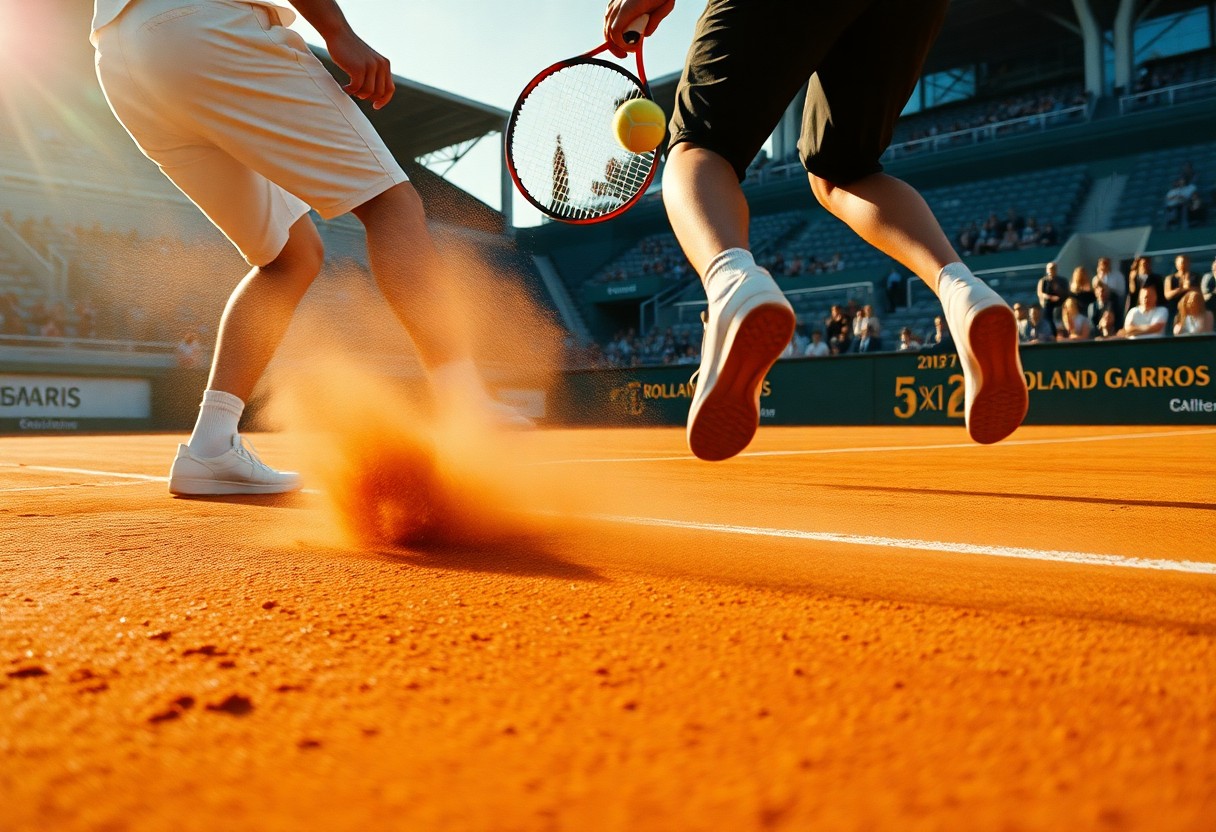
Roland Garros’ red clay produces a slower court where heavy topspin yields a high, kicking bounce and extended rallies; sliding is integral to movement and matches commonly demand exceptional endurance and point construction, a style epitomized by players who thrive on attrition and margin control.
Hard Courts
Acrylic hard courts offer a reliable, medium‑fast pace with uniform bounce that suits aggressive baseliners and big servers, while differing topcoats and underlying layers let tournaments tune speed and feel; the surface is effective for consistent shotmaking but can be harder on joints.
Construction varies: multiple underlayers provide cushioning and shock absorption, while the acrylic topcoat controls friction and ball skid-small changes can shift play toward offense or defense, which is why organizers choose specific systems (e.g., GreenSet, Laykold/DecoTurf) to influence match dynamics.
Grass Courts
Grass remains the fastest surface, with a naturally low, sometimes unpredictable bounce that rewards quick serving, slice and net approaches; Wimbledon’s perennial ryegrass produces brisk points early in the fortnight and increasingly variable bounces as wear appears.
Maintenance-mowing height, irrigation and rolling-directly alters ball behavior and footing; courts get firmer and more uneven over days, creating slippery patches and sudden low bounces that favor players with fast reactions and adaptable footwork.
After comparing speed, bounce and maintenance demands across surfaces, Roland Garros’ red clay stands out for its unique combination of slow pace, high bounce and slide‑dependent tactics that reshape match strategy.
Unique Factors of Roland Garros
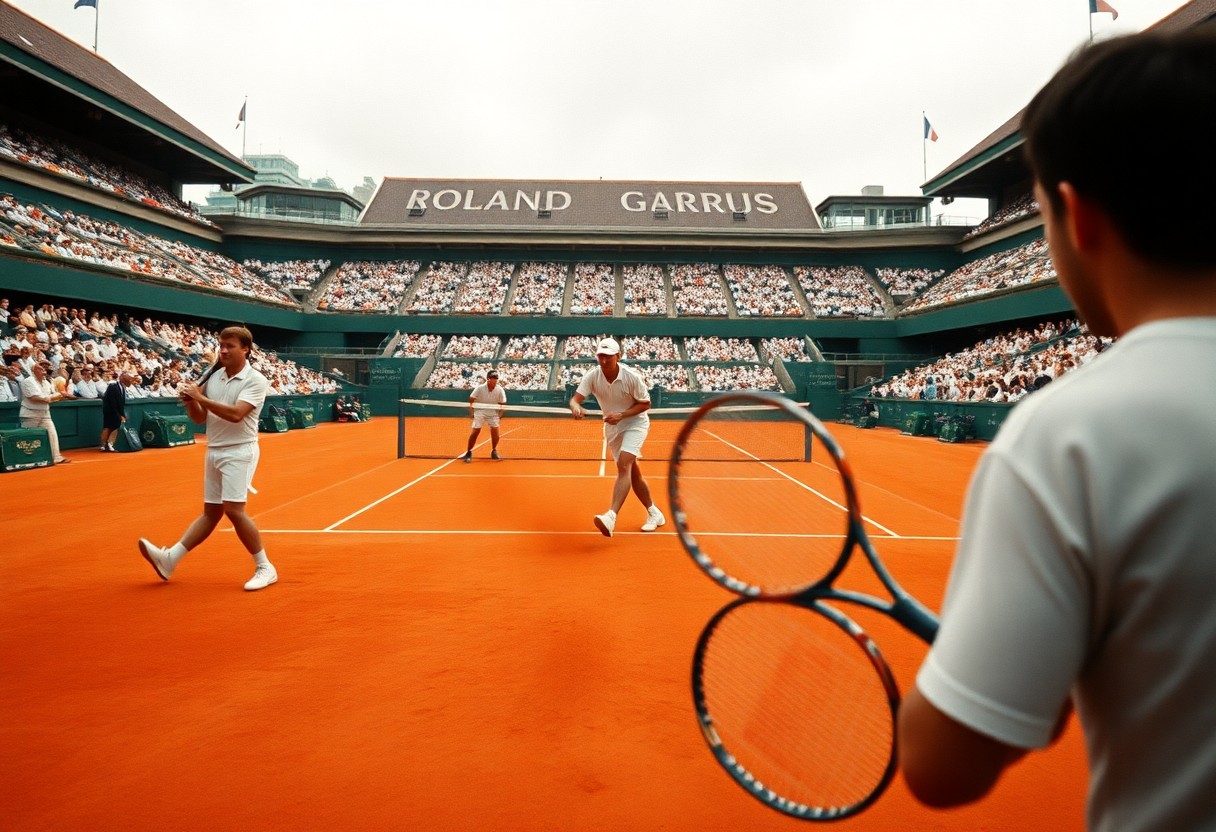
Its red clay surface, three iconic showcourts-Philippe‑Chatrier, Suzanne‑Lenglen, Simonne‑Mathieu-and a 128-player singles draw over two weeks create a tournament where rallies lengthen, topspin rules and endurance wins; matches often favor baseline grinders and specialists who slide effectively and manage variable Paris weather. Rain delays and humidity regularly alter court speed and scheduling. Thou witness tactical adjustments and epic physical battles unique to this Grand Slam.
- Red clay
- Long rallies
- Topspin advantage
- Sliding technique
- Weather variability
- Showcourts: Chatrier, Lenglen, Mathieu
- 128-player draw
Historical Significance
Since becoming an international event in 1925 and moving to the stadium named for aviator Roland Garros in 1928, the tournament has produced era-defining champions; Suzanne Lenglen’s dominance in the 1920s and Rafael Nadal’s record 14 titles illustrate how the venue shapes legacies, rewarding clay mastery and endurance across generations.
Atmospheric Conditions
Parisian late-May/early-June weather-typically moderate temperatures around 15-22°C with variable humidity and occasional showers-makes the clay tackier and the ball bounce higher; wind and dampness change session-to-session, forcing players to adjust spin, string tension and recovery strategies while organizers juggle scheduling and potential rain delays.
Humidity increases friction between ball and surface, slowing pace and amplifying the effectiveness of heavy topspin, so serving power is often less decisive and baseline consistency matters more; tournament additions like the Chatrier roof have reduced some interruptions, yet variable microclimates across courts still produce tactical diversity and unpredictable match rhythms.
Tips for Attending Roland Garros
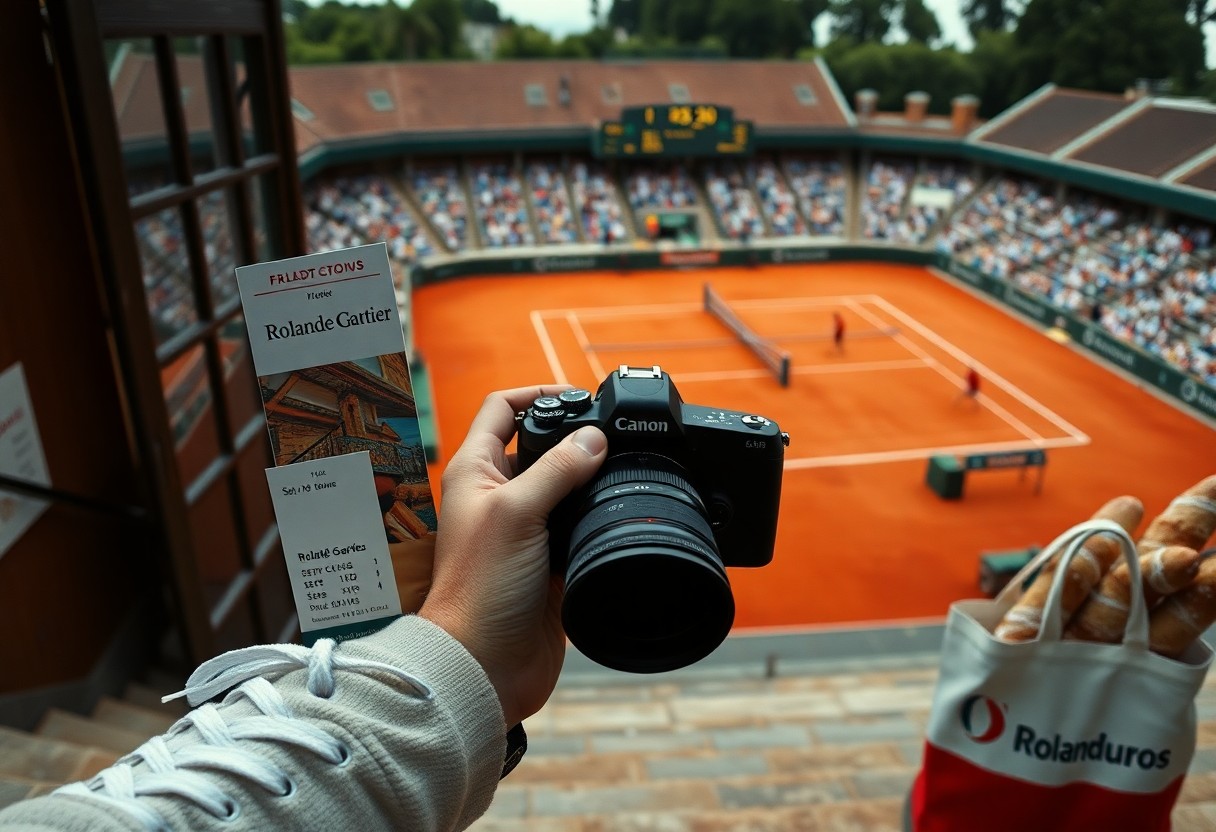
Pack for long walks and staircase access around Court Philippe-Chatrier, which seats ~15,000 and often fills for night sessions; expect bag checks and limited lockers, so keep items compact and secure. Buy advance tickets for key matches and use digital tickets to skip lines; early-round sessions on weekdays offer quieter courts and better vantage points. Knowing that lines can take 30-60 minutes and showers are common, plan arrival times and shelter options accordingly.
- Arrive 45-60 minutes before play to clear security and claim good spots on secondary courts.
- Use public transport – metros drop you within a 10-20 minute walk to the grounds.
- Bring a small bag to meet venue rules and speed up security checks.
- Dress for clay: light-colored shoes you don’t mind getting dusty and breathable layers for 15-25°C.
- Hydration and sun protection: SPF 30+, hat, and refillable bottle (empty at security if required).
- Plan for rain: compact waterproof jacket and quick-dry socks keep you comfortable during delays.
Best Time to Visit
Late May into early June, during the two-week French Open, offers full tournament atmosphere; choose weekday early rounds for smaller crowds and court diversity, or final weekend for headline drama and packed stands. Temperatures typically range from 15-25°C, but intermittent rain increases mid-tournament; arrive mornings for cooler air and the best chance to see top seeds on adjacent courts before evening sessions fill Philippe-Chatrier.
What to Bring
Prioritize comfort and portability: comfortable shoes, SPF 30+ sunscreen, a hat, sunglasses, and a small crossbody bag to meet security checks. Carry a portable charger and a refillable water bottle (often emptied at entry); pack a lightweight waterproof jacket for sudden showers and a printed or digital copy of match tickets.
For gear specifics, include a 10,000 mAh power bank, a 500ml refillable bottle (empty if required by security), and a compact umbrella under 25 cm when folded. Opt for shoes with good grip for clay and concrete transitions, and keep receipts or ID handy for ticket collection points; if attending multiple days, a lightweight foldable tote helps stash purchases without breaching bag-size limits.
Step-by-Step Guide to Playing on Clay
| Step | Action |
|---|---|
| Warm-up | 10-15 minutes of dynamic movement, mini-slides and progressive hitting to adapt to slower bounces. |
| Footwork | Use 2-3 short adjustment steps then a controlled slide of 1-2 m into the shot; push from the outside leg. |
| Positioning | When defending stay 3-5 m behind the baseline; step in after short balls to finish points. |
| Shot Plan | Favor heavy topspin to the backhand, mix in angled crosscourt balls and occasional drop shots to break rhythm. |
| Recovery | After each stroke take 2 quick backward steps and reset weight to prepare for the next slide or sprint. |
Movement Techniques
Maintain a low center of gravity with knees bent, use small approach steps (2-3) then slide into balance for the stroke; sprinters should practice 1-2 m controlled slides and push off the outer foot to recover, since improper planting increases the slip risk on damp clay.
Shot Selection
Favor heavy topspin to force high bounces and defensive replies, employ angled crosscourt patterns to open the court, and insert a well-timed drop shot after pushing the opponent deep to exploit clay’s slower pace.
When constructing points, start with a deep high-bounce ball to the backhand, then follow with an angled topspin to the forehand corner; if the opponent retreats more than 3-4 m, execute a short drop or slice to finish-Rafael Nadal’s pattern of deep kick then exaggerated angle is a proven model on clay.
Pros and Cons of Competing in Roland Garros
| Pros | Cons |
|---|---|
| Surface rewards endurance and tactical play-baseline grinders often thrive, exemplified by Rafael Nadal’s 14 titles. | Long rallies and sliding increase wear; matches frequently push players into higher injury risk for knees and hips. |
| Clay neutralizes big serves, giving returners more break opportunities and longer points to construct winners. | Adapting from hard or grass courts is difficult; big servers and aggressive flat hitters often struggle early on. |
| Develops point construction and movement skills-useful for career longevity and tactical growth. | Weather and humidity affect clay drying; despite the Philippe-Chatrier roof (installed 2020), scheduling can still be disrupted. |
| Success yields full Grand Slam rewards: 2,000 ranking points and major prestige on a unique surface. | Matches, especially best-of-five men’s rounds, can exceed three hours, forcing tougher recovery demands between matches. |
| Sliding technique and clay-specific footwork become elite skills transferable to other tournaments. | Requires specialized gear-shoes, string tensions, and maintenance routines add logistical and financial overhead. |
| Parisian crowd and history enhance motivation and exposure for rising players. | Physical and tactical intensity can shorten seasons for some players, increasing long-term load management needs. |
Advantages for Players
Baseline specialists gain a tangible edge at Roland Garros: the slow, high-bounce clay amplifies heavy topspin and point construction, as seen in multiple-title winners. Earning the title awards 2,000 ATP/WTA points, lifting rankings rapidly, while mastering clay movement and sliding builds skills that improve defense and consistency across surfaces.
Challenges Faced
Players contend with extended rallies and intense physical strain-men’s matches often surpass three hours-heightening the chance of overuse injuries and demanding superior conditioning, recovery protocols, and clay-specific footwork to remain competitive through two weeks.
Common issues include lateral knee stress, ankle sprains from aggressive sliding, and persistent tendonitis from repetitive points; tournament scheduling usually allows only ~24 hours between matches in early rounds, so teams must plan ice, physio, and stringing precisely to prevent performance drops and protect long-term health.
Summing up
Drawing together the French Open’s red clay, which slows the ball and raises bounce, its demanding sliding movement, and a tradition that rewards endurance and strategic variety make Roland Garros distinct among Grand Slams. Its surface reshapes tactics, favors baseline grinders, and produces longer rallies, while the stadium’s history and clay-court specialists preserve a unique technical and cultural identity within tennis’s four majors.
FAQ
Q: How does Roland Garros’ clay surface change the style of play compared with the other Grand Slams?
A: The red clay slows the ball and produces a higher, more irregular bounce, which lengthens rallies and reduces the effectiveness of pure serving power. Heavy topspin is amplified on clay, so players who generate spin and construct points from the baseline have an advantage. Movement is dominated by sliding: players must master controlled slides and quick recovery steps. Net play and serve-and-volley tactics are less rewarded than on grass or fast hard courts, while patience, point construction and variety (angles, drop shots, heavy kick serves) become primary weapons.
Q: What physical and tactical adaptations do players make specifically for Roland Garros?
A: Players adjust footwork to slide efficiently and protect joints, increase aerobic conditioning for longer points and matches, and often lower string tension to boost spin and comfort. Tactically, they build points methodically, use more heavy-topspin groundstrokes, vary pace and height, and employ well-timed drop shots to exploit opponents pushed back behind the baseline. Match scheduling and recovery are also managed differently-players prepare with clay-court lead-up events and plan for greater match-to-match physical toll.
Q: Besides the surface, what aspects make Roland Garros unique among the Grand Slams?
A: Roland Garros is the only major played on clay, giving it a distinct visual and playing identity: the orange-red courts, the Parisian setting and a long clay-court tradition. The tournament’s historic stadiums (Philippe-Chatrier, Suzanne-Lenglen) and passionate, knowledgeable crowds create a special atmosphere. Court maintenance-rolling, watering and brushing between sessions-produces day-to-day condition shifts that influence tactics. Recent stadium upgrades (roofs, expanded facilities) modernized playability while the clay season timing in late spring shapes the tour calendar and player preparation, rewarding clay specialists and shaping careers in ways the other Grand Slams do not.