
How mid-match psychological shifts change live odds and create value
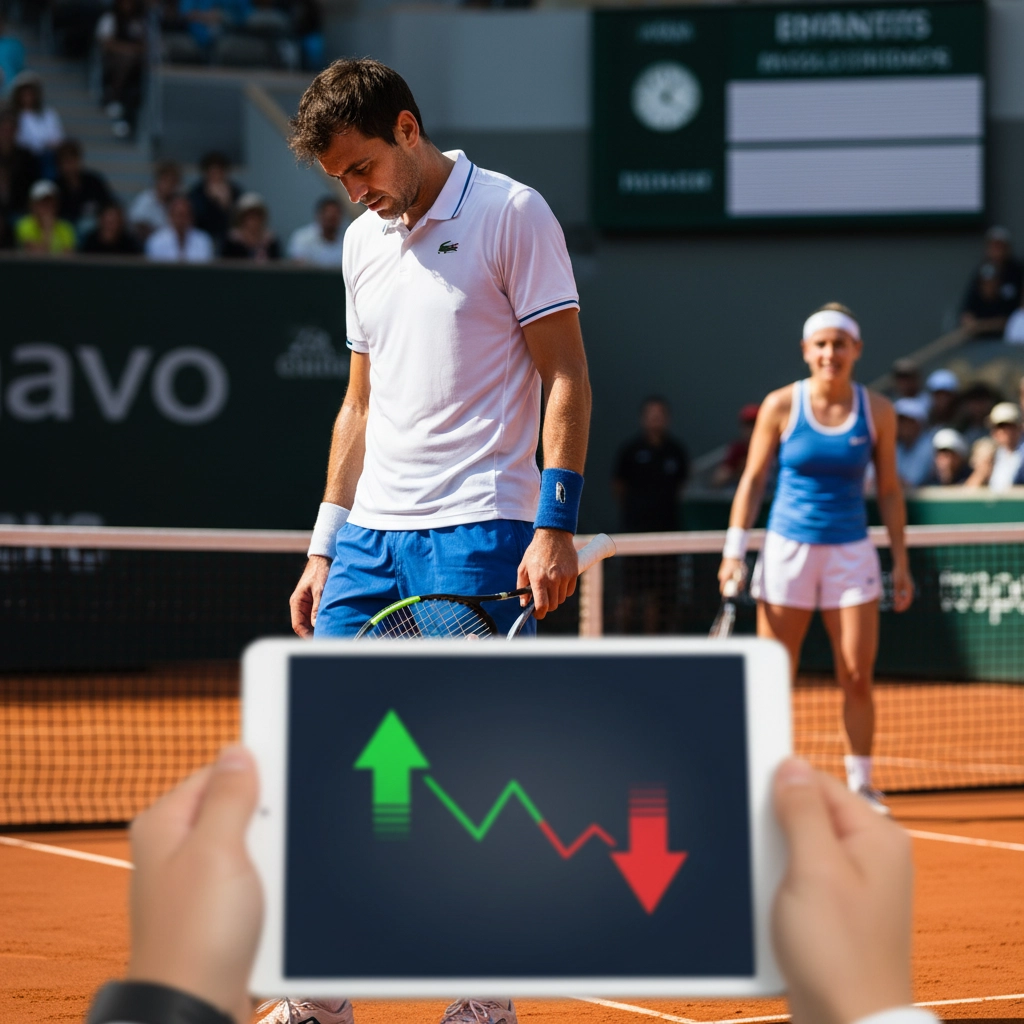
When you watch a tennis match in-play, the numbers on the screen are only half the story. Psychological shifts — a player suddenly becoming tentative after losing serve, or another finding an extra level of focus — create momentum swings that the betting market doesn’t always price in immediately. If you learn to read those shifts, you can identify short windows of value: odds that lag behind what you see on court.
Live markets respond to obvious events (breaks, set wins) quickly, but subtler emotional changes travel slower. You can exploit hesitation, visible frustration, or renewed aggression because bookmakers and casual bettors tend to under- or overreact to those cues. In practice, that means spotting trends that suggest a higher probability outcome than the live price implies and acting before the market corrects.
Why your perception of psychology becomes an edge
- Early recognition beats price correction: You can move faster than the market if you spot a mental shift immediately after a pivotal point.
- Patterns matter more than single events: One double fault or a loud complaint isn’t decisive — repeated signs of breakability or resilience are what you should trust.
- Context amplifies cues: Crowd, fatigue, and match importance change how psychological signs should be interpreted; the same body language in a Grand Slam second week means something different than in a 250-level opener.
Practical psychological signals to watch early in a live match
To convert observation into bets, you need a short checklist of reliable signals you can track without losing pace. Focus on a handful of indicators and apply them consistently across matches.
Concrete cues to monitor within and between games
- Serve tempo and toss consistency: A wobbling toss, rushed routine, or repeated double faults often precede a service wobble you can target with break-back or next-game bets.
- Time between points: Players who start taking longer after poor points may be processing pressure — expect tentative strokes and reduced aggression.
- First-serve percentage shifts: A sudden drop in first serves reduces short-term win probability on serve and can be reflected in favorable break odds.
- Body language and facial expressions: Tension, avoidance of eye contact, or visible frustration across several games suggests an increased chance of unforced errors.
- Response to pressure points: How a player reacts on break points or set points — aggressive winners versus conservative play — tells you whether momentum is shifting.
- Movement and footspeed: Slower steps or shuffling indicate fatigue, which often leads to shorter rallies and tactical changes you can exploit with handicaps or short-term markets.
Once you identify one or more of these signals consistently, you can start mapping them to specific bet types (next-game, break-back, set handicap) and staking rules. In the next section, you’ll learn concrete in-play betting strategies and stake management techniques that turn these psychological reads into repeatable decisions.
Concrete in-play strategies tied to specific psychological reads
Once you’ve identified a psychological pattern, translate it into a clear betting play. Below are tried-and-tested templates that link observable cues to market actions — treat each as a rule-of-thumb rather than an ironclad law.
– Next-game on a nervous server: If a player’s toss, routine or first-serve percentage collapses across two service games and the opponent shows steady aggression, target the next-game or next-break market on the returner. Odds often remain generous for one or two points after the break opportunity appears because many bettors wait for the scoreboard event rather than the signs that precede it.
– Break-back after momentum fade: When a player loses serve and immediately exhibits rushed play or longer time between points (processing pressure), a break-back bet in the subsequent return game can offer value — particularly on slower surfaces where longer rallies punish tentative strokes.
– Set handicap when focus shifts: If a player visibly tightens up after winning a tight set (playing too conservatively), consider hedging with set-handicap or over/under games in the following set. The market often prices the recent set result too heavily and underestimates a loss of aggression going forward.
– Short-market scalps on confidence spikes: Watch for a player suddenly finding rhythm — cleaner first serves, shorter time between points, aggressive returns. Use micro-markets (next game winner or next two games) to scalp odds before books shorten lines.
Execution tips:
– Move quickly but selectively. Only act when at least two independent cues align (e.g., serve wobble + increased error count).
– Use small, focused stakes for fast markets; these bets are about frequency and discipline, not big single stakes.
– Avoid markets with thin liquidity if you’re using exchanges — slippage can erase theoretical edges.
– Place a contingency: if the opponent immediately responds with an aggressive hold or a dominant service game, close the position or accept a small loss; the read can reverse fast.
Staking discipline, risk control and when to walk away
Psychological reads give you an informational edge, but that advantage is meaningless without disciplined staking and clear exit rules.
Staking framework:
– Adopt a unit-based approach: allocate a small percentage of your bankroll (1–2% per in-play opportunity) to protect against variance. For higher-probability reads, size incrementally (1 unit base, 1.5–2 units for corroborated signals).
– Use a “Kelly-lite” mindset: weight your stake by how strong the signal is (number of cues, match context) rather than purely odds. Overbetting on subjective reads is a common killer.
Loss control and exits:
– Predefine a stop-loss per match (e.g., 5–10% of bankroll risked across all in-play bets on a single match) and stick to it.
– Set profit targets for quick scalps (10–30% return on a micro bet). If you hit the target, step away and reassess — hunting bigger wins in the same momentum often backfires.
– Prefer hedging over emotional cash-outs: if the live price allows, hedge to lock a small profit rather than waiting for a full reversal.
Knowing when not to bet:
– Avoid matches with high variance and low informational value for psychology reads (big servers on fast indoor courts, where point outcomes hinge on a single serve).
– Skip matches where crowd influence or coaching signals are ambiguous; these amplify subjectivity.
– If you’re emotionally engaged or output after a run of losses, take a break — psychological betting requires a clear head.
Record everything: track cues, stakes, market chosen and outcome. Over months you’ll refine which signals convert to return and which are noise — that iterative learning is your best defense against overconfidence.

Putting the edge into practice
Turn observation into disciplined action: practice your checklist in low-stakes situations, keep concise notes after each match, and refine which cues reliably convert to profit. Treat psychological reads as one input among many — combine them with surface, matchup and form knowledge, and always protect your bankroll with predefined unit sizes and stop-loss rules. For background on interpreting behavioral signals under pressure, see sports psychology resources.
Frequently Asked Questions
How quickly should I act on a psychological signal during a match?
Act promptly when at least two independent cues align (e.g., serve wobble plus increased unforced errors), but avoid reacting to single isolated incidents. Live markets correct fast after visible momentum builds, so efficient observation and fast execution are essential — aim to place micro-market bets within the next game or two once your checklist criteria are met.
How should I size my stakes for in-play bets based on psychological reads?
Use a unit-based approach, typically 1–2% of your bankroll per in-play opportunity. Increase sizing modestly (e.g., 1.5–2 units) only when multiple corroborating signals and favorable match context boost your confidence. Follow a “Kelly-lite” mindset: weight stakes by signal strength, not emotion.
What can I do to avoid my own emotions biasing psychological reads?
Rely on a short, objective checklist and require at least two confirming cues before betting. Track every read and outcome to spot personal biases over time, set strict per-match stop-loss limits, and step away after a losing streak. If crowd noise or ambiguous coaching signals make interpretation uncertain, skip the opportunity.