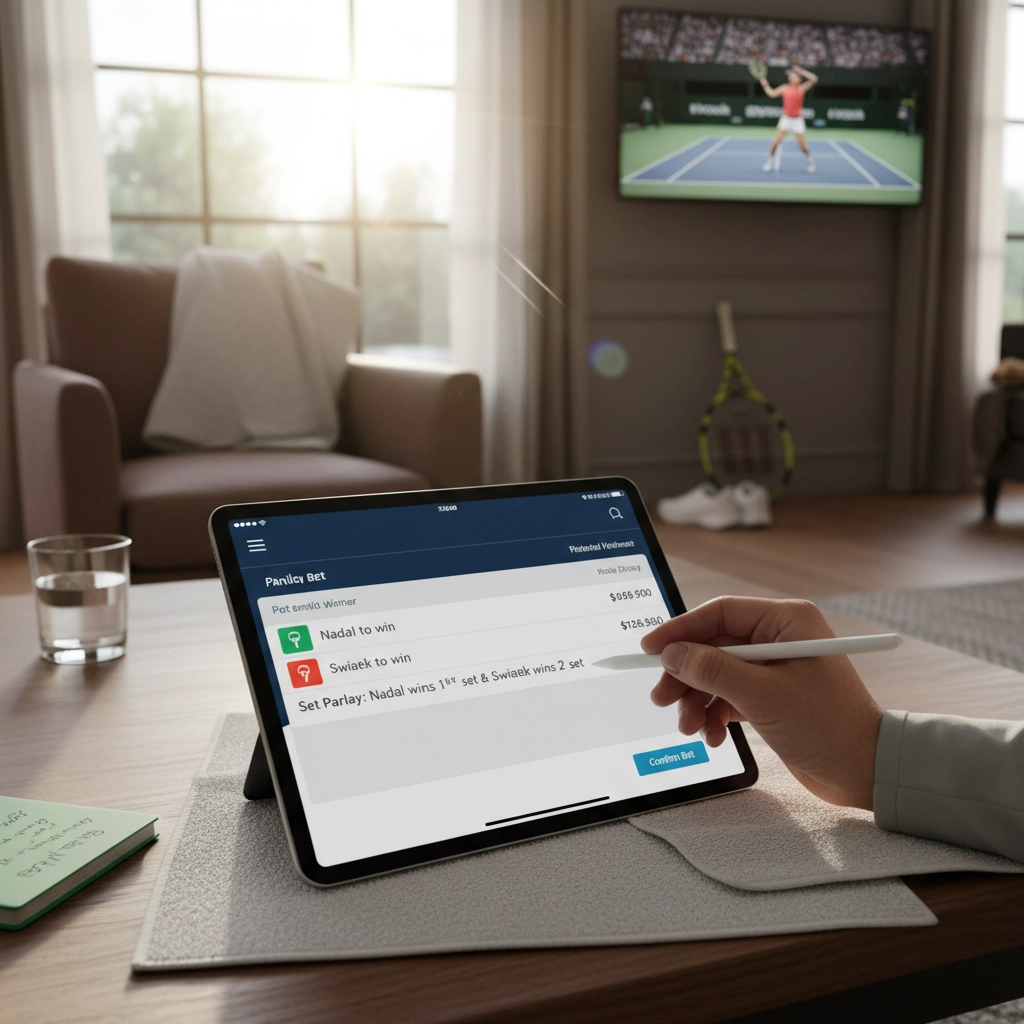
Why the mental game is one of your best edges when betting on tennis
Tennis is as much a psychological contest as it is physical. When you’re placing bets, you’re not just forecasting strokes and serve speed—you’re predicting how two minds will cope with pressure, momentum swings, and fatigue. Recognizing mental patterns gives you an edge that raw statistics often miss. You can spot favourites who struggle in big moments, underdogs who raise their level under pressure, and players whose temperament makes them prone to folding after a bad set.
As a bettor, you can use mental-game signals to refine pre-match selections, choose profitable live-betting moments, and size stakes more sensibly. This section explains which mental factors matter most and how to observe them before and during a match.
Pre-match psychological clues that should influence your bets
Recent results: look beyond wins and losses
Winning or losing streaks are useful only when you factor in context. Ask yourself: were recent wins hard-fought comeback victories or routine straight-set walks? A player who ekes out a series of close wins may be mentally exhausted and vulnerable to a focused opponent. Conversely, a player who has consistently closed out tight matches may have superior nerve control—valuable in close markets like sets or tiebreak bets.
Surface comfort and confidence
A player’s body language and track record on a specific surface reveal confidence. If you watch warm-ups and see relaxed footwork, consistent deep ball striking, and decisive volleys, that’s an indicator the player is mentally comfortable. On the other hand, tentative movements, short swings, or frequent unforced errors in practice suggest shaky confidence—something you can exploit by avoiding bets on them to hold serve or win key points.
Recent travel, schedule density, and off-court issues
Mental fatigue accumulates from long flights, quick turnarounds, and personal distractions. Check news, social media, and player interviews for hints about sleep, injuries, or family matters. A top seed arriving after a grueling week of travel may be physically fit but mentally flat, making them a less reliable favourite in live markets.
Identifying in-match mental momentum and when to act
Once the match starts, the mental game becomes dynamic—momentum shifts, emotional spikes, and visible frustration are your signals. Pay attention to how a player responds to losing a break, whether they can reset after a bad game, and how they handle pivotal points like break points and set points.
- Signs of a mental dip: repeated foot faults, rushed serves, staring at the ground, slumped shoulders.
- Signs of growing momentum: louder grunts, more aggressive shot selection, fist pumps, and eye contact with the coach (where coaching is allowed).
- Key moments to consider: end-of-set games, sudden breaks of serve, and long tied tiebreak points—these can flip betting value.
With these observations, you can time entry into live bets—back a player on a momentum surge or lay a favourite who looks mentally broken. In the next section, you’ll learn concrete live-betting tactics and staking strategies that turn mental-game reads into profitable wagers.

Live-betting tactics: strike when mental momentum actually confirms
The difference between reacting to a single noisy point and acting on genuine momentum is temperament. To convert mental reads into profitable live bets, wait for confirmation. A break of serve followed by an immediate consolidation (holding the next service game comfortably) is a stronger signal than a break followed by two tight hold-or-break games. Look for behavioral confirmation: the player who just broke now walks more upright, uses the towel calmly, and makes cleaner first serves. That’s the moment to consider increasing exposure.
Tactics to use in-play:
– Back the player who has just taken control of the court rhythm (short, disciplined stake) rather than the one who simply scored an isolated highlight.
– Use “next game” and “next set” markets for momentum bursts—these offer better odds and let you avoid the variance of predicting a whole-match outcome.
– If a favourite shows early signs of mental wobble (foot faults, repeated double faults), lay them or hedge with an underdog small stake once a pattern appears rather than after one mistake.
– In tiebreaks, back the player who has won the last few critical points and is displaying aggressive, focused body language; tiebreaks are high-leverage moments where recent mental strength translates directly to points.
Also set a simple confirmation rule you’ll follow every time—e.g., wait for one completed service game after a break or three consecutive points favoring one player—so you trade emotion for discipline.
Staking strategies that respect psychological edges
Your stake should reflect how confident you are in the mental read, not just the perceived value. If you’ve identified a clear, repeatable pattern (a player who always raises level in pressure), use a slightly larger fraction of your bankroll. If it’s a speculative live read, keep the stake small.
Practical staking frameworks:
– Flat-percentage: stake 1–2% of your bankroll on routine pre-match bets; 2–4% on live bets where you have confirmed mental momentum. This keeps variance manageable.
– Graded scaling: split a planned stake into two or three tranches—enter with a small initial bet, add if confirmation arrives, and stop if it doesn’t.
– Conservative Kelly-ish sizing: if you calculate an edge, use a fractional Kelly (25–50%) to avoid large drawdowns from misreads.
Always cap exposure per match (e.g., no more than 6–8% total bankroll on one match across markets). Mental edges can evaporate quickly—don’t let a single subjective read dominate your allocation.
When to bail out: spotting irreversible mental collapse
Not every tilt recovers. Some players go into an unrecoverable downward spiral where chasing the comeback is simply poor value. Red flags: persistent unforced errors that don’t improve after a change of ends, a player refusing to engage with their coach or team, visible physical discomfort that worsens, or a player who loses multiple breakpoints in a short span without changing tactics.
If you see these, take action:
– Close or hedge positions to lock a partial profit or limit damage.
– Reduce your stake size on subsequent live opportunities in the same match; the market is likely to overreact to short-term noise, and you’re no longer trading from a position of informational advantage.
– Log the incident for future reference—certain players will repeatedly display collapse patterns and are better avoided in tight markets.
Trading the mental game well means not only spotting when to strike, but also when to walk away before a psychological slide turns a small loss into a big one.

Putting the mental game into practice
Turn these ideas into routine habits rather than one-off instincts. Start by keeping a short mental-game log: note pre-match observations (body language in warm-ups, recent travel, press-conference tone), in-match confirmations (consolidated breaks, cleaner serves, visible energy shifts), and the outcome when you acted on that read. Use modest stakes while you test rules and limit how much of your bankroll any single match can touch.
Build a small watchlist of players whose psychological patterns you understand well—those who frequently raise their level, those who crumble under pressure, and those who oscillate wildly. Combine those qualitative reads with objective measures (break-point conversion, double-fault trends) and stick to simple confirmation rules so emotion doesn’t drive your sizing. For ongoing research, follow reliable sources for player interviews and match reports, such as player interviews and profiles, to catch off-court context that affects mentality.
Above all, treat mental-game betting as an exercise in discipline: small, repeatable procedures beat flashy guesses. Iterate on your process, log every trade, and let patterns—not adrenaline—dictate when you increase exposure.
Frequently Asked Questions
How can I tell a reliable psychological signal from momentary noise?
Reliable signals repeat or are confirmed by behavior and match events: a break followed by a calm consolidation game, several consecutive points of cleaner hitting, or repeated tactical adjustments by the player. Use a pre-defined confirmation rule (e.g., wait one full service game after a break or three consecutive clean holds) and keep stakes small until the pattern proves consistent.
Are psychological reads useful for pre-match bets or only live betting?
They’re useful for both. Pre-match, factor in recent results context, surface comfort, scheduling and travel, and public comments in interviews. Live, you can exploit momentum shifts and visible confidence changes. Pre-match reads inform markets like match odds and set handicaps; live reads are best for “next game/next set” and tiebreak markets where short-term mental strength translates to immediate value.
What staking method suits betting on mental edges?
Match your stake to the confidence of the mental read. Use flat-percentage staking (1–2% pre-match, 2–4% when you have confirmed live momentum), graded scaling (enter small and add on confirmation), or a conservative fractional Kelly if you can estimate an edge. Always cap total exposure per match (e.g., 6–8% of bankroll) to protect against misreads and variance.