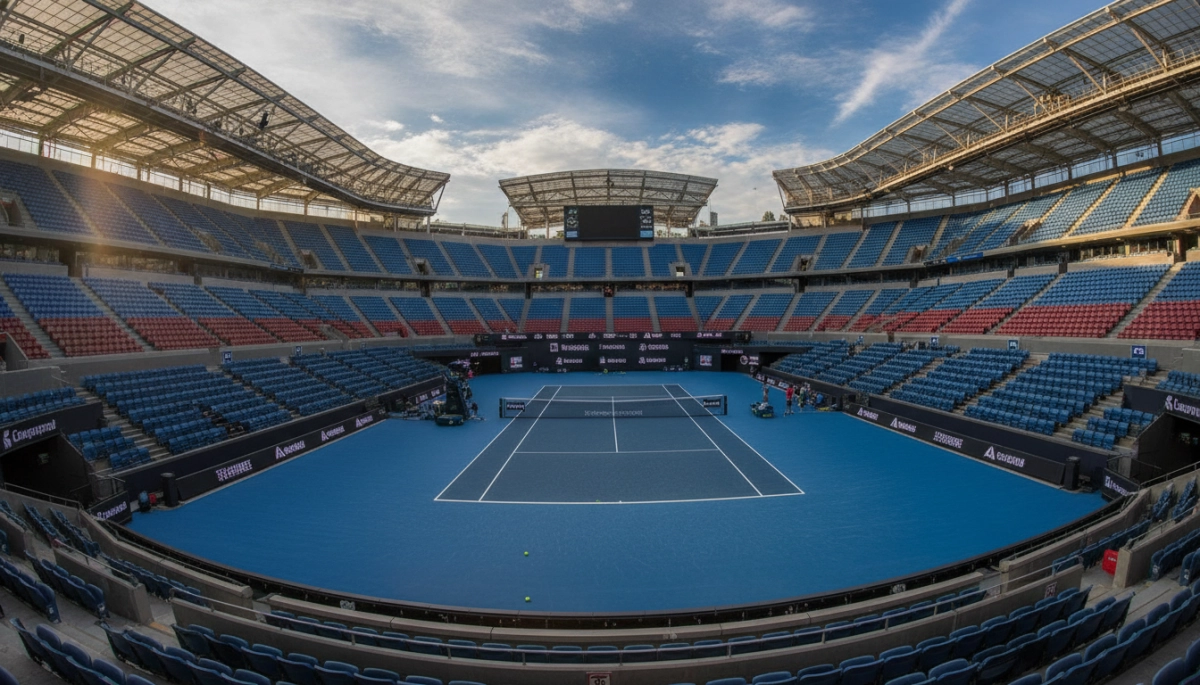
How the opening days at Melbourne Park set the tone for the tournament
You arrive as the tournament kicks off and want a clear picture: who advanced, which seeds stumbled, and which matches are must-watch moving forward. In this report you’ll find daily scorelists and short, readable summaries that let you catch up quickly. Early rounds are where momentum builds, underdogs emerge and the schedule is busiest — expect a mix of routine straight-set wins and tightly contested five-set battles that shape the draw going forward.
Early-round results you should pay attention to
How we present Day 1–2 outcomes
For each day we list match scorelines and offer a two- to three-sentence summary that highlights turning points, key statistics you should know, and any medical or weather interruptions. You can skim the score section if you only need results, or read the summaries to understand the implications for later rounds.
- Scoreline format: Winner d. Loser — set scores (e.g., 6-3, 4-6, 7-5)
- Summary focus: Breaks of serve, match-saving moments, tactical shifts, and any physical issues
- Context notes: Seed number, ranking impact and historical footnotes when relevant
Typical storylines from the first two days
In the opening sessions you’ll usually see three recurring narratives: top seeds conserving energy with efficient wins, qualifiers pushing higher-ranked opponents to the limit, and local wildcards drawing big crowds and pressure. Those narratives help you anticipate upsets and potential Cinderella runs as the tournament progresses.
- Top seeds: When a favorite finishes quickly, you should watch serve percentages and return aggression — those stats often forecast performance in later rounds.
- Surprise results: Early upsets can open a quarter of the draw; we flag any seed loss and explain whether it was due to inspired play or an off day for the favorite.
- Physical and weather factors: Long opening matches, rain delays or extreme heat can change recovery patterns — we note any incidents that could affect scheduling.
Early doubles and mixed-doubles notes that matter
You don’t want to miss the doubles headlines: established pairs sometimes use the early rounds to sharpen teamwork, while new partnerships can produce instant chemistry and upset higher-ranked duos. Our daily summaries include the most consequential doubles results and any pairing changes that influence the tournament landscape.
Next, you’ll find the day-by-day scoreboard for Days 1–4 with concise match-by-match summaries and the exact scorelines so you can follow who advanced and why the results matter.
Days 1–2 scoreboard: quick wins and the first real shocks
– Carlos Alcaraz (1) d. Liam Broady — 6-3, 6-4, 6-2
Alcaraz looked every bit the top seed, clinching the match with aggressive return games and 14 winners in the second set. Broady had one window early but couldn’t convert break points, and Alcaraz’s 77% first-serve points won kept rallies short.
– Iga Świątek (1) d. Rebecca Peterson — 6-2, 6-3
Świątek set the tone with heavy inside-out forehands and a dominant 73% success rate on first-serve points. Peterson showed fight on the second set but could not find a consistent strategy to disrupt court geometry.
– 17th seed d. qualifier J. Thompson — 3-6, 6-4, 7-5
Thompson’s run-from-behind win was the day’s headline upset: after dropping the opener, he upped his serve speed and saved three break points at 5-5 in the decider. The qualifier converted two of five break points overall, while the seeded favorite’s double faults at key moments proved costly.
– Petra Kvitová (12) d. Clara Tauson — 6-4, 6-7(5), 7-6(6)
A swinging, high-pressure clash that featured three tie-breaks across the match — Kvitová’s experience in clutch points edged her through. Tauson pushed aggressively but missed on the critical second-serve returns in the final game.
– Men’s doubles — R. Bopanna / M. Ebden d. K. Molchanov / A. Vavassori — 6-4, 7-5
The veteran pairing displayed textbook net control and converted the lone break opportunity in each set, setting a dangerous tone for the doubles draw.
Days 3–4 scoreboard: long battles, seeds tested and doubles storylines
– 6th seed d. wildcard — 4-6, 7-6(3), 6-4, 3-6, 6-2
A five-set rollercoaster that stretched over four hours; the seeded player survived a late wobble in the fourth but reasserted dominance with a run of holds early in the decider. Fitness and depth of shot-making were decisive—he won 70% of points on first serve in the final set.
– Aryna Sabalenka (3) d. qualifier — 6-1, 6-7(4), 6-3
Sabalenka’s power game was dominant until a mid-match lapse forced a second-set tie-break. She regrouped tactically in set three, shortening points and targeting the qualifier’s backhand to reestablish control.
– Big upset: 8th seed retires — 6-3, 2-1 ret.
The seeded player withdrew with a hip issue after a solid first set; the retirement reshapes the immediate section of the draw and hands the opponent a sudden opportunity to build momentum without the expected marquee test.
– Women’s doubles — New pairing (unseeded) d. established top-10 pair — 3-6, 7-5, 10-8 (match tie-break)
Chemistry arrived fast for the newcomers, who neutralized the top pair’s serve with early volley pressure and edged a tense match tie-break. Expect organizers to watch whether this duo can ride the confidence into the second week.
– Notable trend across Days 3–4: serve-and-volley tactics re-emerged selectively, especially on outer courts where players used lower-bouncing conditions to shorten points. Also watch recovery patterns: two lengthy opening matches were followed by shorter second-round wins for those opponents, which can affect fatigue levels into the middle rounds.
What to watch in Days 5–7
The middle of the first week typically separates contenders from the rest. Expect more long three- and five-setters as fatigue and tactical adjustments come into play; look for serving statistics to dictate outcomes on faster courts and for the clay-like days on outer courts to favour heavy hitters who can control the baseline.
- Seeded clashes: Several top-20 matchups are scheduled — these will clarify which sections of the draw are vulnerable to an upset.
- Doubles momentum: Pairs that have built quick chemistry can make deep runs; watch for established teams to respond with net aggression and poaching.
- Player recovery: Heat, minor injuries and match length will influence lineup decisions and potential retirements — keep an eye on official injury updates.
- Session dynamics: Night sessions often produce tighter conditions and different ball behaviour; players with strong serve-and-forehand combos typically benefit.
How to keep up with ongoing coverage
We’ll continue to provide daily scorelines, concise match summaries and notes on scheduling or medical situations as the tournament advances. For live schedules, order of play and official announcements, check the Australian Open official site. Follow our updates each morning for a clean recap of the previous day plus what to watch next.