Context: Why study the most famous tennis players and what this guide offers
The most famous tennis players offer more than highlights; they provide patterns of technique, tactics and mental habits that recreational players can learn from. This multi-part guide gives short biographies, key characteristics of serve, backhand, forehand, tactics and mental strength, lists of their most important matches, and practical exercises adapted for players in Serbia and the wider Balkan region who want to borrow parts of these champions’ games.
Part 1 focuses on foundational eras and five historic champions whose styles shaped modern tennis. The article explains relevant tennis terms such as service game, return game and break point when they appear, and it ends with practical, low-cost drills that can be done on club courts and public courts in the region.
How eras and player selection inform practical learning
Choosing players from different eras—classic serve-and-volley, the baseline revolution, and the modern all-court athlete—helps recreational players identify specific skills to train. Each profile below highlights style, preferred surfaces, signature shots and why the player mattered to tennis development.
This section also clarifies selection criteria: historical impact, distinctive technical traits, and transferable elements useful for club-level players (e.g., slice returns, heavy topspin, net transition patterns).
Classic legends and their defining traits
The following short profiles summarize early and transitional-era champions whose approaches still teach valuable lessons. For each player, key game traits and a short list of historically significant matches are provided so readers can watch and study technique and tactics.
Rod Laver — all-court pioneer
Rod Laver played with complete versatility and excellent footwork, enabling him to perform on grass and clay. His serve and forehand were solid rather than overpowering, and he used court craft and variety—slice, drop shots, timely net approaches—to win points.
Contributions: Laver demonstrated the value of adaptable strategy and shot variety. Notable references: his 1969 Grand Slam run and several classic Davis Cup performances that showcase tactical intelligence.
Björn Borg — baseline consistency and icy composure
Borg introduced relentless heavy-topspin baseline play combined with extraordinary endurance and calm under pressure. His two-handed backhand and high-energy forehand preparation set a template for modern baseline grinders.
Contributions: Borg helped normalize long rallies and physical conditioning as decisive factors. Watch his 1980 Wimbledon final vs. John McEnroe to study mental focus and point construction under pressure.
Pete Sampras — serve-and-volley authority
Sampras was defined by an elite first serve, precise placement and aggressive net play. His backhand slice and tactical use of the serve to open the court made him dominant on grass and fast hard courts.
Contributions: He refined the serve-plus-volley formula and showed how efficient point-ending tactics reduce unforced errors. Look at his Wimbledon finals and key matches vs. Andre Agassi for service-game mastery.
Practical drills for club players inspired by these legends
Below are simple, repeatable drills that reflect champion elements while fitting the resources of regional clubs and public courts.
- Topspin forehand drill (Borg-style): 3 sets × 20 crosscourt rallies at moderate pace focusing on low-to-high swing and brush. Rest 90 seconds between sets.
- Serve-and-volley pattern (Sampras-style): 15 first serves from deuce and ad positions; immediately approach the net to practice short volleys. Emphasize placement over speed.
- Variety and transition (Laver-style): Alternate 10 baseline slices and 10 drop shots, then approach net on the next short ball to practice movement and timing.
Terminology note: a service game is when a player serves for the game; a return game is when the opponent serves. A break point occurs when the returner can win the game on the next point if they win that rally.
Transitioning into Part 2, the guide will analyze modern-era champions, detailed technical breakdowns (serve mechanics, two-handed vs. one-handed backhand), and more region-specific training plans for Serbian recreational players.
Modern masters: Federer, Nadal, Djokovic — profiles and practical lessons for regional players
Roger Federer, Rafael Nadal and Novak Djokovic represent three complementary modern archetypes. For recreational players in Serbia and the region, each offers concrete, trainable elements.
– Roger Federer — graceful all-court innovator
Short bio: Swiss maestro, greatest exponent of timing and variety on faster surfaces.
Key characteristics: effortless single-handed backhand slice and one-handed topspin, fluid footwork, precise serve placement (not always fastest), exceptional transition skills and point construction. Mental strength: calm under pressure, resets quickly after mistakes.
Contributions: refined transition tennis and the importance of aesthetics + efficiency.
Notable matches to study: 2008 Wimbledon final (vs Nadal), 2009 Wimbledon final (vs Roddick).
Practical for regional players: practice short-step footwork and balance drills to improve transition game; work on serve placement over pace on small courts. Drill — 30 serves each session focusing on T and body serves (10 each), then immediately practice approach volley patterns for 10 points.
– Rafael Nadal — clay-court king and physical grinder
Short bio: Left-handed Spaniard whose heavy topspin reshaped baseline exchange.
Key characteristics: extreme heavy-topspin forehand, steady two-handed backhand, relentless court coverage, superb kick serve on clay. Mental strength: combative, fight-for-every-point attitude.
Contributions: normalized extreme topspin and high-recovery fitness standards.
Notable matches: 2008 Wimbledon final (vs Federer), multiple Roland Garros finals.
Practical for regional players: exploit local clay courts to develop heavy topspin and sliding footwork. Drill — 3×30 crosscourt rallies aiming for high net clearance and deep depth; add 10 explosive 2–3 shot point starts to simulate Nadal pressure.
– Novak Djokovic — return specialist and defensive baseline architect
Short bio: Serbian champion, supreme returner and stretcher with exceptional flexibility and movement.
Key characteristics: best return of serve of the era, flat reliable two-handed backhand, elastic defense-to-offense transition, precise depth control. Mental strength: ruthlessly consistent focus and match management.
Contributions: elevated return- and baseline-defensive strategies, inspired many Balkan players.
Notable matches: 2012 Australian Open final (vs Nadal), 2019 Wimbledon final (vs Federer).
Practical for regional players: prioritize return-of-serve patterns and sliding defense in winter indoor/hard-to-clay transitions. Drill — partner serves 40 balls from both sides; returners must place 70% inside the court zones (short, middle, deep) then play 2-point sequences emphasizing recovery.
H2: Technical focus: serve mechanics and backhand choices — drills and adaptations for Serbian recreational courts
Serve mechanics (simplified phases): toss consistency — coil/load and leg drive — acceleration with shoulder rotation and racket pronation — controlled follow-through and recovery. Common faults: toss too heavy/forward, lack of leg drive, early arm collapse. Affordable drills: toss target (mark 3 small zones on court to repeat same toss), box-step serve to coordinate legs (five slow reps focusing on knee bend), 2-ball serve drill (toss two balls; serve first, catch second to enforce rhythm). Emphasize 15–20 quality serves per session before power work; on clay prioritize spin and placement.
Two-handed vs one-handed backhand (practical guide): two-handed backhand offers stability for returning heavy serves and easier topspin; one-handed allows greater reach, variety (slice, angled drives) and smoother transition to net. For most club players in the region, the two-handed backhand gives faster returns-to-consistency; one-hander is viable with focused strength and timing work.
Drills for both:
– Two-handed: wall feeds for 3 sets × 40 strokes focusing on rotation and stepping in; crosscourt depth target practice (cones).
– One-handed: slice-to-approach drill — practice low slices that sit up, then approach and finish at the net; racket-tip control exercises with lighter grips.
Tactical adaptations for Serbian courts:
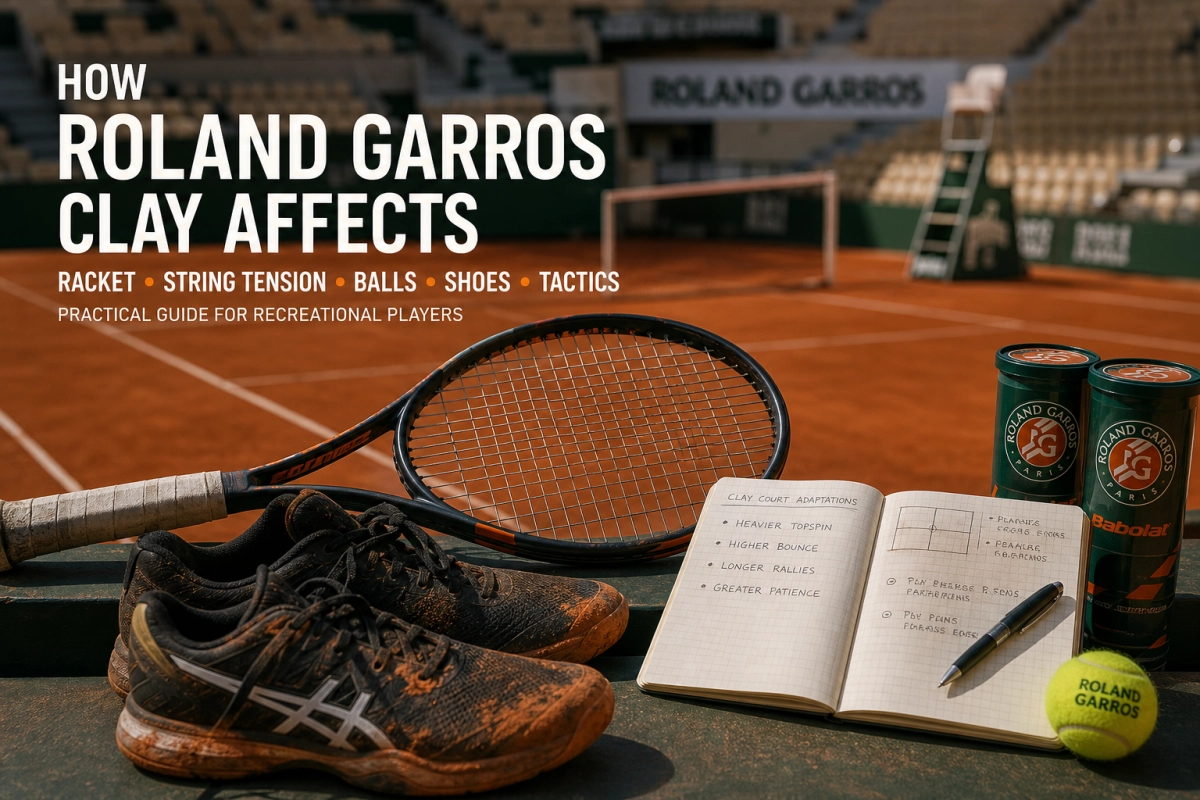
– On clay: use heavy topspin, open stance, longer rallies and sliding recovery drills.
– On indoor hard courts: shorten points — practice first-serve percentage and third-shot strategies (chip-and-charge).
– Winter gym work: core rotation medicine-ball throws, band-resisted diagonal chops for serve/backhand power, and mobility for Djokovic-style defense.
These practical pieces bridge champion traits and everyday training—allowing regional players to adopt clear, court-ready habits without high-cost infrastructure.
Putting champion lessons into practice
Take the ideas you liked from these champions and translate them into small, consistent changes on court. Focus on one technical habit, one tactical pattern and one mental routine at a time. Track progress with short, measurable goals and rebuild them as you improve; small, steady gains compound into lasting skill.
Practical next steps for club-level players
- Choose a primary focus for the next 4–6 weeks (serve placement, a reliable return, or a confident approach volley) and design every session around improving that single element.
- Combine focused drill work with at least one match-play session per week to test tactical choices under pressure—adapt drills to local surfaces (clay sliding, indoor hard-court timing).
- Record a short practice video once every two weeks to check technique, footwork and recovery patterns; use slow-motion for serves and volleys.
- Work mobility and injury prevention into your routine—dynamic warm-ups before sessions, band work for shoulder and hip stability, and core rotation exercises to support serving and groundstrokes.
- Seek peer feedback or a coach’s eye for one session monthly; outside critique accelerates correction and prevents reinforcing bad patterns.
Mindset and match routine
- Adopt a pre-point routine to stabilize focus (breath, visual target, split-step timing) and a short reset after errors to prevent drift in concentration.
- Practice controlled aggression: choose moments to shorten points instead of trying to win every rally by power—learn to mix pace, spin and placement.
- Value process goals (first-serve percentage, crosscourt depth, number of successful approaches) over outcome goals; they are more controllable and easier to measure.
Final encouragement
Progress comes from consistent, deliberate practice and from adapting elite ideas to the realities of your court, equipment and schedule. Be curious, patient and experimental—try a champion’s element for several weeks before deciding whether it fits your game. The region has a strong tennis culture; use local courts, partners and competitions to test what works and enjoy the process of making the game your own.