How Roland Garros clay (French Open) forces different equipment and tactical choices for recreational players
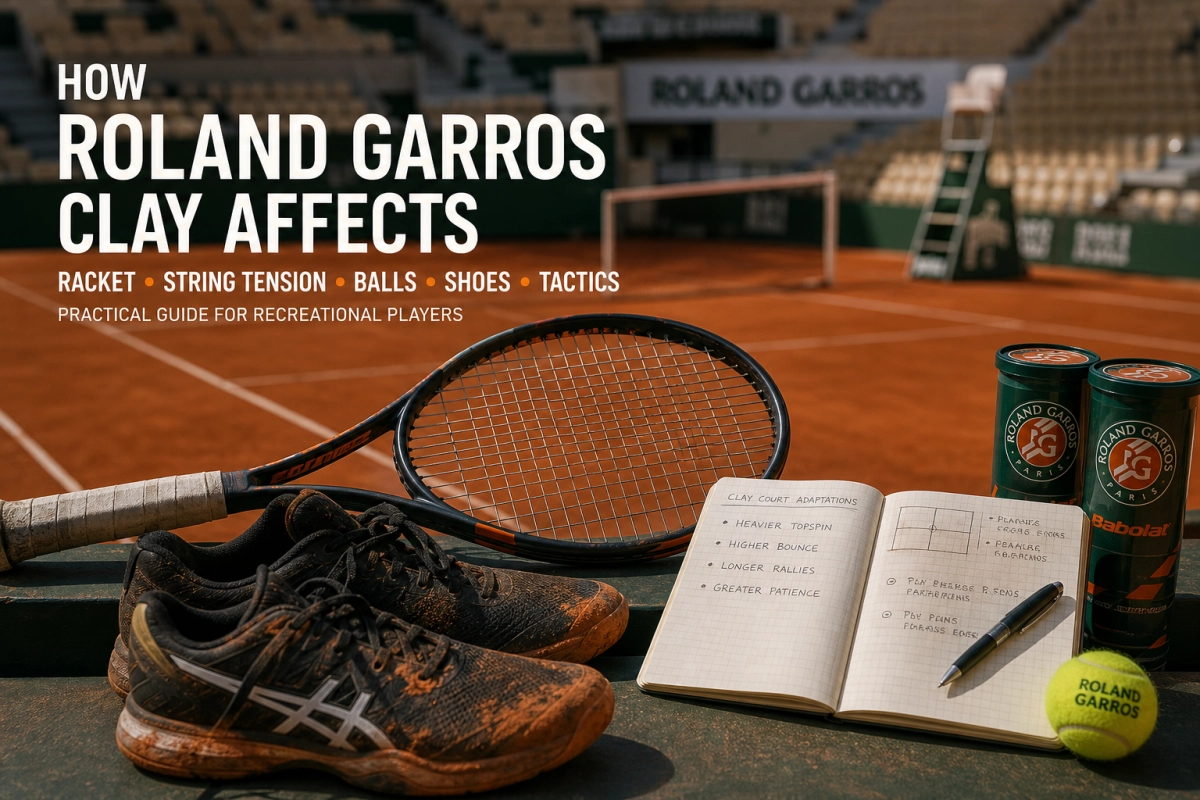
The French Open and its characteristic red clay surface present unique demands on racket selection, string tension, ball and shoe choice, and match tactics. This part explains why clay at Roland Garros plays differently from hard or grass courts and previews concrete adjustments recreational players from Serbia and the region can adopt. Readers will learn which racket features, string settings and ball types help control longer rallies on clay, and why movement and tactical patience become decisive.
Why clay at Roland Garros changes play: bounce, spin and rally length
Clay courts slow the ball, increase topspin bounce and favor longer rallies. Players face higher bounces for heavy topspin shots, reduced skid on low slices, and more time to set up returns, which alters decision-making during service and return games.
Longer points on clay also increase the importance of consistency over outright power. Terms to know: a break point is an opportunity to win the opponent’s service game, an unforced error is a mistake not caused by opponent’s pressure, and a winner is a clean finishing shot. On clay, fewer winners and more tactical point construction are common.
Surface physics and practical implications
The loose top layer of red clay absorbs pace and allows the ball to grip the surface, amplifying topspin. For recreational players this means slower, higher bounces that reward patience, improved footwork and greater emphasis on placement rather than flat power.
Racket and string adjustments suited to Roland Garros-style clay
Equipment choices should help players manage higher bounce, produce reliable spin and reduce arm strain during long rallies. This section outlines racket head size, balance, stiffness, and string tension choices that make sense for club players on clay.
Recreational players in Serbia often face outdoor club clay courts with variable humidity; recommended changes below reflect those real-world conditions rather than pro-level extremes.
Racket characteristics to prefer on clay
- Head size: Medium-to-large (100–105 in²) provides forgiveness on longer rallies and helps generate spin without over-swinging.
- Balance and weight: Slightly head-light to neutral balance with 300–320 g strung weight improves maneuverability and court coverage; heavier pro-style sticks are less necessary for amateurs.
- Frame stiffness: Moderate flex reduces shock during many back-and-forth exchanges and lowers injury risk.
String type and tension guidance
- Strings: Hybrid setup (polyester mains, softer multifilament crosses) offers spin potential and comfort—use softer crosses to protect the arm.
- Tension: Lower to mid tensions (50–55 lbs / 22–25 kg) help increase dwell time for spin and reduce vibrations during long rallies on clay. Lower tension also mitigates unforced errors by enlarging the effective sweet spot.
- Replacement rhythm: Clay soils and humidity can shorten string life; inspect and restring more frequently if cuts or loss of feel occur.
Next part will detail ball selection, shoe choices for Balkan clay courts and specific tactical adjustments — including serve placement, return patterns and movement drills tailored to Serbian recreational players.
Ball selection and upkeep for Balkan clay conditions
Ball choice matters more on clay than many recreational players expect because felt condition, internal pressure and humidity interact with the loose red surface. For club courts in Serbia and the region you’ll typically choose between pressurized and pressureless balls; both have pros and cons for local conditions.
- Pressurized balls (new canned balls from major brands) give lively bounce and spin when fresh, but lose liveliness quickly on dusty or damp clay. They are good for tournaments or matches where cans are rotated frequently.
- Pressureless balls keep a consistent, heavier bounce over time and tolerate rough clay better—useful for heavy public-court use or practice sessions where replacing balls often is impractical.
- Felt thickness and weave matter. Balls with denser felt maintain grip on the clay and preserve topspin feedback; look for club-grade balls marketed for clay or “all-court” durability.
Practical upkeep tips: wipe or brush excess clay from balls between sets so the felt doesn’t clog and change bounce; rotate balls so older ones aren’t always used for serves; store spare cans in a dry place to avoid moisture absorption. After rainy or dewy mornings, let balls dry (indoors) before play to reduce unpredictable skid.
Shoe choice and movement: traction, wear and local court care
On clay, sole pattern and shoe construction are decisive. A full herringbone outsole (zigzag pattern) is the traditional and most reliable choice because it sheds clay and provides predictable grip for sliding.
- Outsole: choose a deep herringbone tread with durable rubber—shallow treads clog quickly on soft Balkan clay.
- Support and cushioning: midsoles with moderate cushioning protect knees during long rallies; avoid ultra-stiff court shoes that reduce feel for slides.
- Fit and toe protection: reinforced toe caps and a secure midfoot reduce blisters during sliding and frequent stops.
Local court maintenance affects shoe performance: poorly groomed clay (uneven, with hard patches) demands slightly firmer soles and more ankle support; well-rolled, soft clay allows more aggressive sliding and lower-profile shoes. Clean shoes after play—brushing out clay from the outsole prolongs grip and life—and rotate between two pairs if you play several times a week.
Tactical adjustments and practical drills for Serbian recreational players
On Roland-Garros-style clay, tactical patience and movement patterns trump raw power. Adjustments below are tailored for amateur play where rallies are longer and court conditions vary.
- Serve placement: favour spin/kick serves and wide serves to open the court rather than flat power. Aim the wide serve to the deuce court to pull a right-hander off the baseline; use heavy kick serves to the backhand on second serves to force a short reply.
- Return patterns: take returns with a compact, topspin-focused swing. Target the opponent’s feet or deep crosscourt to prevent easy approach opportunities. Early returns work less on clay—allow the ball to rise slightly to use its bounce for depth.
- Point construction: build with deep topspin crosscourt to create angles, then use short angled approaches or occasional drop shots to finish. Avoid trying for low-percentage winners; construct points with three or more strokes in mind.
Drills to practice:
- Topspin rally: 3 sets of 6 minutes, both players staying crosscourt and focusing on depth and heavy topspin.
- Serve-placement routine: 20 serves—10 wide, 10 kick—to a target box; follow each serve with a short rally emphasizing the resulting return.
- Sliding footwork drill: 5 repetitions each side of controlled slides into a recovery split-step, then step forward into a forehand. Repeat after short rest.
These small equipment and tactical tweaks—paired with regular practice on local clay—help Serbian recreational players convert longer exchanges into consistent, match-winning tennis on Roland-Garros-style surfaces.
How to test equipment and tactic changes safely
Introduce one modification at a time and give it several practice sessions before deciding whether it helps. Keep a short log after sessions: what you changed, how it felt, and any measurable effects on consistency or comfort. Test on a court with conditions similar to where you normally play (same local clay, similar maintenance) so results translate. If possible, run a controlled comparison: warm up, play a set with your usual setup, then a set with the change to feel the difference directly.
- Make single-variable changes (racket, strings, tension, shoes) rather than several at once.
- Use practice matches or drill-focused sessions to evaluate tactical options before applying them in league play.
- Ask a coach or experienced training partner for objective feedback, especially on movement and serve/return adjustments.
Smart, local-minded decisions for Serbian and regional players
Factor in budget, local court upkeep, and seasonal weather when choosing gear or timing changes. Seek out demo rackets at clubs or stores, use pressureless balls for regular public-court practice, and prioritize durable, herringbone-soled shoes for everyday clay work. Coordinate with club staff on court maintenance to improve traction and consistency—small improvements in grooming pay off for everyone.
- Rotate two pairs of shoes and two sets of strings if you play frequently, to extend gear life and maintain consistent performance.
- Join local group drills focused on clay movement and topspin—practical repetition accelerates adaptation.
- Balance investments: prioritize footwear and string setups for comfort and injury prevention before premium rackets.
Final notes on building confidence on clay
Adapting to Roland-Garros-style clay is a gradual process that rewards patience, measured experimentation and regular practice. Focus on steady improvements—one gear tweak, one tactical habit, one movement drill at a time—and let on-court experience guide which changes stick. Above all, enjoy the longer rallies and tactical richness clay offers: confident footwork and shot selection will translate into more wins and greater playing satisfaction over the long run.