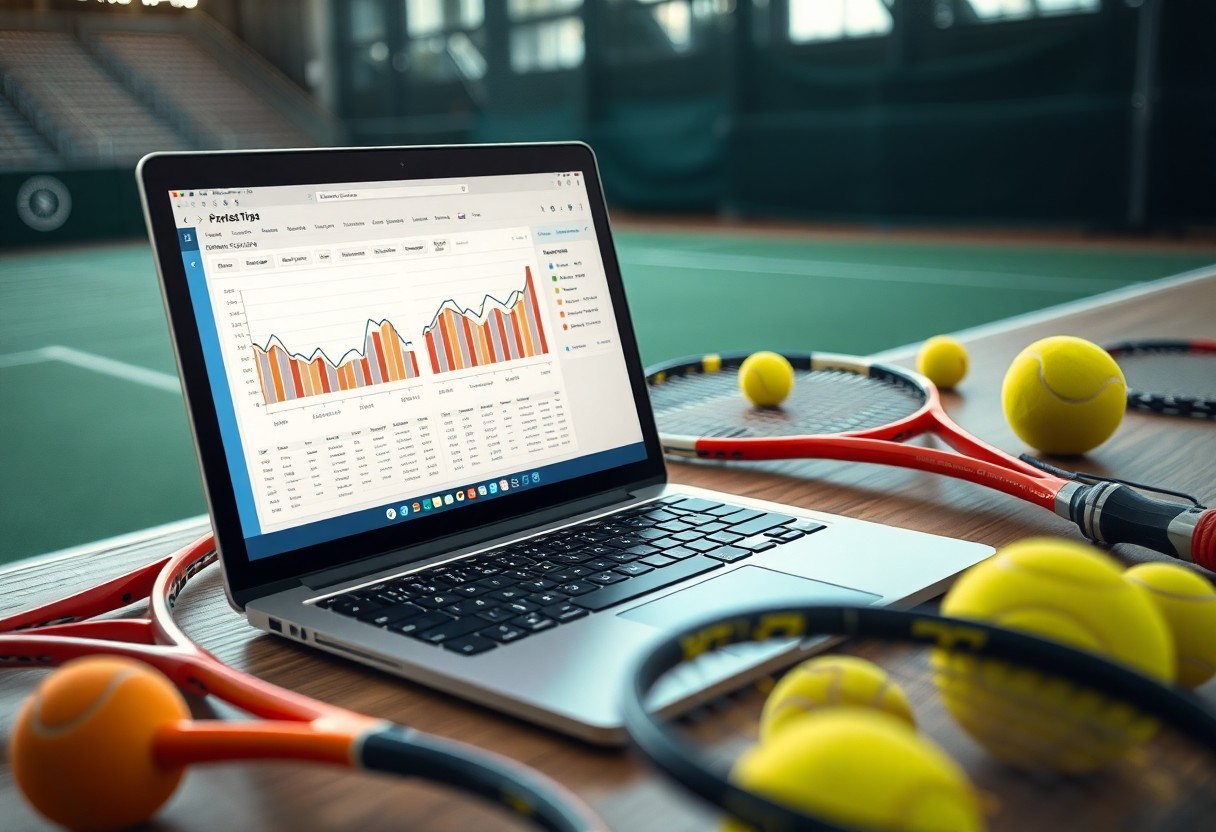
Tennis player training now integrates biomechanics, physiology and data analytics to refine stroke mechanics and recovery; sports science reduces injury risk while delivering measurable performance gains, and advances in monitoring expose overload dangers, guiding smarter coaching, tailored conditioning and evidence-based match strategies.
The Anatomy of Athletic Performance: Key Physical Metrics for the tennis player
Performance profiling for the modern tennis player tracks metrics like VO2max (≈55–65 ml·kg−1·min−1), peak sprint speed (up to 7 m/s), and serve velocities often exceeding 200 km/h; detailed comparisons with elite players show how small gains in these numbers translate to match wins and long-term durability.
Biomechanics and Movement Patterns for the tennis player
Ground-reaction forces during serve and change-of-direction can reach 3–4× bodyweight, with hip–shoulder separation and lower-limb drive dictating racket-head speed and injury risk; motion-capture analyses reveal that improving lateral push-off technique and trunk rotation timing reduces deceleration loads and raises effective court coverage by measurable meters per second.
Physiological Adaptations and Their Impact on the tennis player
Match demands blend short maximal efforts and aerobic recovery: anaerobic spikes produce lactate while an aerobic base shortens recovery windows, with average in-play to rest ratios near 1:3 (8–10s effort, 20–30s recovery); players with higher repeated-sprint ability sustain intensity across sets and win a greater share of long rallies.
Specific training adaptations include 2–3 weekly HIIT sessions to raise lactate threshold and repeated-sprint capacity, plus 2 strength sessions targeting eccentric hamstring capacity and shoulder stabilizers to cut soft-tissue injury rates; monitored increases in VO2max and sprint power reliably correlate with improved breakpoint conversion and fewer unforced errors under fatigue.
Mental Fortitude: The Psychological Edge for the Modern Tennis Player
tennis player mental resilience now differentiates break-point winners: teams deploy sports psychologists, HRV monitoring and 10–15 minute visualization sessions pre-match. Case studies like Djokovic’s breath control and Nadal’s pre-point rituals show structured mental work produces measurable clutch-point gains, with coaches noting fewer unforced errors and better decision-making after 6–8 week mental training blocks.
The Role of Sports Psychology in Training for the Tennis Player
Sports psychology blends CBT, goal-setting, imagery and biofeedback into practice: common protocols include 2–3 weekly consultations plus daily 10-minute mental rehearsals. Academies using HRV feedback report notable reductions in pre-serve heart-rate spikes, while combining visualization with technical drills accelerates skill retention and enhances shot selection under fatigue.
Coping Mechanisms and Performance Under Pressure for the Tennis Player
Players adopt concise coping tools: 3-step pre-serve routines, 4–6 second paced breathing, and “if-then” plans to interrupt negative spirals. Simulated-pressure drills—match-point scenarios with crowd noise—reduce error spikes and cortisol surges, and daily rehearsal of these protocols keeps composure during momentum shifts and tiebreaks.
Physiological measures inform interventions: 6–8 week HRV biofeedback lowers sympathetic activation and speeds recovery between points, while quiet-eye visual focus drills lengthen pre-shot fixation and link to improved serve accuracy in trials. Layering physiological data with cognitive strategies builds a multi-level defense against choking and sustains peak performance.
Strategic Training: Crafting the Modern Tennis Player
Tennis player preparation now combines GPS/IMU match loads, force-plate jump metrics and HRV monitoring to individualize periodization; teams commonly prescribe 3–4 high-intensity on-court sessions and 2 strength sessions weekly, with microcycles adjusted when CMJ power drops >10% or HRV shows persistent suppression to reduce overuse injury risk.
Personalized Training Regimens Based on Data for the tennis player
Wearable data and lab tests guide session content: IMU-derived decelerations and racket acceleration profiles inform agility drills, V̇O2 and lactate tests set conditioning zones, and force-plate CMJ tracks neuromuscular fatigue; players follow 2–4 week loading blocks with a deload week, tailoring intensity to biomechanical asymmetries revealed by motion capture.
The Importance of Recovery and Injury Prevention for the tennis player
Sleep hygiene (7–9 hours), HRV-guided adjustments and targeted modalities—10-minute cold-water immersion at ~10–15°C, daily 10–15 minute mobility routines—form the backbone of recovery; managing acute spikes in workload prevents tendon overload, shoulder strains and lateral epicondylitis common in high-volume competition.
Implementing injury prevention means tracking the acute:chronic workload ratio (aiming roughly between 0.8–1.3), prescribing eccentric rotator-cuff and wrist protocols, and scheduling prehab sessions 2–3×/week for 15–20 minutes; motion-capture checks every 6–8 weeks flag technical drivers of overload so conditioning can correct kinetic-chain faults before they become injuries.
Nutrition and Hydration: Fueling Success on the Court — tennis player
Tennis player energy systems demand targeted macronutrient timing: aim for 5–7 g/kg/day carbohydrates during heavy training, 30–60 g/hour of carbs in long matches, and 1.2–1.7 g/kg/day protein for repair. Prioritize quick recovery with 20–25 g of high‑quality protein within 30–60 minutes post-match and use periodized meals around practice to sustain repeated sprint ability and serve speed without excess body fat.
Dietary Strategies for Peak Performance — tennis player
Employ carbohydrate periodization: 1–4 g/kg carbohydrate 1–4 hours pre-match based on duration, plus a 0.5 g/kg top-up 15–30 minutes before long sessions. Integrate nitrate‑rich beets for anaerobic bursts, omega‑3s for inflammation, and maintain iron and vitamin D status via testing; elite teams often tailor meals to match schedules and opponent style to preserve on‑court power and recovery.
Hydration Science: Balancing Electrolytes — tennis player
Match hydration starts with measured sweat rates (typically 0.5–2.0 L/hour) and sodium losses (~500–1,500 mg/L). Use 6–8% carbohydrate sports drinks with added sodium to replace electrolytes during long rallies, and weigh players pre/post session to guide fluid plans; excessive plain water without sodium raises the risk of hyponatremia.
Practical protocol: a 70 kg tennis player losing 1.5 L in 90 minutes should replace ~150–225% of lost volume over the next 2–4 hours with fluids containing electrolytes and 20–50 mmol/L sodium as needed; oral rehydration solutions or custom mixes outperform water alone for rapid plasma volume restoration and neuromuscular function.
Technology’s Game-Changing Influence in Tennis for the tennis player
tennis player integration of on-court sensors, high-speed cameras and AI now samples motion at 10 Hz GPS and inertial rates of 300–1,000 Hz, linking acute workload spikes to injury markers and performance shifts; teams use these metrics to adjust weekly load, monitor serve speeds exceeding 230 km/h, and flag fatigue-related injury risk before symptoms appear.
Wearable Tech and Performance Monitoring for the Tennis Player
Wearable IMUs on wrist and trunk capture racket acceleration, spin proxies and peak g-forces (often 20–40 g), while heart-rate and HRV trends plus countermovement jump drops of 5–10% signal neuromuscular fatigue; sports scientists combine these streams to prescribe rest, modify practice intensity and reduce acute:chronic workload spikes linked to injury.
Video Analysis: A New Lens on Technique Improvement for the Tennis Player
High-speed video (typically 240–1,000 fps) and markerless motion-capture quantify racket path, hip-shoulder separation angles and ball impact geometry, enabling coaches to detect sub-degree swing plane deviations that alter spin and margin over the net; overlays and AI-driven pose estimation translate frame-by-frame data into actionable drill cues.
Combining 3D kinematics from 200–500 Hz lab systems with court-based 500 fps cameras validates technique changes: measurement precision often approaches ±2° for joint angles, and synchronized IMU/video pipelines let teams test adjustments (toss position, swing arc) and measure immediate effects on serve velocity, spin and shoulder load without invasive procedures.
Final Words — tennis player
Conclusively the tennis player of today benefits from integrated sports science—biomechanics, physiology, data analytics and tailored recovery—shaping technique, training and match strategy to elevate performance while reducing injury risk. Coaches and medical teams use precise metrics to individualize programs, ensuring sustained progression and competitive consistency across surfaces and seasons.