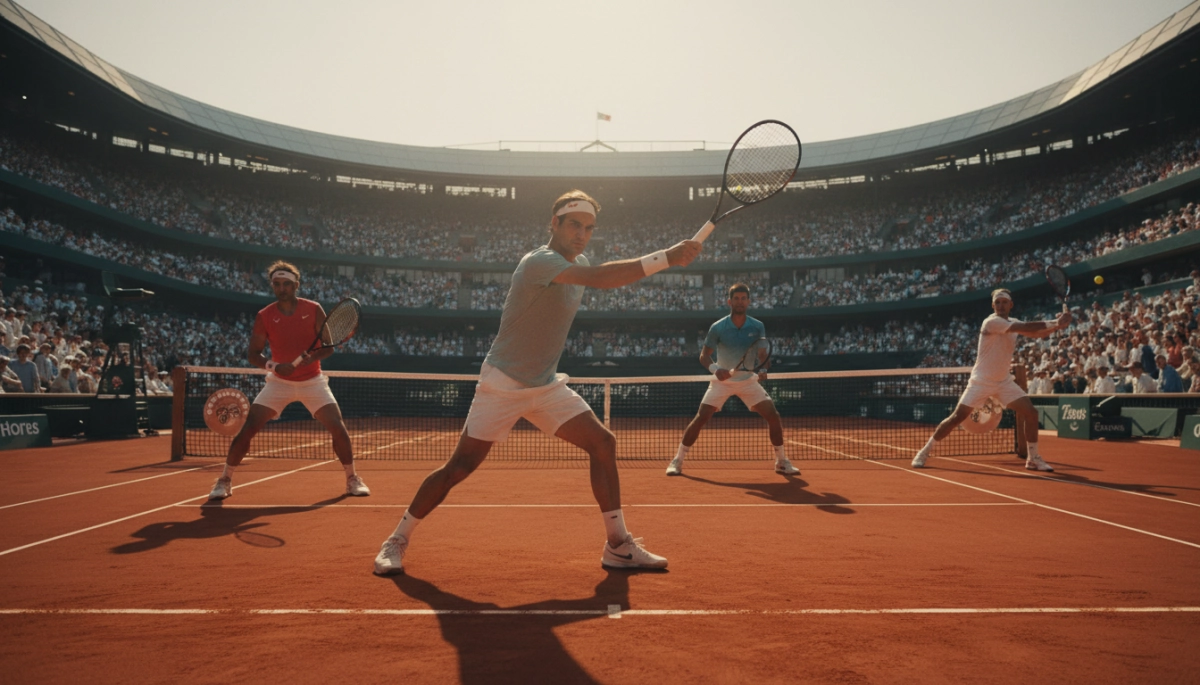
Setting the stage: why these rivalries define modern tennis
You’ve likely seen headlines declaring Roger Federer, Rafael Nadal or Novak Djokovic the “greatest ever.” Those proclamations feel definitive because these players rewrote records, produced iconic matches and defined eras. Yet when you step back, you see that “greatest” depends on which facts and values you prioritize: Grand Slam counts, weeks at No. 1, head-to-head records, surface dominance, longevity, or impact on the sport.
Understanding the debate requires more than memorizing numbers. You need to place achievements in historical context, weigh different metrics against each other, and recognize how playing conditions and rivalries influenced outcomes. This section gives you the foundation to compare legends fairly and thoughtfully.
How to measure greatness: metrics you should consider
Quantitative measures that matter
- Grand Slam titles — the headline stat that still carries the most weight for many fans and analysts.
- Weeks ranked No. 1 — a measure of sustained dominance across seasons.
- ATP Tour titles and Masters 1000 — indicators of consistency at elite levels outside majors.
- Head-to-head records — essential when comparing contemporaries who faced each other repeatedly.
- Titles by surface — clay, grass and hard-court records reveal players’ adaptability and specialization.
- Longevity and injury resilience — how long a player remained competitive after peak years.
Qualitative context you shouldn’t ignore
- Era and competition — you should compare accomplishments relative to the depth and style of opponents at the time.
- Technological and rule changes — racquet evolution, string technology and even court-speed adjustments affect play and statistics.
- Big-match temperament — clutch performances in finals and deciding sets often define legacies beyond raw totals.
Early careers and playing styles: how beginnings shaped long-term success
When you examine the formative years of Federer, Nadal and Djokovic, patterns emerge that help explain their later dominance. Early coaching, junior competition, and the surfaces they favored played outsized roles in shaping technique and tactical preferences.
- Federer — developed a fluid, offensive all-court game; early success on faster surfaces and a smooth serve/forehand combination set him up for rapid ascent.
- Nadal — honed a relentless left-handed topspin game on clay, building extraordinary physicality and court coverage that translated into unmatched dominance at Roland Garros.
- Djokovic — refined an elastic defensive baseline game and exceptional return-of-serve skills; his early adaptability enabled breakthroughs across all surfaces.
- Other contenders — players like Pete Sampras, Rod Laver and Björn Borg contributed different benchmarks (e.g., grass dominance, pre-Open Era achievements) you should include when you broaden comparisons.
By the end of this foundational look you should feel equipped to weigh numbers against context. Next, you’ll examine the specific Grand Slam records, head-to-head matchups and surface-by-surface dominance that drive much of the GOAT conversation.
Grand Slam tallies: why raw totals need context
Grand Slam totals are the most cited measure of greatness because majors are the highest-stakes tests — best-of-five, media pressure, toughest draws. But totals alone can mislead unless you parse when and how those titles were won. Consider a few complicating factors:
– Timing and competition: Winning 20 Slams in an era with several contemporaries logging hundreds of weeks at No. 1 and multiple Grand Slam champions is different from piling up titles when the field is shallower. The peak depth of the Federer–Nadal–Djokovic era makes each additional major harder to claim.
– Surface bias and specialization: Some players built their totals on a single slam (or surface). A player who amassed many titles largely at one major demonstrates supreme mastery but less across-the-board versatility.
– Career interruptions: Injuries, military service (in earlier eras), or fewer tournaments per year affect the opportunity to contest — and win — Slams. Longevity counts as much as peak brilliance.
Applied to the main contenders: Nadal’s major haul is defined by an unprecedented stranglehold on clay, Federer’s by a long run of excellence with standout Wimbledon performances, and Djokovic’s by sustained success across all four events. But the “value” of each Slam varies: beating a stacked draw in late career or surviving multiple five-set thrillers can elevate the weight of a title beyond the tally itself.
Head-to-head matchups: reading the story behind the numbers
Head-to-head records are the raw interpersonal proof of rivalry dynamics, but they need reading like a match script rather than a final scoreboard. Patterns matter more than the final number: surface splits, stages of careers, and injury-affected meetings tell different stories.
– Surface splits: Many head-to-head advantages are surface-driven. A player who dominates on clay may still struggle head-to-head on grass or fast hard courts. When Nadal and Federer faced off, clay skewed results toward Nadal; grass and faster hard courts favored Federer’s timing and serve.
– Career phases: Early-career reversals and late-career comebacks change the ledger. Some players adapt and flip previously unfavorable matchups; others decline. A head-to-head that looks lopsided overall can actually be evenly split across the years they were both at their peak.
– Match importance: Finals and five-setters carry disproportionate legacy weight. Winning the decisive Grand Slam finals or Olympic matches often matters more for reputational standing than a collection of early-round wins.
For the big three, head-to-head duels became chess matches — tactical adjustments, mental edges, and fitness shifts determined outcomes as often as shot-making. Comparing these rivalries shows not just who won more, but who learned to counter whom, and when.
Surface supremacy: where each legend truly reigned
Breaking down surface records clarifies why each player’s greatness is different rather than strictly comparable.
– Clay — the domain of attrition and heavy topspin. Clay contests reward stamina, patience, and the ability to construct points. One player stands apart for near-unbreakable dominance on this surface, repeatedly turning clay courts into a personal fortress.
– Grass — rewards precision, serve-and-volley timing and quick point construction. Success at Wimbledon has historically signaled pure feel and net game excellence; Federer’s stylistic grace and slice game made him a perennial favorite here.
– Hard courts — the widest battleground. Hard courts reward adaptability and consistency; success here often correlates with a player’s ability to win across different tournament conditions and surfaces. Djokovic’s adaptability and return game have made him exceptionally hard-court prolific.
When you add the indoor/outdoor and calendar timing nuances, surface records reveal specialization, strategic scheduling and physical resilience. Greatness often comes down to whether a player could translate surface dominance into cross-surface success — the difference between an era-defining specialist and a universally dominant all-court champion.
Final reflections on the GOAT conversation
Greatness in tennis will always be part numbers, part narrative and part personal judgment. Rather than seeking a single definitive label, use the metrics and context outlined here to make a reasoned case—and be ready to adjust it as careers, rule changes and new challengers reshape the record books. Watch the key matches, track surface splits and head-to-heads, and remember that the most memorable moments often matter as much as the biggest totals.
If you want up-to-date statistics or to dive deeper into match records and tournament histories, check resources like the ATP Tour for official data and seasonal rankings.
Key Takeaways
- Greatness combines quantitative achievements (Slams, weeks at No. 1, head-to-heads) with qualitative context (era strength, surface specialization, big-match temperament).
- Federer, Nadal and Djokovic each define a different route to all-time status—style, surface dominance and adaptability—so comparisons require metric-specific weighting.
- The GOAT debate is dynamic: follow ongoing results and deeper analytics rather than relying on a single static stat to settle it.