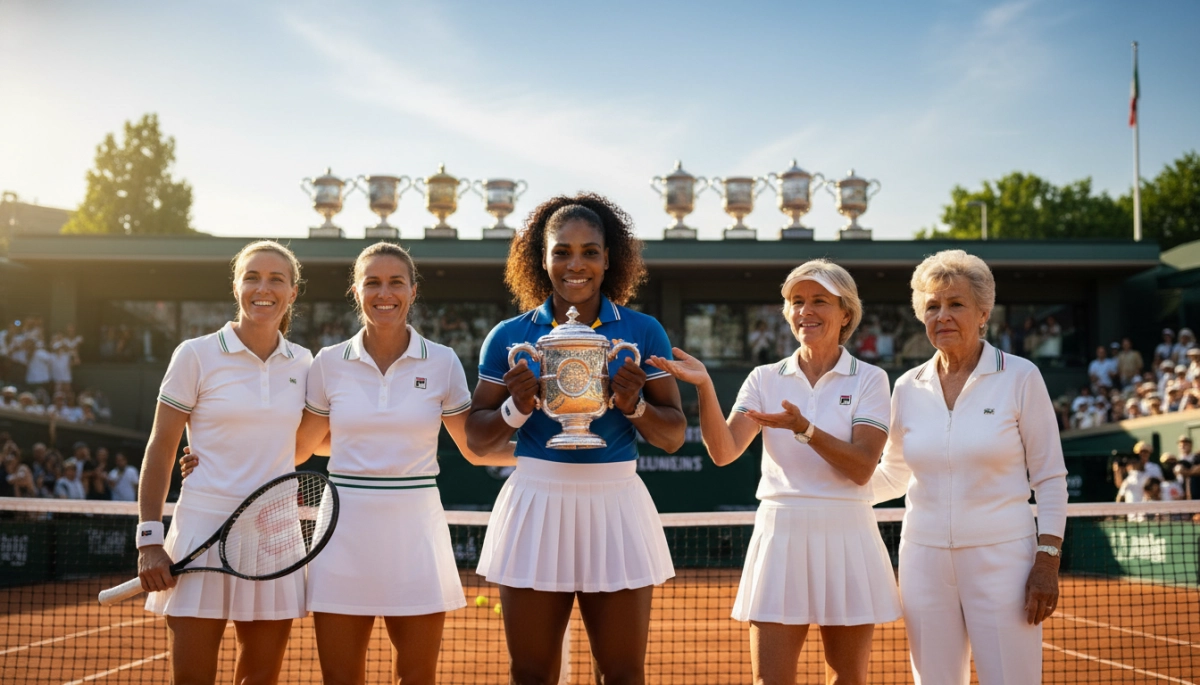
Why tennis trophies carry outsized meaning for players and fans
You already know that winning a match feels great, but trophies do more than mark a single victory: they encapsulate history, prestige, national pride, and the narrative of a career. As a player, lifting a famous trophy is a public validation of years of practice, travel, and sacrifice. As a fan, those trophies become shorthand for eras—think of how certain cups or plates instantly evoke the names of legends.
Prestige in tennis isn’t measured only by metal or size. It’s shaped by tradition, how frequently an event is contested, the quality of opposition, and the cultural weight of the tournament. Some trophies confer immediate ranking points and prize money; others carry symbolic importance that outlasts the seasonal calendar. Understanding what makes each award special helps you appreciate why players covet particular wins and why career resumes often highlight certain trophies above all else.
Grand Slams: the iconic trophies every player dreams of
If you want to understand tennis prestige quickly, start with the Grand Slams. There are four major tournaments on the professional calendar—each with its own trophy, rituals, and history. Winning any Grand Slam singles title instantly elevates a player’s status; winning multiple across surfaces cements versatility and greatness.
Australian Open — Norman Brookes Challenge Cup and Daphne Akhurst Memorial Cup
The Australian Open, played on hard courts, awards the Norman Brookes Challenge Cup to the men’s singles champion and the Daphne Akhurst Memorial Cup to the women’s singles winner. These trophies reflect the tournament’s rise from a regional event to a global summer highlight and reward players who can navigate heat, travel, and a competitive field that traditionally starts the Grand Slam year.
French Open — Coupe des Mousquetaires and Coupe Suzanne Lenglen
Held on clay at Roland-Garros, the French Open prizes are steeped in clay-court legend. The Coupe des Mousquetaires (men’s) and the Coupe Suzanne Lenglen (women’s) symbolize mastery of a demanding surface that favors stamina, topspin, and tactical patience. For many players, a Roland-Garros win is proof of tactical depth and physical resilience.
Wimbledon — Gentlemen’s and Ladies’ Singles Trophies
Wimbledon’s trophies are synonymous with tradition: grass courts, strict dress codes, and royal attendance. The Gentlemen’s Singles Champion receives a silver gilt cup, while the Ladies’ Singles champion takes home a fondly revered salver. Grass demands quick reflexes and serve-and-volley skills; a Wimbledon title often signals an all-court pedigree.
US Open — U.S. Open trophies and the modern prestige of hard-court success
The US Open completes the Slam cycle on hard courts in New York. Its trophies reward players who thrive under night lights, loud crowds, and a fast-paced hard-court game. A US Open title is as much about mental toughness in high-pressure moments as it is about technical excellence.
Having covered what makes the Grand Slams uniquely coveted, next you’ll look at year-end and team trophies—the awards that measure consistency, season-long dominance, and national achievement.
Year-end championships — trophies that reward season-long excellence
The ATP and WTA year-end finals occupy a special place on the calendar because they don’t just honor a single performance — they reward sustained excellence across a full season. The ATP Finals and the WTA Finals gather the top eight singles players (and top doubles teams) for a round-robin format that guarantees marquee matchups and often settles year-end rankings. Winning one of these trophies signals that a player has repeatedly beaten the best, not just enjoyed a fruitful fortnight.
These events are unique in their structure: the round-robin stage forces top players to prepare for multiple styles and rethink strategies from match to match, while the knockout semis and final test nerves and adaptability. The winners’ trophies therefore represent more than a big payday; they are a compact proof of dominance over peers and an indicator that a player has managed form, fitness, and focus across an entire season. For some careers, an ATP or WTA Finals title is the trophy that validates a superstar’s claim to be the season’s best, particularly in years when Grand Slam success was shared among several contenders.
National team trophies — the Davis Cup, Billie Jean King Cup, and the pull of country pride
Trophies awarded for national team events carry a different kind of weight: they stand for collective effort, national identity, and moments when players step away from individual agendas to represent flag and country. The Davis Cup, founded in 1900, remains the oldest and most storied of these, its silver trophy symbolizing generations of national rivalry and comeback narratives. The competition has evolved dramatically in format and staging, but the emotional core—countrymen rallying behind a shared cause—remains unchanged.
On the women’s side, the competition now known as the Billie Jean King Cup (formerly Fed Cup) plays the same role. Winning national selection and delivering under that banner often means more to many players than individual tour titles, because it reconnects tennis to patriotism and team dynamics. In recent years newer events like the Laver Cup—pitting Team Europe against Team World—have added a modern, high-profile team trophy to the sport. Though not nationalistic in the traditional sense, the Laver Cup’s celebrity captains, intense matchups, and celebratory trophy have made it a sought-after prize, especially for players who relish team camaraderie and exhibition-style pressure.
Olympic gold — rarity, symbolism, and the career-defining medal
An Olympic tennis gold medal occupies a rarefied place in the trophy hierarchy. Awarded only once every four years, it combines sporting prestige with global symbolism. Unlike tour trophies, an Olympic medal transcends the rankings system; it’s a moment watched by billions and often inserted into the broader narrative of national achievement. For many players, an Olympic gold can complete a career milestone — be it a career Golden Slam or a missing piece in a legacy otherwise dominated by Grand Slams.
The prestige of Olympic success also lies in its scarcity. With limited opportunities and the pressure of representing a country on the world stage, an Olympic trophy is as much about timing and circumstance as it is about form. That rarity is precisely what makes it so coveted: few things in tennis reward both personal greatness and national celebration in equal measure.
Final reflections
Trophies are more than metal and engraving; they are milestones that capture emotion, era and identity—both for the players who earn them and the fans who remember them. They bind personal achievement to collective memory, and as the sport evolves so too will the symbols players chase. For those who want to explore the official structures and competitions that create these moments, the International Tennis Federation is a good starting point.
Key Takeaways
- Grand Slam titles sit at the top of tennis prestige, but year-end, team, and Olympic trophies each carry unique historical and emotional weight.
- Prestige comes from tradition, rarity, competition level, and the stories trophies create across careers and nations.
- Understanding the context behind each award deepens appreciation for players’ achievements and the sport’s evolving legacy.