Australian Open: format, match rules and how to follow the action from Serbia
The Australian Open is one of the four Grand Slam events and understanding its format is essential for any tennis fan. This guide explains the tournament structure, how matches are played (surface, number of sets, tie-break rules), practical time-zone conversion for viewers in Serbia, and the main ways to watch or follow live scores. Readers will learn basic tennis terms as they appear, so even newcomers can follow match narratives confidently.
How the Australian Open is organised and what the draw looks like
The Australian Open features both men’s (ATP) and women’s (WTA) singles draws of 128 players, plus doubles, mixed doubles and junior/legends events across two weeks. The tournament uses seeded players to separate top-ranked competitors in the draw; seeds are determined by rankings so favorites do not meet in early rounds.
- Qualifying rounds: lower-ranked players compete in a pre-tournament qualifying event for a limited number of main-draw spots. “Qualifiers” enter the main draw if they win enough matches.
- Wild cards: organisers grant wild cards to players who would not otherwise qualify — often local players or returning stars.
- Rounds: the event progresses from first round through to the final over 7 rounds for singles (1R → 2R → 3R → 4R → QF → SF → Final).
Ranking points are awarded by round—deeper runs yield more points and affect ATP/WTA standings. Head-to-head records (previous results between two players) can help anticipate match dynamics but are only one factor in analysis.
Match rules: courts, number of sets and tie-break specifics
The Australian Open is played on hard courts in Melbourne — specifically on Plexicushion in recent years, though surface branding can change; the key point is that matches are on medium-fast, hard surfaces favoring players with solid serves and consistent baseline games. Court speed, heat and ball type influence match patterns, so watching conditions matters.
Match formats and scoring:
- Number of sets: men’s and women’s singles at Grand Slams differ historically; at the Australian Open both men’s singles matches are best-of-five sets, while women’s singles are best-of-three sets. Doubles are usually best-of-three with match tie-breaks in some draws.
- Tie-breaks: the tournament uses tie-breaks to decide sets that reach 6–6. The Australian Open implemented a final-set tie-break format in recent years: a 10-point “super” tie-break (first to 10 points with a 2-point margin) decides the final set when players reach 6–6. Regular set tie-breaks (first to 7 points, 2-point margin) apply in earlier sets unless stated otherwise for specific draws.
- Key terms explained: a service game is when a player serves; a return game is when they receive. A break point is a chance for the returner to win the server’s game. An unforced error is a mistake not caused by the opponent’s pressure; a winner is a shot that wins the point outright.
Converting match times to Serbia: practical tips for following live matches
Australian Open matches in January take place in Melbourne time, which is Australian Eastern Daylight Time (AEDT, UTC+11). Serbia is on Central European Time (CET, UTC+1) in January, so Melbourne is 10 hours ahead of Serbia. This time difference determines when matches air live for Serbian viewers.
Practical examples and suggestions:
- If a match starts at 11:00 AEDT, it will be 01:00 CET the same day in Serbia — useful for planning late-night viewing.
- Session scheduling: main showcourts host day and evening sessions; evening Melbourne matches can fall into early mornings in Serbia. Check local TV schedules and the official tournament schedule to plan viewing.
Next, the guide will explain specific TV and streaming options available to viewers in Serbia, list reliable live-score services and offer a checklist of tactical and statistical things to watch during the first two weeks of the tournament.
Where to watch live in Serbia: TV channels and streaming options
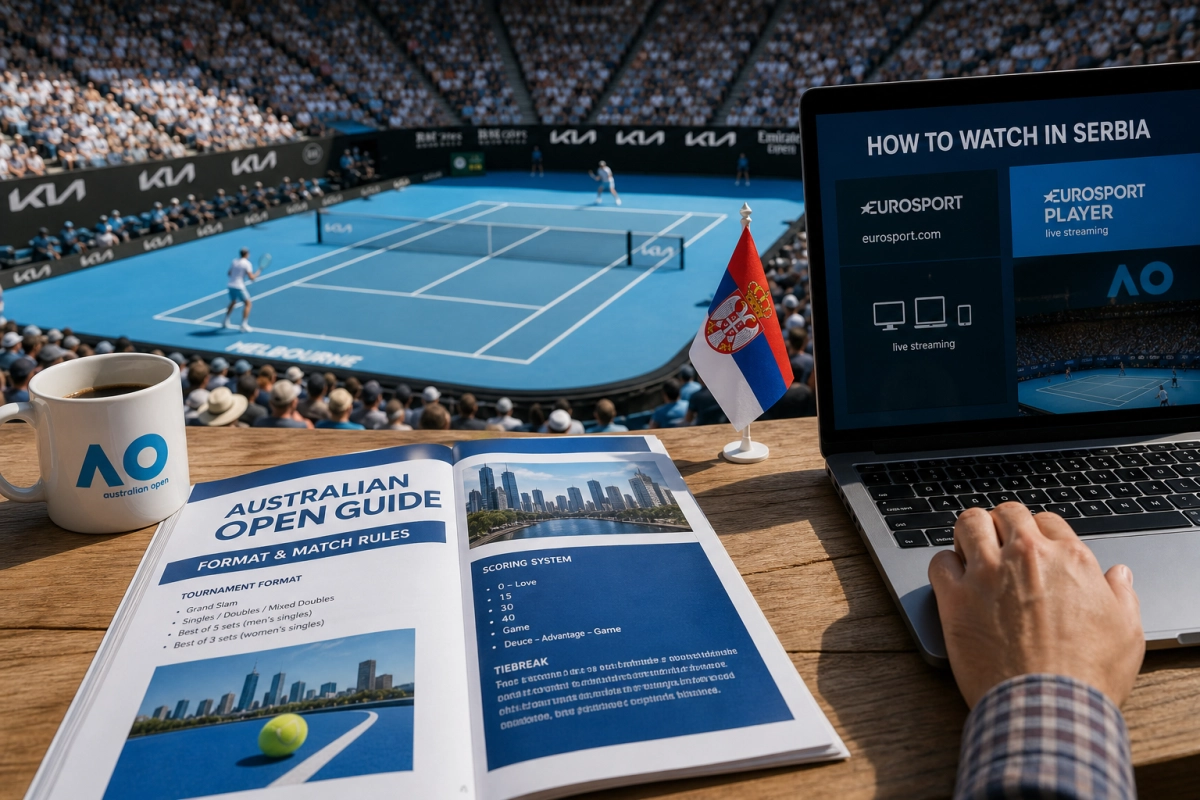
Broadcast rights vary by year, so the safest approach is to check current rights a few days before the tournament. In recent seasons the Australian Open has been available on Eurosport and its streaming service (Discovery+/Eurosport Player) across much of Europe — this is a common option for viewers in Serbia. Local pay-TV sports channels may also carry matches (for example, Arena Sport or the national broadcaster RTS have shown major tennis events in past years), and major Serbian providers (SBB, Telekom mts, Orion, IPTV packages) usually include those channels in sports bundles.
Practical steps to secure a reliable feed:
- Confirm the official broadcaster for Serbia on the tournament website or your pay-TV guide. Broadcasters publish detailed daily schedules and session start times.
- Subscribe to the streaming service in advance (Discovery+/Eurosport Player or the listed local service). Test the app on your phone, tablet or smart TV before matches so you know how to login, select courts and enable subtitles or alternate commentary where available.
- If you rely on mobile streaming, check your data plan and prefer Wi‑Fi for long sessions; cast the stream to a TV (Chromecast, Apple TV, Smart TV app) for a better viewing experience.
- Be cautious about unofficial streams and geo-restrictions. Using VPNs may violate service terms and can cause unstable streams; it’s better to use an authorised provider or pay-TV partner.
Following live scores and match stats: apps and websites to use
For fast, reliable live scoring and in-match stats use a mix of official and third‑party sources. The official Australian Open website and mobile app provide live scores, point-by-point updates, stats pages, and often interactive shot charts for big matches. ATP and WTA apps also give live scores, order of play updates and player news.
Popular third‑party score services include Flashscore, SofaScore and LiveScore — these are quick, have push notifications and let you follow specific matches or players. For richer statistical breakdowns (serve percentages, breakpoint conversion, winners/unforced errors) check the AO live stats pages or the match-centre on ATP/WTA sites.
Tips for following remotely:
- Set push notifications for your favourite players or matches so you get score alerts, especially if matches run at odd Serbian hours.
- Use the tournament schedule to add matches to your calendar (many sites offer an “add to calendar” or ICS link) and convert times to CET to avoid confusion.
- Follow live blogs and social feeds from trusted outlets (Eurosport, ATP/WTA social media, prominent tennis journalists) for context — injuries, weather delays and on-court behaviour often appear there first.
Key things to watch during the first two weeks
Early rounds (days 1–4): focus on serve efficiency and early-round upsets. Hard courts reward big servers, so track first-serve percentage, aces and double faults. Watch qualifiers and wildcards — they’re match‑tough and can trouble seeds. Pay attention to how players handle sudden heat or schedule changes; short recovery between long matches is a common factor.
Middle rounds (rounds 3–QF): look at return stats and baseline consistency. Breakpoint conversion and defense-to-offense transitions often decide tight sets. Also watch tactical adjustments — players who change court position, vary pace or approach the net more often tend to gain an edge.
Late rounds (SF–Final): endurance and clutch statistics matter. Track tiebreak records, performance in deciding sets (especially for men in best-of-five), second-serve win percentage and physical signs of fatigue. Narrative elements — coaching changes, recent form on hard courts, and head-to-head history — become more predictive as the field narrows.
Throughout the fortnight, keep an eye on young breakouts, veteran comebacks, and doubles specialists who can influence singles draws. Using score apps plus match stats will help you understand not just who wins, but why a match went the way it did.
Match-day checklist for viewers in Serbia
- Confirm the day’s order of play in AEDT and convert key match times to CET (Melbourne is UTC+11; Serbia is UTC+1 in January).
- Set push notifications for favourite players and matches in your chosen score app (Flashscore, SofaScore, official AO/ATP/WTA apps).
- Test your streaming app or TV channel access before match time and ensure your device and internet connection are ready.
- Plan for odd hours: decide whether to watch live, follow live scores, or catch highlights; schedule short naps if you expect late‑night or early‑morning sessions.
- Keep basic stats visible during matches (first‑serve %, breakpoints, winners/unforced errors) to understand momentum shifts.
- Monitor tournament social accounts and live blogs for news on delays, injuries or court changes that can affect start times.
Final notes for following the Australian Open from Serbia
Enjoy the atmosphere and narratives the tournament brings: the upsets, the endurance battles and the breakthrough performances. Use the tools and checks above to stay informed and comfortable while watching matches at unusual hours. Whether you watch full sessions, follow point‑by‑point updates, or catch highlights, staying prepared will make the fortnight more engaging and easy to follow from Serbia.