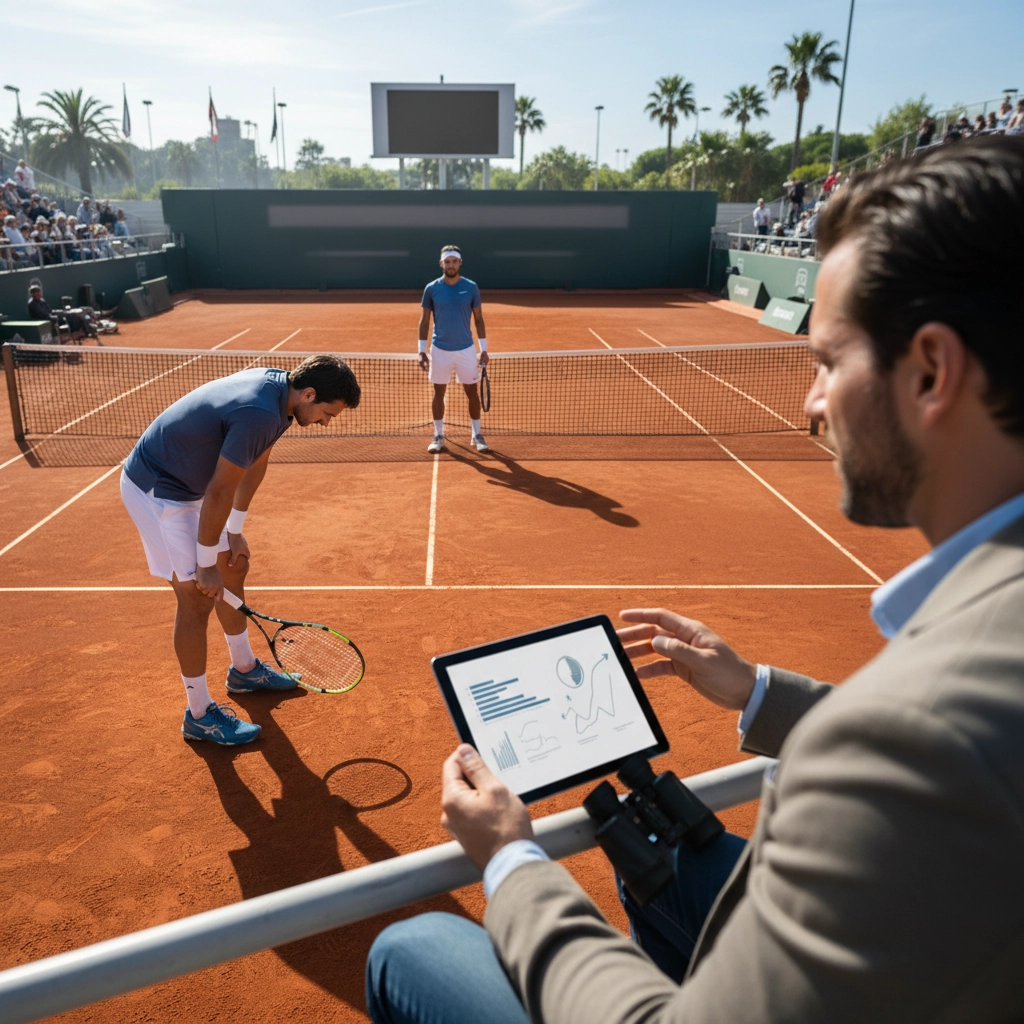
How player psychology influences match momentum and your betting edge
You don’t need to be a sports psychologist to use player psychology in your betting — you need observational habits. Tennis is a sport of small margins and repeated rituals; those small gestures and micro-behaviors often reveal confidence, fatigue, or mental fragility before the scoreboard does. By training yourself to notice patterns in posture, routines, and reactions, you can anticipate momentum swings and find value bets that odds compilers haven’t fully priced.
Think of body language as an early-warning system. While bettors often wait for a break of serve or a flurry of errors, you can get ahead by spotting the nonverbal signs that typically precede those events. That early edge is where value lives: when public markets react later than you do, prices shift and profit opportunities appear.
Practical cues to watch during the opening games
In the first few games of a match you should be especially attentive — players are settling in, and small nervous habits or confidence displays are most pronounced. Below are repeatable, objective cues you can log and use when forming pre-live or live staking decisions.
Facial and upper-body signals
- Eye focus and blink rate: A steady, calm gaze toward the ball and opponent suggests concentration; frequent blinking or darting eyes can indicate stress or uncertainty.
- Jaw and mouth tension: Clenched jaw or pursed lips often accompany frustration — watch whether these signs persist after lost points.
- Shoulder and spindle posture: Rounded shoulders or hunched posture may show fatigue or tentativeness, whereas upright, open chest posture usually signals confidence.
Movement, timing, and routines
- Footwork crispness: Quick, decisive steps toward the ball indicate physical readiness; shuffling or delayed steps can precede missed returns and shorter rallies.
- Service routine consistency: Many top players have precise pre-serve rituals. Disruption in routine — extra tosses, longer pauses, or skipped rituals — can hint at cognitive distraction or discomfort.
- Recovery speed between points: How quickly a player composes themselves after a point (walks to the baseline, breathes, towel use) is a reliable measure of emotional control.
How to weight and record what you see
- Focus on persistent patterns rather than single incidents — one flinch isn’t a trend.
- Combine cues: a slow serve plus hunched shoulders is more significant than either cue alone.
- Use quick shorthand in live betting (e.g., “slow feet + long serve” = higher probability of broken serve in next two games) so you can act fast when odds drift.
These early observations will help you pre-select matches and decide when to go deep live. Next, you’ll learn how to convert these body-language reads into concrete value-bet decisions and incorporate them into staking and risk management strategies.
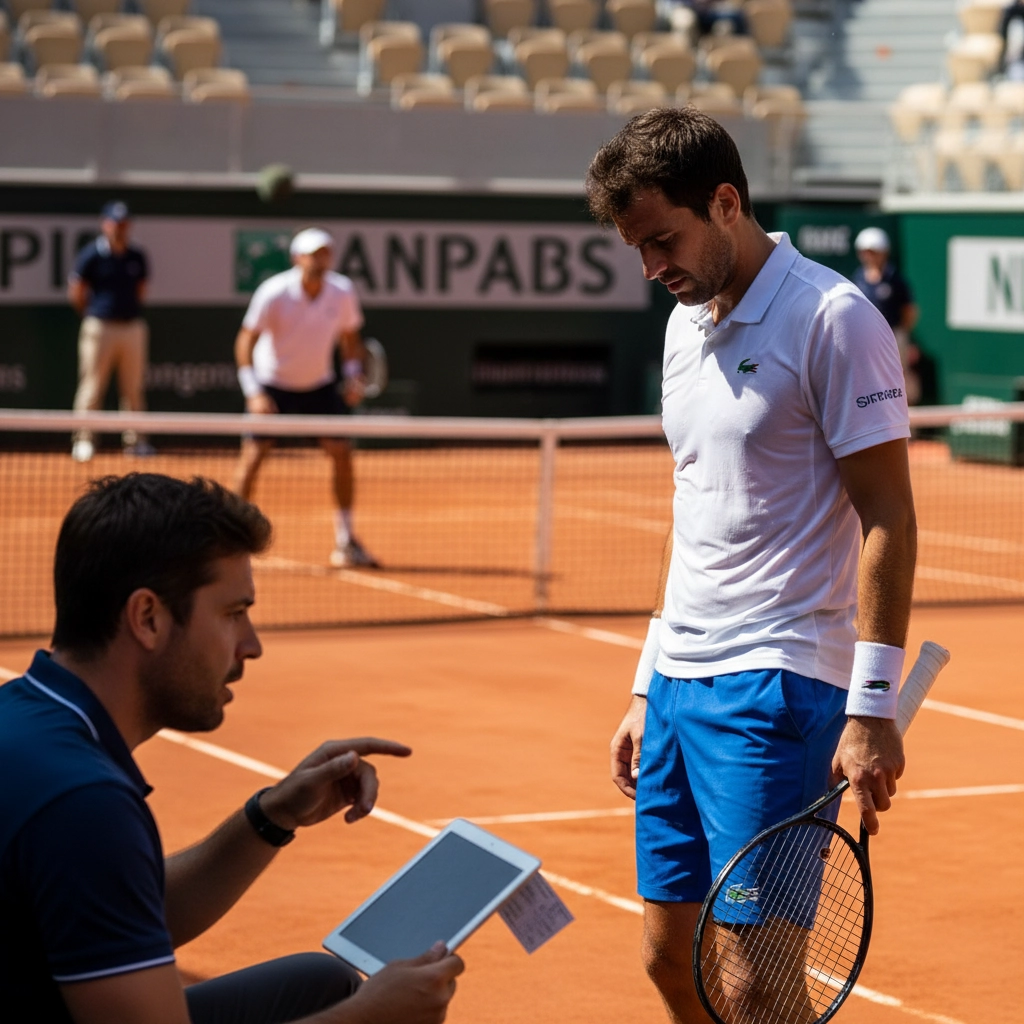
Turning body-language reads into concrete value bets
Once you’ve identified consistent cues, the next step is translating them into specific markets and trigger points. Think in terms of short, high-probability windows rather than betting the whole match on a single read. Body-language edges are strongest for near-term outcomes: the next game, the next break opportunity, or a small games line — not always the match winner.
Practical mapping of cues to markets:
– Slow feet + late preparation on return → bet on “server to be broken” or “returner wins next game” at the start of the server’s service game. Odds will often be generous early in a set.
– Disrupted service routine (extra tosses, dropped toss) → target next service game or “break in next two games.” Compounded by opponent gaining momentum, this increases likelihood of an immediate break.
– Hunched posture, short follow-throughs, and shallow returns → take unders on total games or back the opponent on low-margin markets (short, two- or three-game handicaps).
– Opponent’s visible frustration (clenched jaw, towel abuse) + a streak of double faults → value on returner or on short live markets like “next point: return winner” when odds spike.
How to set trigger rules:
– Require corroboration: only place a live bet when 2+ independent cues align (e.g., slow feet AND extended serve routine).
– Define a time window: act within the next 1–2 service games. Body-language effects usually fade or are corrected quickly.
– Use preset bet sizes and markets: list 2–3 go-to markets per cue in your notes so you can act without hesitation.
Log every trade: match, time, cue(s), market, stake, odds, and outcome. Over weeks this will show which cues and players provide repeatable edges.
Staking, bankroll rules, and limiting emotion-led risk
Subjective reads are profitable only when paired with disciplined staking. You’re trying to convert an observational advantage into a positive expected value over many small, fast bets — not swinging your whole bank on a hunch.
Staking guidelines:
– Unit sizing: treat these as smaller, higher-variance bets. Start with 0.5–1% of bankroll for single-cue reads; raise to 1.5–3% only when multiple cues, match context, and prior player history strongly support the read.
– Fractional Kelly for experienced readers: if you’ve calibrated edge percentages from your log, use a small fraction (10–25%) of the Kelly recommendation to avoid large drawdowns from noise.
– Limit consecutive exposure: set a max number of live psychology-based bets per day (e.g., 6–8) to prevent emotional overtrading after a loss streak.
– Stop-loss rules: consider a daily loss cap (e.g., 6–8% of bankroll) to force pause and review.
Hedging and when to close:
– If your psychology read triggers a bet and the market moves heavily against you, avoid doubling down emotionally. Either accept the small loss or hedge by taking a smaller counter-position when odds offer positive expected value.
– If the player corrects the cue quickly (resumes routine, two crisp holds), close or hedge — the edge has evaporated.
Avoiding common traps:
– Don’t overstate the certainty of a nonverbal cue. Use recorded outcomes to convert gut feelings into probabilistic estimates.
– Be aware of broadcast lag, angle distortion, and crowd noise that can exaggerate or mask behaviors. When in doubt, wait for a second corroborating point before committing stake.
By converting sharp, time-limited reads into disciplined, well-sized bets and tracking every outcome, you move from guessing at body language to building a repeatable, measurable trading approach.
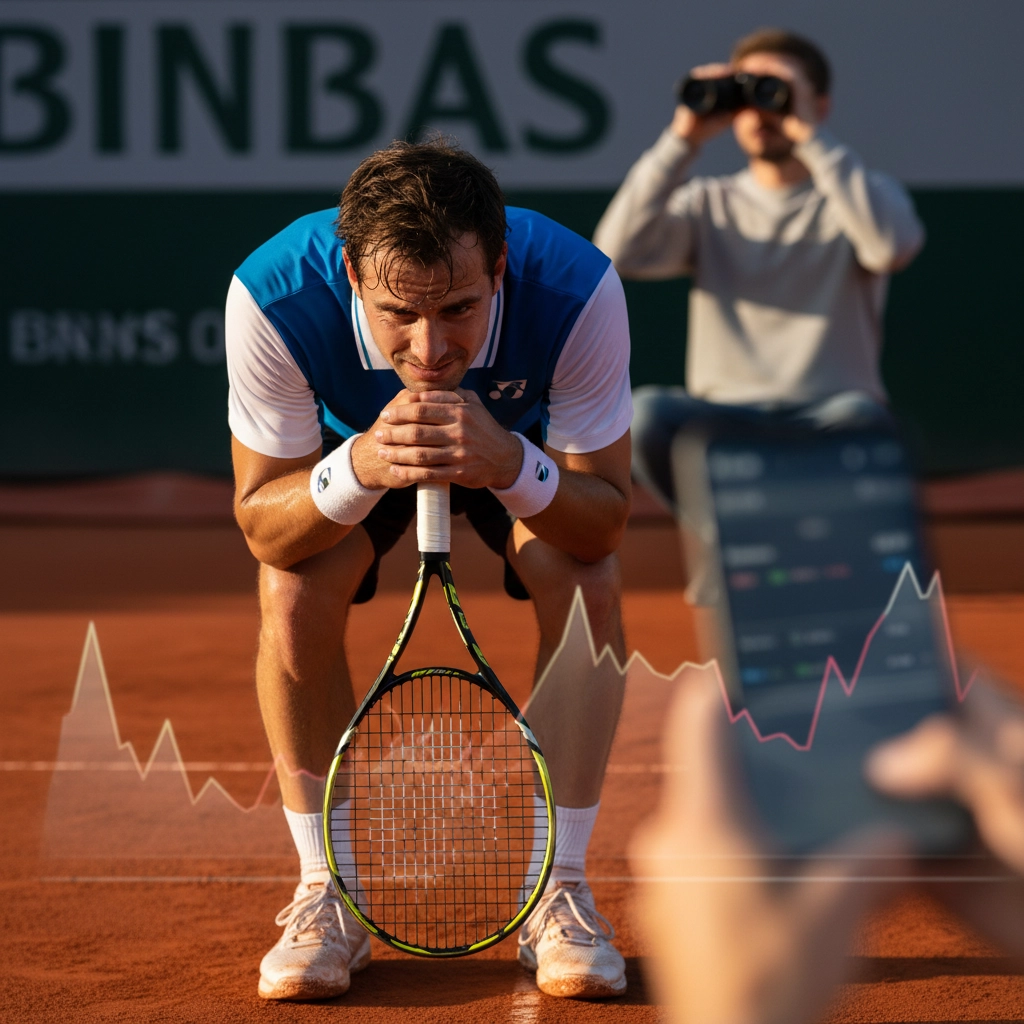
Putting observational skill into ongoing practice
Developing a reliable psychology-based edge is less about one-off insights and more about disciplined habit formation. Treat every live session as training: keep your notes tight, limit bet size, and force regular reviews of what worked and what didn’t. Respect the limits of what nonverbal cues can tell you — they raise probabilities, they don’t create certainties — and always pair observational reads with sound money management and situational context.
- Build a short, repeatable checklist you can use courtside or at your screen (e.g., eye focus, service routine, recovery speed) so you can act quickly when odds shift.
- Schedule weekly reviews of your log to convert anecdote into calibrated probability estimates and refine your trigger rules.
- Keep ethics and integrity front of mind: observe respectfully, avoid invasive behavior, and don’t rely on prohibited data sources.
- For player history and match context that complements behavior reads, consult trusted sources such as ATP Tour player profiles before staking larger positions.
Frequently Asked Questions
Can body-language signals be relied on consistently for live betting?
They can be a useful probabilistic edge when used correctly, but they’re not guarantees. Reliable use requires corroboration (2+ independent cues), short betting windows (next game/next two games), and consistent logging to verify that your reads convert to measurable edges over time.
Which betting markets are best suited to psychology-based reads?
Short-term markets where momentum and immediate errors matter most: next-game winners, “break in next two games,” small games lines, short handicaps (±1–3 games), and occasionally next-point or return-winner markets. These markets let you exploit transient behavioral edges without overexposing your bankroll.
How should I track and test my body-language observations?
Use a simple log: match, minute/time, player, observed cues, market staked, stake, odds, and outcome. Over weeks, analyze hit rates and ROI by cue and player to estimate your edge. If you can quantify edge estimates, apply fractional Kelly sizing and limit the number of live psychology-based bets per session to control variance.