
How your pre-match rituals change what you expect from a tennis match
You already know that form, rankings, and head-to-head records matter when predicting a tennis match. What often gets overlooked is how pre-match rituals shape the players you watch — and therefore the accuracy of the predictions you make. Rituals are more than superstitions: they affect arousal, focus, and perceived control. When you factor them into your forecasting, you account for psychological variance that pure statistics miss.
In practical terms, a ritual can alter the likelihood of unforced errors, the timing of aggressive play, or the resilience of a player under pressure. By observing routine behaviors in the locker room, on the practice court, or during warmups, you gather cues about a player’s readiness and mental state. Those cues should inform your odds, especially in closely matched contests where psychological edges decide swing points.
Why rituals matter: the psychological mechanisms you can use when predicting outcomes
To use rituals effectively in prediction, you should understand the psychological mechanisms behind them. Four core processes explain why a ritual might change a match’s trajectory:
- Arousal regulation: Rituals stabilize adrenaline and anxiety, helping players hit their optimal arousal zone for peak performance. If you notice a player calmly sticking to a pre-match routine, they may be less likely to start the match with jittery errors.
- Attentional focus: Repetitive routines narrow attention to task-relevant cues. A player who follows a consistent warmup is more likely to maintain point-to-point focus, which can reduce lapses in concentration during momentum shifts.
- Locus of control: Rituals create a sense of control over uncertain outcomes. Players who feel more in control cope better with adversity; this resilience is especially valuable in tight sets and tiebreaks.
- Emotional regulation: Some rituals trigger positive emotions or memories, buffering against negative spirals after lost points. You can often spot emotionally resilient players by how they reset between games.
Typical pre-match routines and what each signals about a player
Not all rituals are equal when it comes to predictive value. Some are overt and informative, others are private and subtle. Pay attention to common, observable patterns:
- Standardized warmup order: Repeating the same drills signals discipline and readiness; it often correlates with fewer early-match miscues.
- Equipment rituals: Consistent racket-taping, grip changes, or ball-bouncing sequences indicate established motor routines that support consistency under pressure.
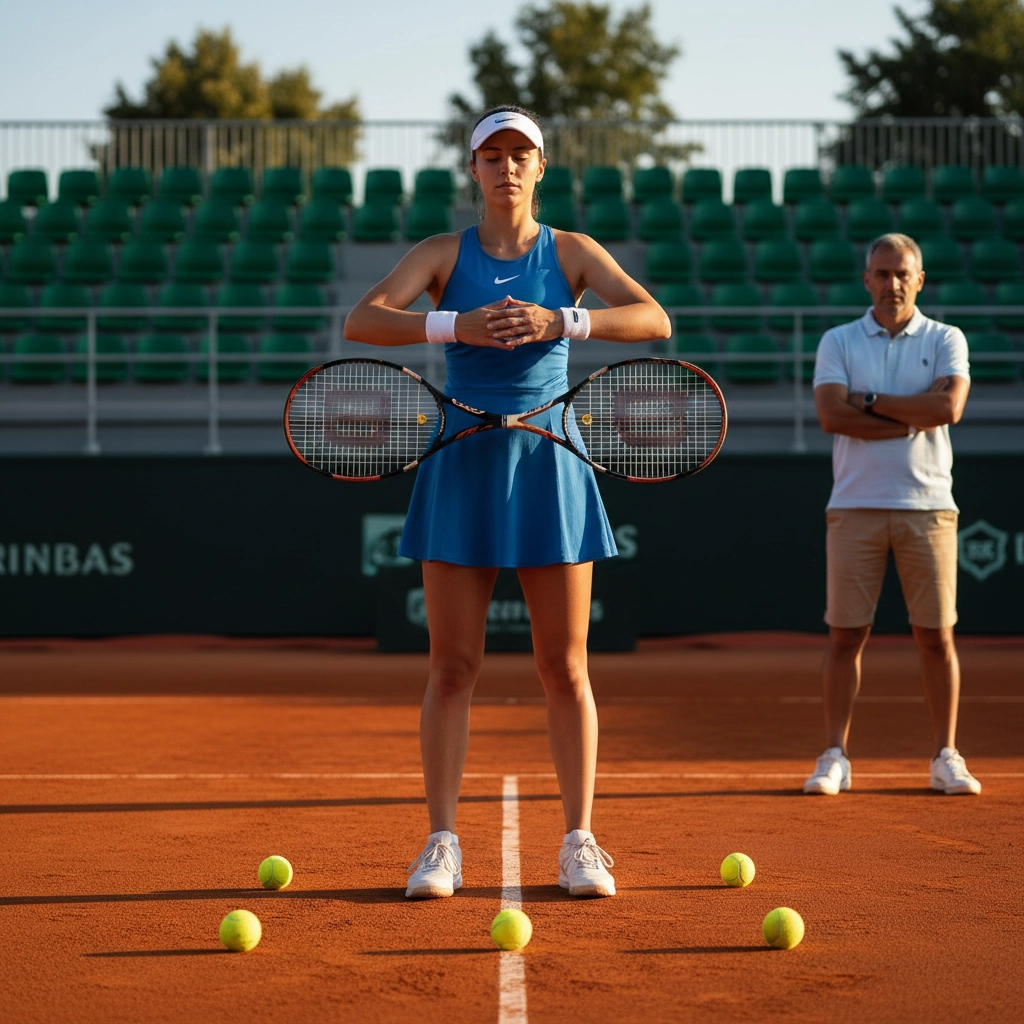
- Pre-match visualization or breathing: Visible breath control or a calm standing pause can be a sign the player is regulating arousal and preparing mentally for intensity.
- Social rituals: How a player interacts with coaches or team members can reveal confidence levels and reliance on external support.
Observing these behaviors gives you a richer context than stats alone, but you also need to weigh frequency, consistency, and opponent-specific dynamics. In the next part, you’ll learn how to quantify ritual effects, distinguish meaningful patterns from noise, and integrate them into a predictive framework.
Quantifying ritual effects: turning observations into measurable signals
To make rituals useful for prediction you must convert qualitative observation into quantitative input. Start with a simple scoring system that captures three dimensions: consistency (how often the ritual appears), distinctiveness (how idiosyncratic or informative it is), and timing (when it happens relative to match start). A practical rubric looks like this:
- Consistency (0–3): 0 = never observed; 1 = occasional; 2 = frequent; 3 = almost always.
- Distinctiveness (0–3): 0 = generic warmup; 1 = common habit; 2 = idiosyncratic; 3 = strongly linked to positive/negative outcomes in past matches.
- Timing (0–2): 0 = absent or irrelevant; 1 = during practice/warmup; 2 = immediately pre-match or between points.
Multiply these dimensions to produce a Ritual Reliability Score (RRS). RRS gives you a normalized measure you can map to effect sizes. As a rule of thumb, use conservative effect bands: low RRS (0–3) → negligible adjustment; medium (4–6) → small adjustment (2–5% win-probability swing); high (7–18) → moderate adjustment (5–10% swing) for marginal matchups. These bands are intentionally conservative because ritual effects are subtle and often entangled with skill and form.
For modelers, a cleaner approach is to convert RRS into a prior in a Bayesian framework or as a regularized feature in a logistic regression. Example: take your baseline win probability P0, convert to log-odds, add a delta proportional to RRS, then convert back. This keeps adjustments bounded and interpretable.
Separating signal from noise: validation and common confounds
Not every repeated behavior matters. To avoid overfitting, validate ritual effects across multiple matches and conditions. Use these checks:
- Cross-match consistency: Does the ritual predict better outcomes across different opponents, surfaces, and tournament levels?
- Temporal stability: Has the relationship held over at least a season, or is it tied to a brief good/bad run?
- Confound control: Test whether ritual presence simply proxies for ranking, fitness, or coaching quality. Include these covariates in your model and check whether the ritual retains significance.
Also consider opponent-specific dynamics. A ritual that signals resilience (e.g., a clear between-point reset) matters more against aggressive returners who create momentum swings than against error-prone baseliners. Weather and crowd conditions can modulate ritual effectiveness — a breathing routine that works in a quiet indoor setting may fail in a windy outdoor match.

Integrating rituals into a predictive workflow
Make ritual-based adjustments part of a repeatable pipeline rather than ad-hoc hunches. Practical steps:
- Annotate: build a small dataset tagging observable rituals for players you follow regularly.
- Estimate: compute RRS and calibrate effect sizes using historical matches with control variables.
- Integrate: add ritual-derived features to your predictive model (or use them as Bayesian priors). Regularize to avoid over-emphasis.
- Monitor: track performance lift and recalibrate quarterly; rituals and their predictive value change with coaching or age.
Finally, use rituals to inform situational bets and live adjustments rather than wholesale lineup changes. They are most powerful as tie-breakers in close calls — the small psychological edges that determine swing points and tiebreaks.
Keep your ritual observations disciplined and modest: treat them as one more signal in a noisy environment rather than a magic bullet. Regular annotation, conservative effect sizing, and routine validation will let you harvest psychological edges without overstating their importance. Over time, the habits you track—and how you translate them into priors—will become part of a repeatable forecasting routine that complements, not replaces, skill and form analysis.
Final thoughts on ritual-informed forecasting
Rituals offer a window into a player’s momentary psyche. Used carefully, they can sharpen decisions in marginal matches, guide live adjustments, and explain variance that raw numbers miss. Keep your approach empirical: record, test, and recalibrate. If you want a starting point for the underlying science, see psychology of rituals for approachable summaries and further reading.
Frequently Asked Questions
How much weight should I give pre-match rituals compared with rankings and recent form?
Treat rituals as a secondary, contextual signal. Use a conservative adjustment (2–5% for medium RRS; 5–10% for high RRS in marginal matchups) and always control for ranking, surface, and fitness. Rituals are most useful as tie-breakers when baseline probabilities are close.
How do I avoid mistaking noise or coaching changes for meaningful ritual signals?
Validate across matches and time. Require cross-match consistency and test whether the ritual retains predictive value after adding covariates like opponent quality and recent results. When coaching or physical condition changes, re-score the ritual—its reliability can shift quickly.
Can ritual observations improve live betting or only pre-match predictions?
They can help both. Pre-match rituals inform starting priors; in-play behaviors—between-point routines or visible resets—can signal momentum resilience and justify small live adjustments. Use them conservatively and combine them with immediate match stats (service hold rates, unforced errors) for live decisions.