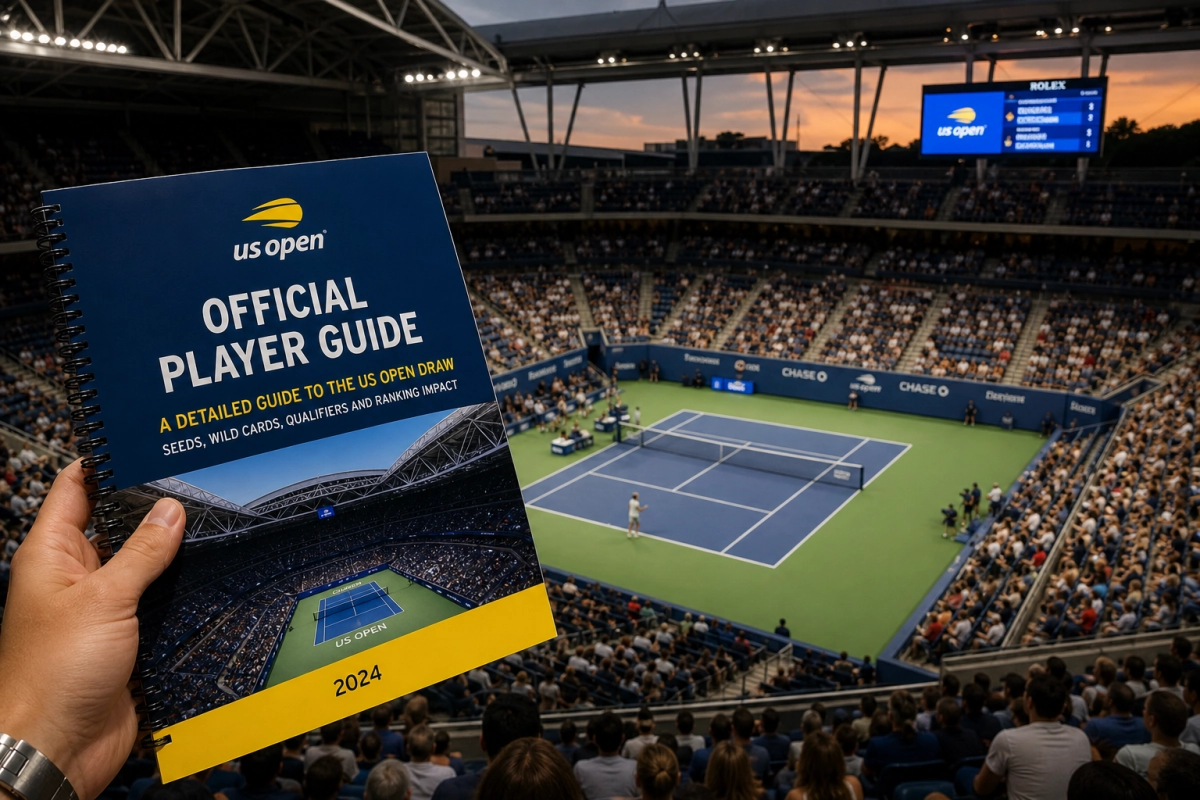
How the US Open draw works and why seeds, wild cards and qualifiers matter
The US Open is one of four Grand Slams and its draw format is a cornerstone of tournament strategy and fan interest. This article explains the US Open draw structure, the role of seeds (nositelji), the purpose and selection of wild cards, how qualifying tournaments function, and how Grand Slam results translate into ATP/WTA ranking points. Readers will learn key terms—like seed, wild card, qualifying round and lucky loser—and gain practical insight into how a single match can influence a player’s ranking.
Basic structure of the US Open main draw
The singles main draw at the US Open contains 128 players for both men and women. That field is composed of direct acceptances by ranking, qualifiers who advance from the qualifying tournament, and players admitted via wild cards. Understanding the composition of the draw helps explain why certain early-round matchups appear and why some lower-ranked players get sudden opportunities on the biggest stage.
In numbers: typically about 104 players enter directly by ranking, 16 players come from the qualifying draw, and 8 players receive wild cards. The draw is single-elimination: once a player loses, they are out of that year’s singles competition.
What a “seed” is and how seeded players are placed
A seed (nositelj) is a player given protected placement in the draw based on their ATP or WTA ranking at the entry cutoff. Seeding reduces the chance that the highest-ranked players meet in the earliest rounds, helping maintain competitive balance and predictability for scheduling and broadcasters.
- There are 32 seeds in a 128-player Grand Slam draw. Seed 1 and seed 2 are placed at opposite ends of the bracket to potentially meet only in the final.
- Seeds 3–4 are randomly placed in the remaining two quarters; seeds 5–8 are randomly allocated to different quarters, and so on down to seeds 17–32. This structured randomization prevents multiple top players from clustering in the same section.
Wild cards, qualifying rounds and the lucky loser system
A wild card is a discretionary spot in the main draw granted by the tournament organizers. Wild cards are often used to support promising local players, returning champions, players coming back from injury, or winners of specific playoff events. They give opportunities to players who would not otherwise qualify by ranking.
The qualifying tournament is held in the week before the main event and is open to players who missed direct acceptance. For Grand Slams, qualifying typically requires winning three matches to reach the main 128-player draw, producing 16 qualifiers. If a main-draw player withdraws after the qualifying tournament ends, the highest-ranked player who lost in the final qualifying round may enter as a “lucky loser.”
These elements—seeds, wild cards and qualifiers—shape the first rounds and create the potential for both predictable matchups and dramatic upsets. The next section will explain how Grand Slam results convert into ATP/WTA ranking points and show practical examples of how a deep run or an early exit changes a player’s position on the rankings list.
How Grand Slam results convert into ATP and WTA ranking points
Grand Slams award the largest number of ranking points on the ATP and WTA tours, which is why performance at the US Open can produce big swings in a player’s ranking. For singles, the standard point distribution at a Grand Slam is the same for men and women: the champion receives 2,000 points, the runner-up 1,200, semifinalists 720, quarterfinalists 360, fourth round (round of 16) 180, third round (round of 32) 90, second round (round of 64) 45, and first-round losers usually receive 10 points. Qualifying rounds also give modest points to those who fall short before the main draw; players who advance from qualifying and then win main-draw matches collect the main-draw points in addition to any qualifying points earned.
Both tours operate on a 52-week rolling system: points earned at a tournament replace the points a player earned at that same event 52 weeks earlier (or, if they did not play, the next result that counts toward their ranking). That means a player’s US Open result this year is directly compared to their US Open result last year. If they perform better, they gain net points; if they perform worse, they lose points. There are also nuances — such as mandatory event rules or protected rankings for injured players — but the core mechanism is replacement of the previous year’s points.
It is important to note that seeds, wild cards and qualifiers do not receive extra ranking points by virtue of their status. Seeding only affects draw placement. Wild cards and qualifiers simply enter the tournament by a different route; once in the main draw, they earn points exactly the same way as direct acceptances.
Practical examples: defending points, big jumps and the impact of upsets
Example 1 — defending points: imagine Player A reached the quarterfinals at last year’s US Open and therefore is “defending” 360 points. This year Player A loses in the third round (R32), earning 90 points. The net change is −270 points (90 earned minus 360 defended), which immediately reduces their ranking total. Depending on how close the leaderboard is, a 270-point loss can cost several ranking places for players ranked around 10–30.
Example 2 — a breakthrough qualifier: Player B was ranked outside the top 100 and had little or no US Open points to defend. They win three qualifying matches to reach the main draw, then upset two opponents to reach the fourth round (R16). They collect the R16 main-draw points (180) plus any qualifying points. Because they had few points to replace, those 180+ points can translate into a substantial jump—often moving a player from ~120 into the top 70–90 range, depending on the distribution of points on the rankings list.
Example 3 — wild card momentum: a young player given a wild card into the main draw wins their opening match and reaches R64 (45 points). For a touring newcomer or local wild card, those 45 points can be more valuable than the immediate prestige—helping them gain direct acceptance into future ATP/WTA events, avoid qualifying, and climb several dozen places in the rankings.
Upsets matter not because beating a higher seed yields bonus points (it doesn’t), but because advancing deeper into the tournament does. A single upset that leads to an extra round can be worth tens or hundreds of ranking points and, consequently, meaningful movement on the rankings list. This is why Grand Slam draws—through their mix of seeds, qualifiers, wild cards and lucky losers—can produce dramatic, ranking-changing stories within just a week.
Practical implications for players, coaches and fans
Beyond rules and numbers, the draw and the ranking system shape real choices: scheduling, tournament selection, injury returns, and how coaches plan a player’s season. Small decisions—whether to accept a wild card, play a lead-up event, or rest before the US Open—can influence available points and match readiness.
- Players and teams: map the 52-week calendar and identify which results are defendable; prioritize events where you can realistically gain more net points than you risk losing.
- Lower-ranked players: leverage qualifying and wild-card opportunities to gain main-draw experience and valuable points without facing immediate pressure of defending large totals.
- Fans and commentators: follow the draw not just for marquee matchups but for potential ranking swings—an upset in an early round can ripple through several players’ rankings over the following week.
- Tournament organizers: seeding and wildcard choices affect narratives and local interest; transparent selection criteria help manage expectations and fairness perceptions.
Looking ahead: the stakes behind every match
The US Open draw is more than a bracket on paper—it’s a mechanism that creates opportunity, risk and storylines. Whether you’re a player plotting a rise up the rankings, a coach managing form and fitness, or a fan chasing the next big upset, understanding how the draw and points interact helps you appreciate why each match matters. Expect drama, value strategic planning, and enjoy the unpredictability that makes Grand Slam tennis compelling.