How the 2026 Australian Open court schedule shapes your match-day experience
When you plan to attend the Australian Open, understanding the schedule by court makes the difference between seeing big-name matches and spending hours waiting in the heat. The tournament uses several showcourts with roofs and dozens of outer courts for the early rounds and qualifiers. Scheduling priorities, session types (day and night), and the tournament’s protocols for weather and extreme heat all affect who plays where and when.
You’ll want to know which courts host the biggest matches, how the daily order of play is released, and what flexibility exists for late changes. Below you’ll find a clear, court-focused overview so you can target the sessions and seats that suit your priorities.
Show courts at a glance: Rod Laver, Margaret Court and John Cain — what each typically hosts
-
Rod Laver Arena — the tournament’s centerpiece
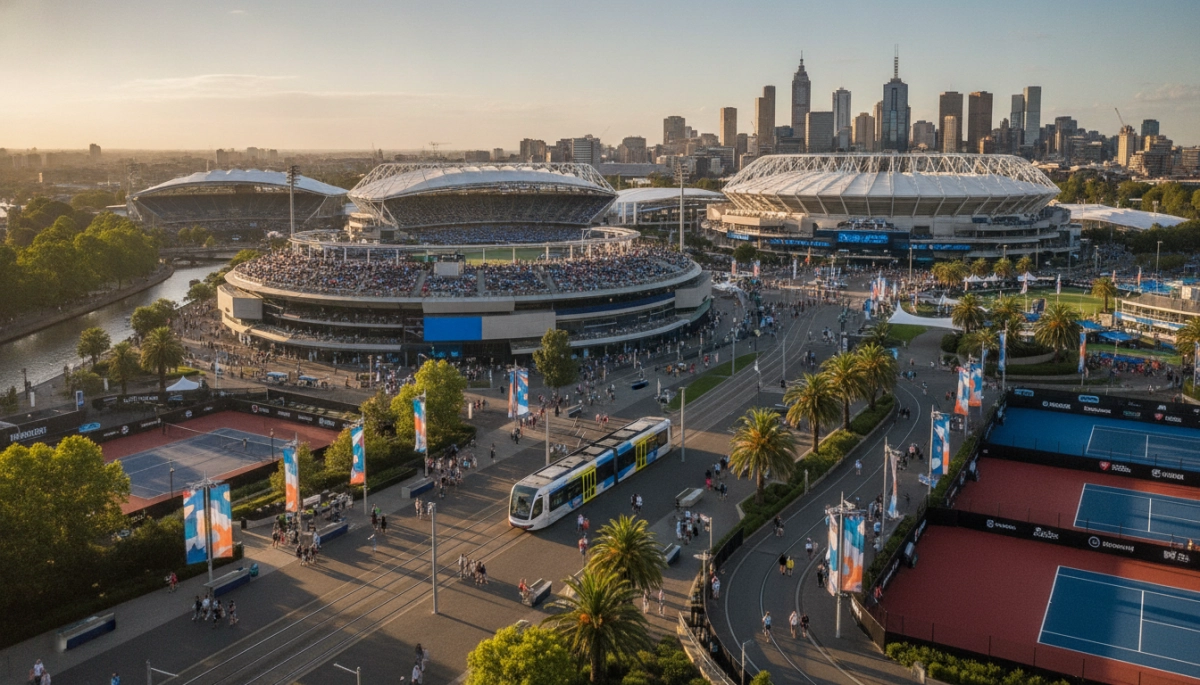
Rod Laver Arena is the main showcourt and usually hosts the highest-profile matches, including night sessions and finals. The retractable roof and large capacity make it the go-to court for marquee singles and premier doubles. If you’re aiming to see top seeds or a potential late-night blockbuster, this is the arena to prioritize when booking tickets.
-
Margaret Court Arena — a flexible second stage
Margaret Court Arena often carries many big matches across both men’s and women’s draws and can host evening sessions when needed. It’s especially useful when play needs to be moved due to weather or to accommodate simultaneous high-interest matches. You’ll find a mix of seeded players, singles and doubles, and occasional night-session scheduling here.
-
John Cain Arena — consistent show-court action
John Cain Arena typically features top-20 matchups, mixed session types, and is a regular site for late-afternoon and evening matches. It’s a reliable option for quality tennis outside of Rod Laver’s marquee fixtures, and is often used to stagger high-demand matches across multiple show courts.
-
Outer courts and show-court overflow
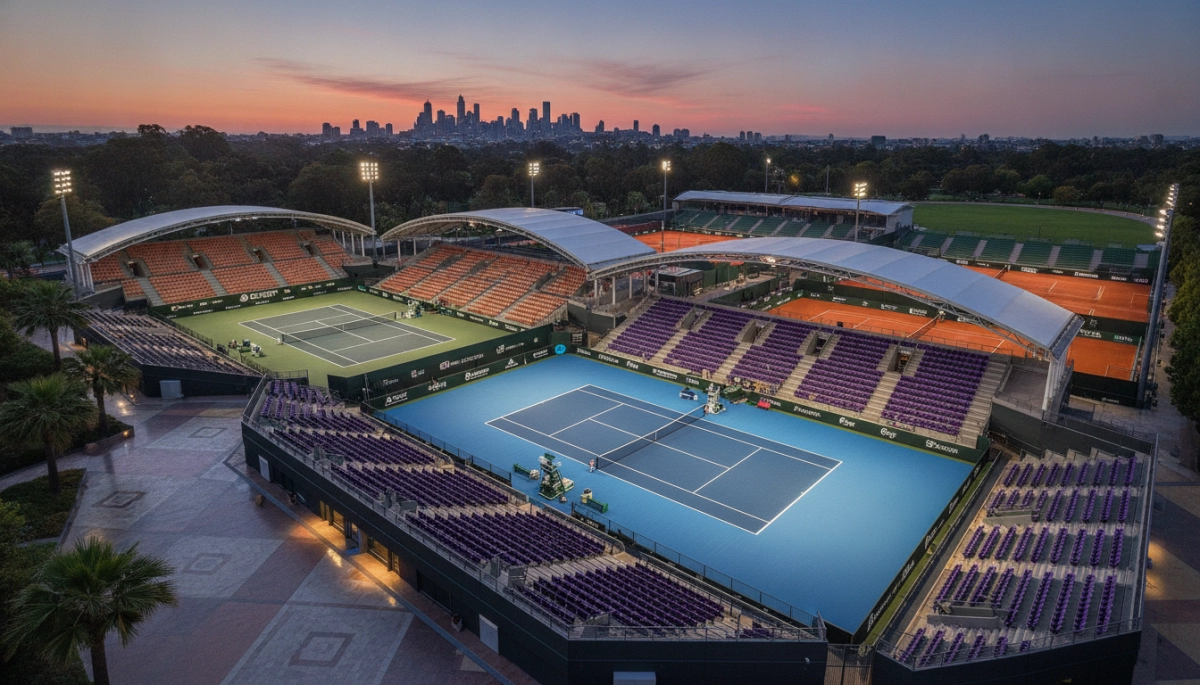
Beyond the three main arenas, outer courts and additional show courts stage the bulk of early-round matches, juniors, wheelchair events and qualifiers. These courts are where you’ll catch emerging talents and longer, less predictable match windows — which can be perfect if you enjoy following a player through several rounds.
Practical scheduling notes to help you choose sessions and tickets
The daily order of play is released by the tournament each evening and is subject to change; you should check the official app or website before you travel to the venue. Session tickets are sold per day or per night, and show-court assignments influence when key matches start. You should also factor in roof closures, extreme-heat policies and possible rain delays — all of which can shift matches between courts and affect start times.
Arrive early to access practice courts, get good vantage points on outer courts, and be ready for short-notice court transfers if match order changes. If you want guaranteed high-profile action, prioritize Rod Laver and Margaret Court tickets for the rounds where top seeds are scheduled.
Next, you’ll get a court-by-court day-by-day breakdown of the first week — including typical start windows and session tips to help you plan which days and courts to attend.
First-week court-by-court: what to expect each day
Day 1–2 (Monday–Tuesday): expect the widest spread of matches across all courts. Early-round scheduling puts dozens of singles matches on outer courts through the day while each showcourt runs a full slate. Rod Laver will usually open with a high-profile match or two in the evening session, but the first two days are prime for catching seeded players on John Cain and Margaret Court as organisers stagger big names to spread crowds. If you want to see rising stars and longer, unpredictable contests, plan to be at the outer courts mid-morning to mid-afternoon.
Day 3–4 (Wednesday–Thursday): match density rises as the second round concludes and third-round pairings emerge. This is when Margaret Court often picks up more marquee daytime slots, and John Cain becomes the go-to for late-afternoon top-20 clashes. Rod Laver’s night sessions are more likely to feature headline singles and key doubles matches — a good window if you want guaranteed big names without committing to weekend crowds.
Day 5–7 (Friday–Sunday): as the tournament moves through the third round toward the Round of 16, show courts tighten their focus on seeded players. Rod Laver hosts the most consequential matches and late finishes; week’s end is the best time to target a Rod Laver ticket if you want potential blockbuster matchups. Margaret Court remains flexible — ideal for catching rescheduled play if weather or roof closures have pushed matches around — while John Cain consistently offers quality night and late-afternoon matches but with slightly smaller crowds than Rod Laver.
Session windows, timing expectations and practical tips
Typical session windows: day sessions commonly begin between 11:00am–12:00pm and run through late afternoon, with matches on outer courts often starting first. Evening/night sessions on showcourts usually start between 6:30pm–8:00pm and can finish well after 10:30pm, especially on Rod Laver when a long three-set or five-set match occurs. Expect a buffer between shows on each court — organisers aim to avoid overlap for ticketed sessions, but delays are frequent.
Practical tips to make the most of those windows:
– Check the official order of play every evening; times and courts can change up to the last minute.
– Arrive early for outer-court seats — the best vantage points fill fast and late changes can leave you scrambling.
– If you have a night session ticket, plan food and transport around potential late finishes; public transport peaks after night sessions end.
– Use Rod Laver night sessions for guaranteed high-profile action but be prepared for later finishes. If you prefer lots of matches per day, a day-session ticket plus outer-court exploring gives more variety.
Handling late changes: weather, roof closures and upsets
Weather and the retractable roofs are the biggest wildcards. A mid-afternoon thunderstorm or extreme heat policy can push play indoors, compressing multiple matches onto fewer courts and changing start times rapidly. When play is moved indoors, expect earlier matches on John Cain or Margaret Court to be rescheduled into Rod Laver if organisers prioritise marquee encounters.
To stay nimble: keep notifications on in the tournament app, position yourself near information boards inside the precinct, and buy flexible transport or allow extra time between commitments. If you enjoy unpredictability, upsets are the best reason to linger around outer courts — you can follow a surprise run from a promising player across several courts in one day. If you prefer certainty, lock in Rod Laver or Margaret Court for key rounds and plan the rest of your day around their likely windows.
Getting ready for match day
Whether you’re chasing a night-session blockbuster on Rod Laver or following a qualifier across outer courts, the best experiences come from planning ahead and staying flexible. Keep apps and notifications enabled for last-minute court changes, factor in transport for late finishes, and embrace the unpredictability — it’s part of the Grand Slam atmosphere.
Quick match-day checklist
- Check the official order of play each evening and during the day on the Official Australian Open site.
- Arrive early for prime outer-court spots or to get through entry queues with ease.
- Pack sun protection, a refillable water bottle (subject to venue rules), and a light layer for evening cool-downs.
- Plan transport both to and from the venue with buffer time in case sessions run late.
- Have a flexible mindset — some of the best tennis moments come from unexpected match-ups and schedule shuffles.