
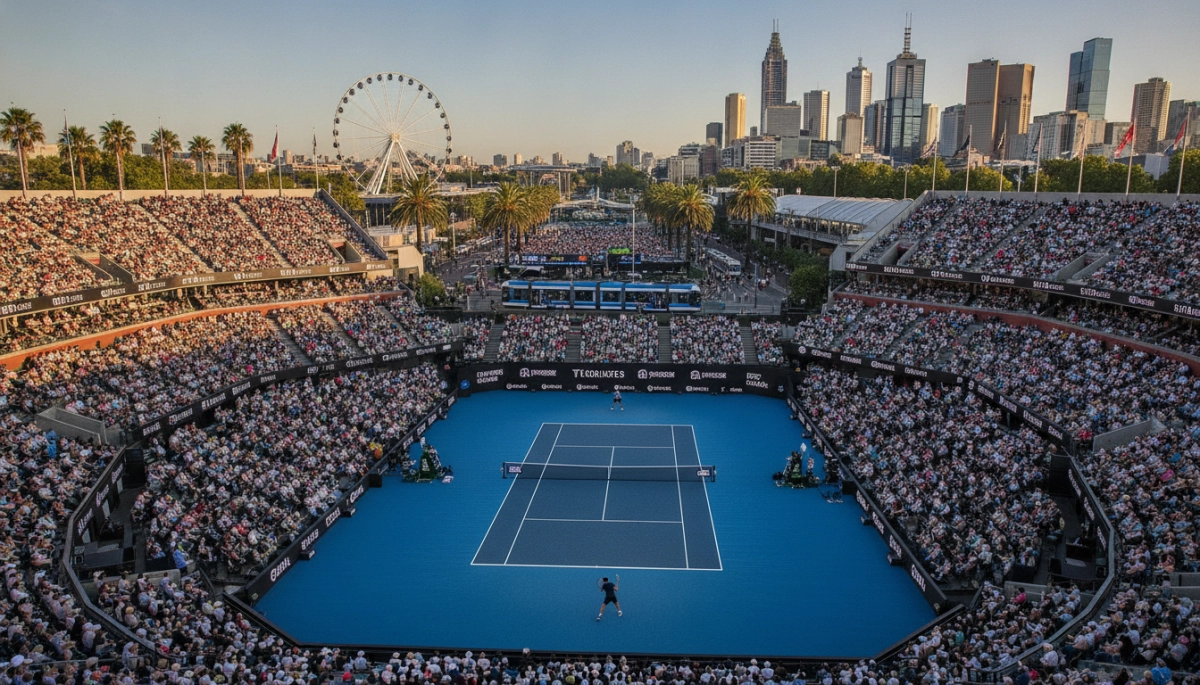
What to expect from the Australian Open 2026 timing and why you should lock in plans early
The Australian Open is one of the four Grand Slams and consistently draws visitors from around the world. The tournament traditionally runs for two weeks beginning on the third Monday of January, so in 2026 you can expect the event to fall in mid-to-late January. Exact dates and the official schedule are released by Tennis Australia well in advance — check their site for confirmed timings before finalising bookings.
Because the tournament coincides with Australia’s peak summer season, demand for flights, hotels and event tickets spikes months ahead. If you want the best seats, reasonable fares, and convenient accommodation near Melbourne Park, you should start planning as soon as possible. Planning early also helps you avoid steep seasonal price increases, sold-out sessions, and fewer hotel options.
Key timeline to plan around
- 6–12 months out: research dates, sign up for ticket and mailing lists for presale notices, and note visa requirements for your nationality.
- 3–6 months out: book flights and secure refundable or changeable fares if possible; start locking down accommodation.
- 1–3 months out: buy match tickets, plan daily transport, and map out non-match activities in Melbourne.
Travel logistics: getting to Melbourne, visas, and local transport
When you travel, treat Melbourne as the hub for more than just tennis — it’s a compact, walkable city with excellent public transport. Here are the practical things you need to sort early so your trip runs smoothly.
Flights and airport arrival
- International flights land at Melbourne Airport (Tullamarine). Book early to secure convenient arrival times and to avoid multiple connections.
- If you arrive several days before the tournament, you’ll reduce jet lag and have buffer time for any travel delays.
Visas and travel documents
- Check visa requirements now — many nationalities can apply for an Electronic Travel Authority (ETA) or eVisitor. Apply well in advance to avoid last-minute stress.
- Ensure your passport has at least six months’ validity from your travel date and keep digital and paper copies of key documents.
Getting around Melbourne and reaching Melbourne Park
- Melbourne’s public transport uses the Myki card system (trains, trams and buses). Buy and top up a Myki as soon as you arrive, and learn tram routes that serve the CBD and Southbank areas.
- Melbourne Park, the AO venue, sits close to the city center and is easily reachable by tram or a short taxi/ride-share. Expect busy public transport during session start and finish times — allow extra travel time.
- Consider staying near a major tram line or Flinders Street station to cut transfer times between your hotel and match sessions.
With timing expectations set and travel logistics underway, the next step is to decide which sessions to attend, how to secure tickets, and how to structure your match-day schedule for the best experience.
Choosing sessions: day, night and finals-week strategies
Deciding which sessions to attend shapes your whole trip. Think about what you want from the experience — headline matches under lights, a full day sampling many courts, or the crescendo of finals week — then plan accordingly.
– Day sessions (usually multiple sessions across outer courts and the main showcourts) are ideal if you want variety. Early rounds offer a chance to see rising stars, doubles and mixed matches, and closer-up action on Show Court 3 or Court 7. Day tickets are often cheaper and let you move between courts all afternoon.
– Night sessions bring a different atmosphere: bigger crowds, higher-profile singles matches, and the drama of play under lights. If you prioritise seeing top seeds, book night session reserved seats early — these sell fast and often cost more.
– Finals week (semi-finals and finals) is the premium experience. Expect the highest prices and the most limited availability; if watching one of these sessions is a must, budget accordingly and consider hospitality packages or official travel bundles.
– Mix and match: consider a day session for breadth and a night session for blockbuster matches. Buying tickets across different days gives you flexibility and reduces the risk of missing a marquee matchup that changes late in the draw.
When planning sessions, check the order of play on the AO app or official site the day before — match times can shift, especially in later rounds.
How to buy tickets, packages and smart resale tips
Secure your seats through official channels to avoid scams. Tennis Australia and its authorised ticketing partners are the safest routes; they list general admission (ground passes), reserved seating, multi-session packs, and hospitality options.
– Ground passes give entry to outside courts and some smaller show courts — great value if you want to roam and catch surprise matches. Reserved seats are necessary for Rod Laver Arena and Margaret Court Arena during high-demand sessions.
– Hospitality and travel packages bundle premium seating, dining and extras; these cost more but simplify logistics and often include queue-free entry.
– If tickets sell out, use the tournament’s official resale platform or authorised partners. Avoid third-party marketplaces that aren’t linked to the AO — unauthorised resale carries high fraud risk.
– Mobile ticketing is common. Ensure your ticketing app is set up and synced to your phone before arrival; screenshots or printouts may not be accepted.
Sign up for newsletters and follow official social channels for presale windows, flash releases and last-minute returns. If you need to change plans, refundable or changeable ticket options offer peace of mind.
Match-day planning: timing, comfort and local conveniences
A well-structured match day keeps you relaxed and lets you enjoy more tennis.
– Arrive early to explore outer courts, watch practice on show courts, and queue for popular players. Early arrival also makes it easier to get food or secure a good spot on ground-level seating.
– Sun and heat: January can be hot. Bring sunscreen, a hat, sunglasses and a refillable water bottle (check permitted bottle size). The tournament operates an Extreme Heat Policy — familiarise yourself with it so you know your rights if play is delayed.
– Food and cash: Melbourne Park has numerous food outlets and cashless payment options. Try local cafés on your way back to the CBD to avoid queues. If you have dietary needs, check available options in advance.
– Post-session transport: trams and trains will be busy after matches. Leave a little extra time, or arrange taxis/rideshares in advance for late-night departures.
Use the AO app throughout the day for live scores, court schedules and nearby facilities — it’s the simplest way to keep your match-day running smoothly.
Quick pre-trip checklist
- Confirm your passport, visa/ETA and travel insurance are valid for the full trip.
- Book refundable or changeable flights where possible and lock in accommodation near tram lines or the CBD.
- Download the AO app, set up your ticketing account and save digital copies of tickets and ID.
- Pack for heat: sunscreen, hat, refillable bottle and lightweight clothing; add a light layer for cool evenings.
- Load your Myki or budget for taxis/rideshares for late-night departures; familiarise yourself with the Extreme Heat Policy.
Final steps before you go
Locking in the essentials early gives you the flexibility to enjoy the event and Melbourne without last-minute stress. Keep an eye on official announcements for precise dates and ticket releases, and consider booking key items now — flights, accommodation and must-see sessions — so you can focus on the experience when you arrive. For official schedules, ticketing and travel packages, check the Australian Open official site.