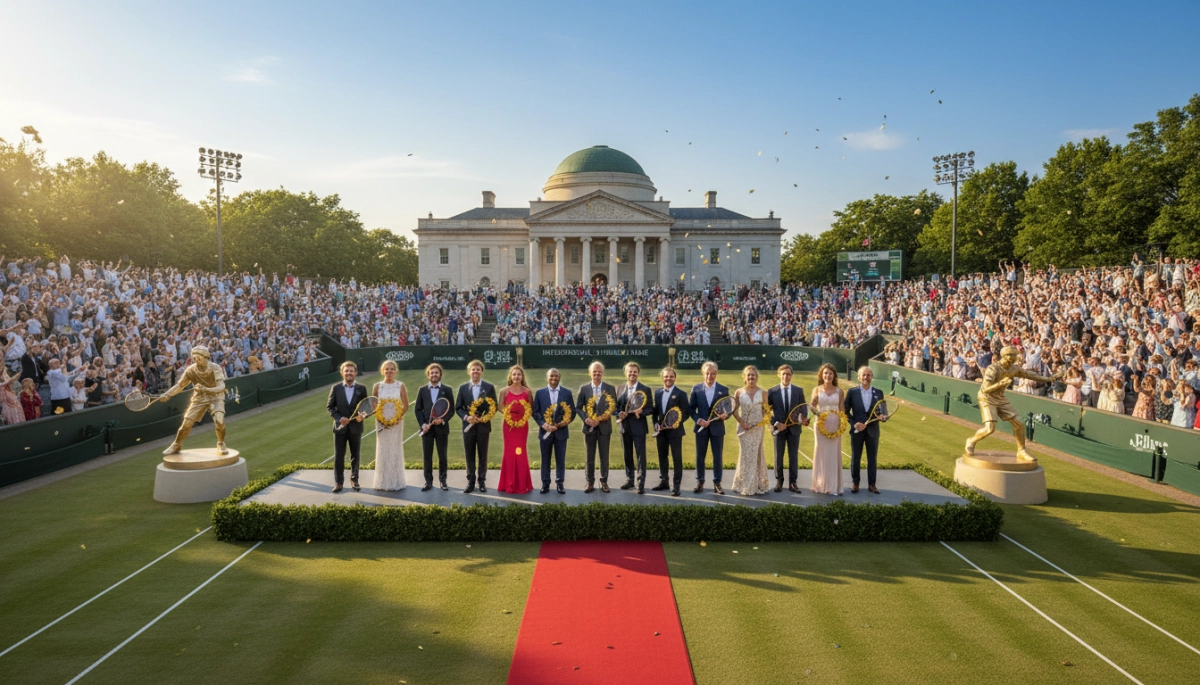
Why Grand Slams matter — and why you should look beyond the tally
When you measure greatness in men’s tennis, Grand Slam singles titles are the headline stat: four tournaments, global stages, and the sport’s toughest tests. Yet simply counting Slams can mislead. Different eras, surfaces, access to tournaments, and the amateur vs Open Era divide all influence how many majors a player could realistically win.
To form a fair assessment of the all-time greats you should weigh multiple indicators. Some players accumulated huge major totals in short bursts of dominance; others built reputations through longevity, versatility, or an ability to win the biggest matches under pressure. Knowing which metrics matter helps you parse claims like “the most successful” or “the GOAT.”
Key metrics you should consider when comparing champions
- Grand Slam singles titles: The clearest headline stat, reflecting performance at the four most prestigious events.
- Surface range: Success on hard, clay, and grass shows versatility; dominance on a single surface can still define a legacy.
- Weeks at world No. 1 and year-end rankings: These indicate consistency across seasons, not just peak moments.
- Head-to-head records: Direct matchups between top contenders reveal who had the edge in rivalry eras.
- Masters/major tour-level titles and Olympic medals: Broader title collections show sustained excellence across the calendar.
- Calendar achievements and milestones: Calendar-year Grand Slams, consecutive major runs, and career Grand Slam completions are rare benchmarks.
Early pioneers who shaped how you judge greatness today
The foundations of men’s tennis greatness were laid long before the Open Era (1968). Players from the amateur period established patterns of dominance and historic firsts that still inform how you evaluate modern champions.
Don Budge became the first man to complete a calendar-year Grand Slam, setting a standard for single-season mastery. Decades later, Rod Laver achieved the same feat twice — an unparalleled demonstration of peak performance and adaptability across changing equipment and competition.
In the mid-20th century, champions such as Bill Tilden and later Roy Emerson amassed multiple major titles and international reputations. Emerson’s success in the 1960s made him one of the preeminent major winners of his time, while Tilden’s dominance in the 1920s helped popularize tennis globally and raised the bar for athleticism and tactics.
But you must treat these pre-Open Era achievements with context. Before 1968, the best players sometimes stayed amateur or professional in different circuits, and travel or tournament accessibility could limit head-to-head opportunities. When you compare eras, account for differences in draw sizes, seeding, and the fact that Open Era players faced a unified, global tour with broader competition.
With that context in mind, you’re ready to move from these early standards to the modern rivalries and record-breaking runs that redefined what it means to be the best — next, you’ll examine the contemporary giants whose Grand Slam battles and records reshaped tennis history.
The Big Three: how Federer, Nadal and Djokovic rewrote the record books
No conversation about modern greatness can skip Roger Federer, Rafael Nadal and Novak Djokovic. Together they not only pushed Grand Slam totals higher than in any previous era, they also changed expectations about longevity, surface mastery and peak consistency. Each brought a distinct brand of excellence: Federer’s aesthetic variety and grass-court authority, Nadal’s relentless intensity and clay supremacy, and Djokovic’s defensive elasticity, return game and machine-like consistency across surfaces.
What makes their legacies especially tricky to compare is the way their strengths complement and counter one another. Federer’s effortless serve-and-volley touch made him nearly unbeatable at Wimbledon during his peak; Nadal turned Roland Garros into his personal fortress with a spin-heavy forehand that neutralized the best repeat challengers; Djokovic developed a defensive-to-offensive transition game that gave him an advantage in long, high-pressure encounters. All three completed career Grand Slams, proving adaptability beyond a single favoured surface, and each accumulated multiple seasons of year-end No. 1 finishes and extended runs at the top of the rankings.
But numbers alone don’t capture the nuance: their head-to-heads, tournament timing and responses to injuries shaped public perception as much as title counts. Rivalries produced iconic matches that raised the bar for mental toughness—a crucial part of what defines a champion. When you consider Federer, Nadal and Djokovic, weigh not only how many Slams they won, but where they won them, whom they beat in big moments, and how they repeatedly reinvented themselves to stay elite as the sport evolved.
Records, rivalries and the small-print that matters
Grand Slam totals make headlines, but secondary records and rivalry dynamics often separate the great from the greatest. Weeks at world No. 1, year-end rankings, unbeaten streaks at particular tournaments, and consecutive Grand Slam semifinals or finals tell you about durability and calendar-wide dominance. Masters-level titles and Olympic results add depth to the picture: some players concentrated their peak in the Slams, others spread excellence across the tour.
Rivalry-specific stats are especially revealing. A player who amassed majors but consistently struggled against a chief rival might look different in context than an opponent with fewer Slams but a winning head-to-head. Surface-specific dominance—think an all-time best on clay or grass—also matters; sustained supremacy at a single Slam (multiple wins at one venue) can be as defining as a more balanced but less concentrated major haul.
Beyond headline counts: the next generation and the deepening field
As the Big Three era matured, a younger cohort began to challenge the established order. Players like Carlos Alcaraz and Daniil Medvedev (among others) have shown they can win majors and push the best to the limit, introducing new tactical patterns—extreme athleticism, heavier hitting, and data-driven preparation. That transition highlights two trends you should track: the narrowing margin between elite players and the increasing depth of the tour, which makes sustained Slam runs harder to achieve.
Coming decades will likely judge legacies by a blend of Slam totals, cross-surface adaptability, head-to-head performance against contemporaries, and era-adjusted dominance. For now, the sport’s recent history offers a rich template: excellence is multifaceted, rivalries define eras, and every new champion reinterprets what “the best” can look like.
Final perspective
Greatness in men’s tennis is not a settled verdict but an ongoing conversation. Numbers provide evidence, but the stories behind those numbers—rivalries, surfaces, injuries, and era-specific conditions—are what make debates meaningful and enjoyable. As new talents rise and records reset, your sense of who the greatest are will evolve with the sport.
If you want up-to-date results, rankings and historical data to shape your own view, check official sources like the ATP Tour.
Key Takeaways
- Grand Slam counts matter, but era, access and surface context are essential for fair comparisons.
- Head-to-head records, surface range, weeks at No. 1 and other tour-level titles help complete a player’s legacy.
- The modern era’s depth and longevity mean GOAT debates will continue as new champions emerge and standards shift.