Why the WTA Player of the Year still matters when you follow women’s tennis
You follow matches, track rankings, and celebrate Grand Slam triumphs — but the WTA Player of the Year award gives you a single, season-wide snapshot of excellence. Rather than honoring one match or one tournament, this recognition captures sustained superiority across months of pressure, travel, and rivalry. When you study past winners, you learn not just who won the biggest titles, but which players consistently raised their level and influenced how the sport was played.
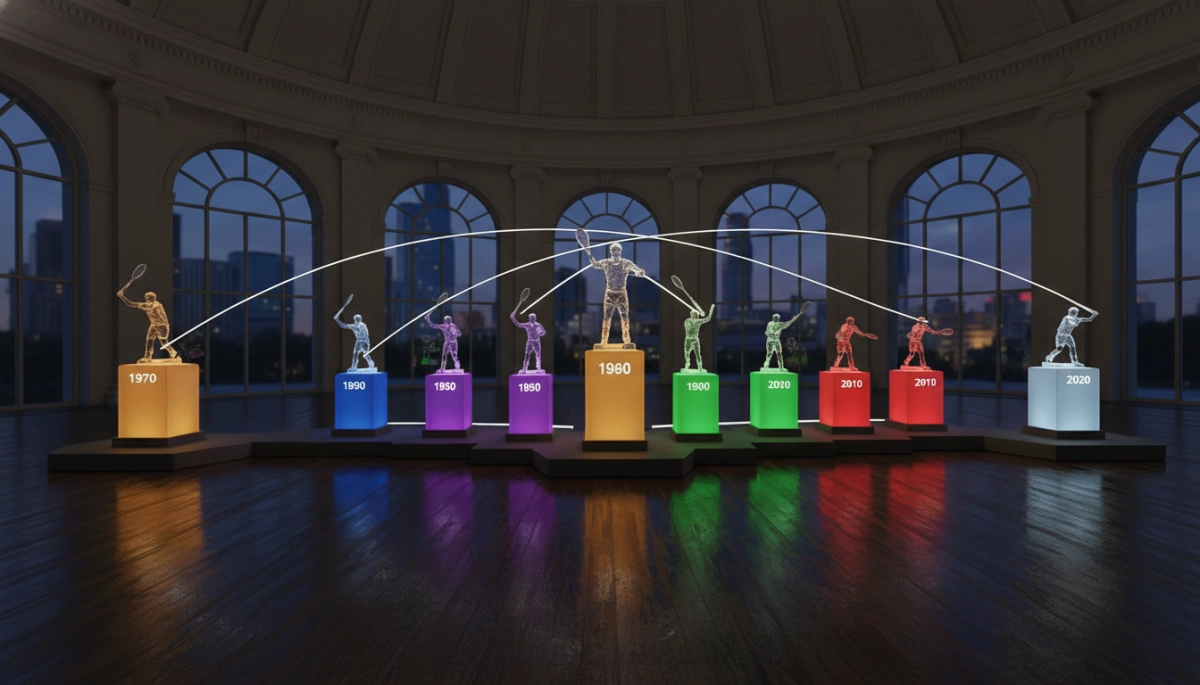
For a fan or a student of the game, the award helps you compare eras. You can look at Martina Navratilova’s relentless serve-and-volley, contrast it with Chris Evert’s baseline precision, and then track the athletic power of later champions. The Player of the Year tells you which approach dominated a season and which athletes shaped the narrative that year.
How Martina Navratilova and her peers defined a new standard
Martina Navratilova: refining athleticism and adaptability
Martina Navratilova transformed how you think about fitness, aggression, and strategy in women’s tennis. Her ability to consistently win on different surfaces and to adapt tactics during matches made her a perennial candidate for season-long honors. If you watch her matches, you see why award voters repeatedly recognized her: she combined peak physical preparation with tactical innovation, raising expectations for what a champion could be.
Chris Evert and the rise of consistency
Chris Evert’s game taught you that consistency is a championship-level weapon. Her methodical baseline play and mental steadiness translated into year-after-year deep runs at major events. For the Player of the Year conversation, Evert’s seasons demonstrated that rhythm, shot selection, and unshakeable focus can equal — and sometimes outlast — pure power.
Steffi Graf and the Golden Slam’s influence
Steffi Graf’s unique blend of speed, forehand power, and slice backhand changed the calculus of what it meant to dominate a season. Her career-highs and historic runs, including the famed Golden Slam, reinforced an important point: when a player combines Slam success with consistent tour-level victories, the Player of the Year distinction is a natural outcome.
What the award measured during the early decades and what you should pay attention to
In the early years, the award reflected several interlocking elements. When you examine winners from that era, consider these factors:
- Grand Slam performance — winning majors carried disproportionate weight in voters’ minds.
- Year-long consistency — deep runs across the calendar proved staying power.
- Head-to-head dominance — beating top rivals regularly signaled true superiority.
- Innovation and influence — players who changed tactics or raised fitness standards often got extra recognition.
Knowing these criteria lets you judge past champions on the same terms and see how the award served as both a reward for results and a recognition of impact. Next, you’ll trace how the 1990s and 2000s introduced new challengers and changed the metrics used to crown the year’s best player.
The 1990s: shifting styles, breakout stars, and a new global footprint
The 1990s remade the Player of the Year conversation by widening the stylistic palette and introducing younger, more global faces. Power remained important, but you also saw how finesse, court craft, and sheer versatility could carry a season. Monica Seles arrived as a force of aggression from the baseline, combining heavy, flat ballstriking with a fearless mentality; her early-90s dominance illustrated how a high-octane game could translate into season-long supremacy. At the same time, Martina Hingis brought something different — clinical variety, court IQ, and match management at a precocious age — showing that dominance could come from precision and anticipation as much as from raw power.
What also changed in the ’90s was the sport’s geography. Tennis expanded beyond its traditional Western power bases, producing champions and contenders from an increasingly diverse set of countries. That internationalization broadened the pool of contenders for Player of the Year and made consistency across a full calendar of travel and surface changes more impressive. Finally, the decade underscored how off-court events and narratives — injuries, comebacks, or highly publicized rivalries — could shape voters’ perceptions. In short, the award started to reflect not just who won the biggest titles but whose season told the most compelling story.
The 2000s: power conditioning, Williams-era standards, and depth of competition
If the ’90s diversified styles, the 2000s made physicality the baseline expectation. The Williams sisters elevated power, athleticism, and mental tenacity to new heights, resetting what you judged as dominance. Their ability to pair Slam-winning bursts with regular tour success meant that Player of the Year honors often went to those who could sustain peak form across both majors and week-in, week-out events.
But the decade was not a one-note era. Players like Justine Henin and Kim Clijsters demonstrated that all-court mastery and technical artistry still mattered; they interrupted power runs with seasons defined by tactical brilliance and clutch performances. The 2000s also marked a deeper tour overall — top-10 players could beat each other on any given week, which made a truly dominant season more notable. As prize money, broadcast exposure, and year-end championships grew in importance, the award increasingly rewarded players who combined marquee victories with consistent success against a stronger, denser field.
How the criteria evolved: stats, context, and the balance between numbers and narrative
Across the decades, the tangible criteria for Player of the Year broadened. You still weigh Grand Slams heavily, but today you also look at win–loss percentage, titles by tier, performance at the year-end championships, head-to-head records against fellow top-10 players, and dominance on multiple surfaces. Advanced metrics — return games won, breakpoint conversion, and match-closing efficiency — give voters and commentators extra ammunition to quantify dominance beyond just trophies.
Equally important is context. A season shortened by injury can still be award-worthy if the player’s results before and after the break redefined the sport that year. Conversely, a player who wins a pair of majors but skips much of the tour may be seen differently than one who racks up consistent high-level wins across the calendar. In short, modern Player of the Year debates blend statistics and story: who produced the most convincing body of work, who beat the best opposition, and whose season had the largest impact on how the game was played. In the next part you’ll see how that balance plays out among the 2010s and today’s champions.
The 2010s to today: rivalry, resilience, and a broader definition of dominance
The last decade deepened what you already saw earlier: dominance can come from sheer power, tactical mastery, or mental resilience. Rivalries continued to shape seasons, but so did pauses, comebacks, and players stepping away for personal reasons — all factors that shifted how voters and fans weighed a year’s significance. The sport’s depth grew, producing more weeks with unsettled outcomes and making truly standout seasons rarer and therefore more celebrated.
At the same time, off-court conversations — about mental health, scheduling, and player workload — began to influence how performance is evaluated. A Player of the Year must now combine results with durability and presence across the tour, and the award increasingly rewards those who push the sport forward technically or culturally. For up-to-the-minute standings, season narratives, and official honors, check the WTA’s official site.
Looking ahead: what the award will tell future fans
As the game continues to evolve, the Player of the Year will remain a useful lens: it highlights who set the standard that season — on court, in preparation, and in influence. Watch how emerging players translate junior success into tour consistency, how established stars adapt their games, and how off-court developments shape on-court opportunities. The award won’t just mark trophies; it will flag the players whose seasons redefined expectations for the next generation.
Key Takeaways
- The WTA Player of the Year captures season-long excellence by blending Grand Slam success, tour consistency, and head-to-head dominance.
- Criteria have evolved: advanced stats, context (injury, breaks, comebacks), and cultural impact now matter alongside titles.
- The award helps fans compare eras and spot who is changing the game technically, physically, or mentally going forward.