How Roland Garros’ Clay Courts Force Different Tactics
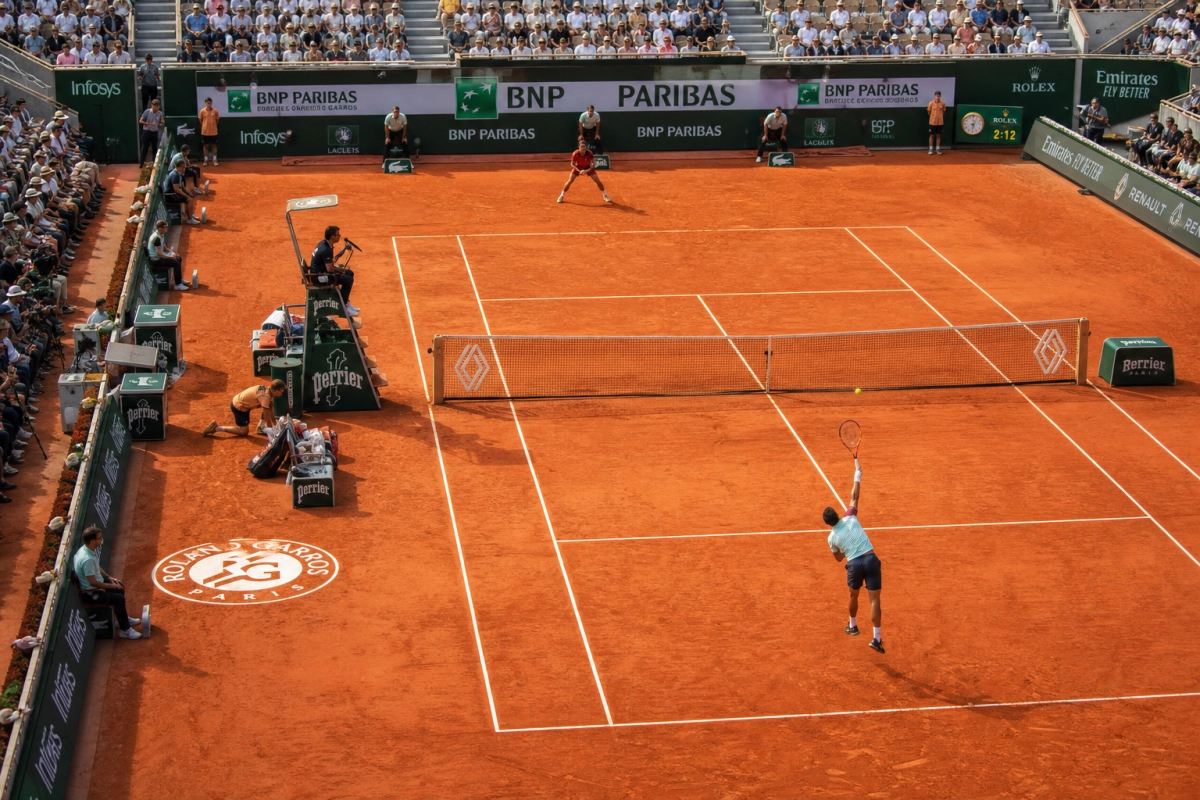
Roland Garros is synonymous with slow, high-bouncing clay that reshapes conventional tactics. This section explains why the surface matters, what tactical shifts players make (especially in serving and returning), and which player archetypes typically prosper on Parisian red clay. The explanation helps fans from Serbia and the wider region understand match dynamics, what to watch for during long rallies, and why some top players become favorites at this Grand Slam.
Why clay changes match rhythm and strategic priorities
Clay reduces ball speed after the bounce and rewards heavy topspin, patience and endurance. Points on clay are often longer than on grass or hard courts, so players trade powerful winners for consistency, placement and movement. Tactical priorities shift toward constructing points, opening angles with topspin, and using depth to push opponents behind the baseline.
Key tactical consequences include more frequent baseline exchanges, increased importance of movement and sliding, and a premium on generating winners from longer rallies. Concepts like a service game (the games when a player serves) and return game (when the opponent serves) become more contested because service dominance is less automatic on clay.
Terminology that matters for clay-court analysis
- Break point: a point that, if won by the returner, breaks the server’s game — more common on clay due to slower serves.
- Unforced error: a mistake not caused by the opponent’s pressure — minimizing these is critical in long clay rallies.
- Winner: a shot that ends the point immediately — fewer outright winners on clay, so winners are often constructed after rapid displacement.
- Seed, wild card, qualifying round: tournament entry terms; seeded players are ranked high and placed in the draw to avoid early matchups, while wild cards and qualifiers can be unpredictable threats on clay.
Serve and return techniques adapted for Roland Garros
Serving on clay emphasizes kick and placement over raw pace. A high-kick serve that bounces up to the opponent’s chest or shoulder can create weak replies and open the court for the server’s next shot. Players frequently use second serves with heavy topspin rather than flat power to reduce double faults while still pushing the opponent back.
Returning on clay requires early preparation, deeper contact point and patience. Because serves are less penetrative, strong returners look to neutralize the serve and immediately take control of the rally by stepping in, redirecting pace, or targeting angles. Good returners also exploit short second serves to attack and create break opportunities.
Practical adjustments players make during a match
- Increase use of topspin forehands to exploit high bounce and force shorter replies.
- Choose slice to change pace and low bounce, useful for disrupting rhythm.
- Prioritize shot selection to reduce unforced errors — patience often rewards court positioning over risky winners.
These tactical foundations explain why clay specialists and well-conditioned baseliners often outlast big servers at Roland Garros; the surface magnifies consistency, movement and point construction. The next part will examine which player types most benefit, key historical rivalries on clay, and practical planning tips for fans traveling from Serbia and the region to Paris.
Player archetypes that profit most from Parisian clay
Clay rewards specific skill sets more than raw power. The archetype most naturally suited to Roland Garros is the heavy-topspin baseliner: players who can consistently loop deep forehands to generate a high bounce, displace opponents laterally, and patiently build points until an opening appears. Equally successful are mobile counterpunchers who read the rhythm well, absorb pace and redirect it — their defence forces opponents into longer exchanges and more unforced errors.
Other successful profiles on clay:
– Tactical all-court players who combine reliable topspin from the baseline with a competent short game and occasional net approaches. Versatility forces opponents to cover more court and adapt to changing trajectories.
– Physically fit grinders with superior endurance and recovery. Because points and matches are longer, stamina and the ability to maintain intensity across five sets (men) or long three-set encounters (women) frequently decide matches.
– Slice-and-drop specialists who can vary pace and height to break rhythm; a well-timed drop shot on clay is especially punishing because sliding recovery is harder from deep positions.
By contrast, pure power servers and flat hitters are relatively neutralized. A big serve still helps, but on clay a kick/placement serve that sets up the next shot is often more valuable than sheer speed. This is why some players who are dominant on faster surfaces must adapt technique — adding kick serves, more topspin and greater patience — to succeed in Paris.
Memorable clay clashes and what they teach spectators
Roland Garros has produced matchups that epitomize clay-court chess: long tactical rallies, shifts in momentum, and matches decided by who can physically and mentally outlast the other. Classic rivalries on Paris clay are instructive for fans because they reveal recurring tactical themes — who imposes depth, who varies height and pace effectively, and who executes the timely change of direction to finish points.
When watching a headline clash, pay attention to:
– How each player constructs the point: repeated wide patterns to open court vs shorter angles and drop shots to pull the opponent in.
– Mid-rally adjustments: a player moving from flat drives to heavier topspin or introducing more slice often indicates a pivotal tactical switch.
– Endurance battles: look for subtle declines in foot speed or timing late in sets — these often presage decisive breaks.
Historic Paris matches also show that mental resilience after long games and the ability to reset between points matter as much as technical skill. For fans, these elements make clay matchups uniquely compelling — tactical depth and drama develop slowly but often explode in key games.
Schedule, points, rankings impact and practical tips for fans from Serbia and the region
Roland Garros runs over two weeks (qualifying the week before), with morning, afternoon and evening sessions spread across Philippe-Chatrier, Suzanne-Lenglen and Simonne-Mathieu. Men play best-of-five sets; women play best-of-three. Grand Slam singles points follow the standard distribution: winner 2000, runner-up 1200, semifinalist 720, quarterfinalist 360, R16 180, R32 90, R64 45, R128 10 — results that can cause major ranking swings because rankings use a 52‑week points system and players must defend prior points.
Practical tips for regional fans: buy tickets only through the official Roland Garros site or trusted vendors; consider ground passes or day sessions for better value; arrive early to catch warm-ups; expect schedule changes when rain intervenes; pack comfortable shoes, sunscreen, and a light waterproof jacket. Travel-wise, book flights and accommodation well ahead (prices spike during the fortnight); aim for lodging with easy metro access and check visa/entry requirements. Follow local broadcasters and the tournament app for live order-of-play, and join fan groups or forums to coordinate meetups and share tips — it makes the Paris experience richer and easier to navigate.
On-site etiquette and viewing tips
- Respect quiet during points and applause between them — it preserves concentration for players and the experience for everyone.
- Follow stadium rules about photography, flash, and where to stand during play; ushers will guide seating and movement between courts.
- If you plan to move between courts, allow time for lines and security checks; morning sessions are less crowded than prime evening slots.
- Use the tournament app or official scoreboards to track matches and court assignments; screens update orders-of-play and any rain delays.
- When cheering for regional players, keep it positive and sportsmanlike — players notice respectful support even from fans far from home.
Enjoy Roland Garros through the tactics
Go to Paris ready to notice patterns more than power: the construction of points, the subtle shifts in spin and height, and the endurance that decides so many matches. Whether you are a once-a-year visitor or a lifelong fan from the region, letting the clay dictate your viewing—slower pace, longer rallies, and strategic adjustments—turns every match into a lesson and every session into a richer spectacle. Above all, savor the atmosphere: Roland Garros is as much about tactical nuance as it is about the shared excitement of live tennis. Safe travels, and enjoy watching the clay reveal its stories.